 Back
BackLesson 1.2: Alkenes and Alkynes: Structure, Nomenclature, Isomerism, and Reactions
Study Guide - Smart Notes
 Tailored notes based on your materials, expanded with key definitions, examples, and context.
Alkenes and Alkynes
Introduction to Unsaturated Hydrocarbons
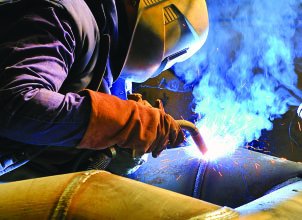
Alkenes and alkynes are classes of hydrocarbons that contain double or triple bonds between carbon atoms, respectively. These multiple bonds make them unsaturated hydrocarbons, meaning they have fewer hydrogen atoms than the corresponding alkanes. Unsaturated hydrocarbons are important in both industrial and everyday contexts. For example, ethyne (acetylene) is used as a fuel in welding torches, while ethene (ethylene) is used to ripen fruit.
Alkene: Contains at least one carbon–carbon double bond. General formula: CnH2n.
Alkyne: Contains at least one carbon–carbon triple bond. General formula: CnH2n–2.
Aliphatic hydrocarbon: A compound with straight, branched, or ring structures of carbon atoms (includes alkanes, alkenes, and alkynes).
Example: Ethene (C2H4) contains a double bond; ethyne (C2H2) contains a triple bond.
Naming Alkenes and Alkynes
IUPAC Nomenclature Rules
The naming of alkenes and alkynes follows systematic rules to indicate the structure and position of multiple bonds and substituents:
Identify the longest carbon chain or ring containing the multiple bond (parent structure).
Determine if the compound is an alkene (double bond, suffix -ene) or alkyne (triple bond, suffix -yne).
Number the chain so the multiple bond has the lowest possible number. Indicate the position before the suffix (e.g., but-2-ene).
Name and number substituents as in alkanes. If multiple bonds are present, use prefixes like -diene or -triyne.
Examples:
CH2=CHCH2CH3 is but-1-ene.
CH3CH=CHCH3 is but-2-ene.
CH3CH=CHCH=CH2 is penta-1,3-diene.
CH3CH2C≡CCHCH2CH3 with an ethyl group at C-5 is 5-ethylhept-3-yne.
Additional info: For rings, the double bond is always between C-1 and C-2, and numbering gives substituents the lowest possible numbers.
Drawing Structures from Names
Stepwise Approach
Draw the parent chain or ring as indicated by the root name.
Identify the positions of multiple bonds and substituents from the name.
Add the multiple bonds and substituents at the specified locations.
Example: 2-methylpenta-1,4-diene has a five-carbon chain, double bonds at C-1 and C-4, and a methyl group at C-2.
Cis–Trans (Geometric) Isomerism in Alkenes
Definition and Identification
Alkenes can exhibit cis–trans isomerism (a type of stereoisomerism) due to restricted rotation around the double bond. Cis isomers have similar groups on the same side of the double bond, while trans isomers have them on opposite sides.
Stereoisomers: Same molecular formula and connectivity, different spatial arrangement.
Cis isomer: Groups of interest on the same side of the double bond.
Trans isomer: Groups of interest on opposite sides of the double bond.
Example: cis-but-2-ene vs. trans-but-2-ene.
Additional info: The cis/trans system is used only when two substituents are the same; otherwise, the E/Z system is used.
Reactions of Alkenes and Alkynes
Addition Reactions
Alkenes and alkynes are more reactive than alkanes due to their multiple bonds, which act as functional groups. The most common reactions are addition reactions, where atoms are added across the multiple bond.
Hydrogenation: Addition of H2 to convert an alkene/alkyne to an alkane.
Halogenation: Addition of halogens (Cl2, Br2) to form dihalides.
Hydrohalogenation: Addition of hydrogen halides (HCl, HBr) to form alkyl halides.
Hydration: Addition of water (H2O) in the presence of acid to form alcohols.
Example equations:
Hydrogenation:
Halogenation:
Hydration:
Markovnikov’s Rule
When adding a hydrogen halide or water to an unsymmetrical alkene, Markovnikov’s rule predicts the major product: the hydrogen atom bonds to the carbon with more hydrogens already attached.
Markovnikov’s Rule:
"When a hydrogen halide or water is added to an alkene, the hydrogen atom attaches to the carbon with more hydrogen atoms already bonded to it."
Example: Addition of HCl to but-1-ene forms 2-chlorobutane as the major product.
Summary Table: Types of Addition Reactions
Reaction Type | Reactants | Product | Example Equation |
|---|---|---|---|
Hydrogenation | Alkene/Alkyne + H2 | Alkane | |
Halogenation | Alkene/Alkyne + X2 (X = Cl, Br) | Dihalide | |
Hydrohalogenation | Alkene/Alkyne + HX | Alkyl halide | |
Hydration | Alkene + H2O (acid catalyst) | Alcohol |
Practice and Application
Draw and name isomers of pentene; compare with pentane to observe the effect of multiple bonds on isomerism.
Identify cis and trans isomers by examining the arrangement of groups around the double bond.
Predict the major product of addition reactions using Markovnikov’s rule.
Additional info: The number of possible isomers increases with the number of multiple bonds and the length of the carbon chain.
