 Back
BackAmino Acids: Structure, Classification, and Chemical Properties
Study Guide - Smart Notes
 Tailored notes based on your materials, expanded with key definitions, examples, and context.
Amino Acids: Structure, Classification, and Chemical Properties
Introduction to Amino Acids
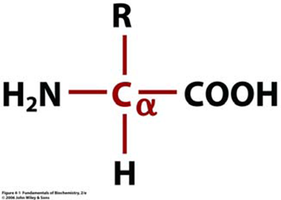
Amino acids are the fundamental building blocks of proteins, playing critical roles in biochemistry and general chemistry. Each amino acid contains a central carbon atom (the alpha carbon) bonded to an amino group, a carboxyl group, a hydrogen atom, and a unique side chain (R group) that determines its properties.
Definition: Amino acids are organic compounds containing both amino (-NH2) and carboxyl (-COOH) functional groups attached to the same carbon atom.
General Structure: The central (alpha) carbon is bonded to four different groups: an amino group, a carboxyl group, a hydrogen atom, and a variable side chain (R group).
Biological Importance: Amino acids are polymerized to form proteins, which perform structural, catalytic, and regulatory functions in living organisms.
Chirality and Stereochemistry of Amino Acids
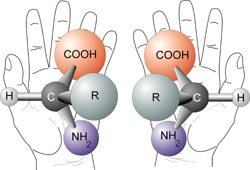
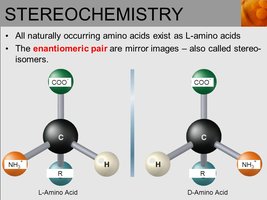
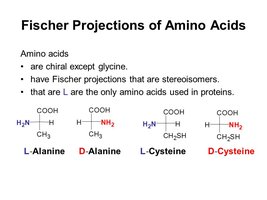
Most amino acids (except glycine) are chiral, meaning they exist as non-superimposable mirror images (enantiomers). In biological systems, only L-amino acids are incorporated into proteins.
Chirality: The alpha carbon is a stereocenter, leading to D- and L-forms. Glycine is achiral because its R group is hydrogen.
Enantiomers: L- and D-amino acids are mirror images. Proteins are synthesized exclusively from L-amino acids.
Classification of Amino Acids
Amino acids are classified based on the properties of their side chains (R groups), which influence their chemical behavior and role in proteins.
Nonpolar Amino Acids: R groups are hydrophobic (alkyl or aromatic).
Polar (Uncharged) Amino Acids: R groups contain alcohols, thiols, or amides.
Acidic Amino Acids: R group contains a carboxylic acid (negatively charged at physiological pH).
Basic Amino Acids: R group contains an amine (positively charged at physiological pH).
Special Classes: Hydroxy, sulfur-containing, aromatic, heterocyclic, branched-chain, and imino acids (e.g., proline).
Standard and Non-Standard Amino Acids
There are 20 standard amino acids encoded by the genetic code, but additional amino acids exist due to post-translational modifications or special genetic coding.
Standard Amino Acids: The 20 alpha-amino acids used in protein synthesis.
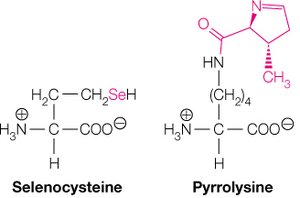
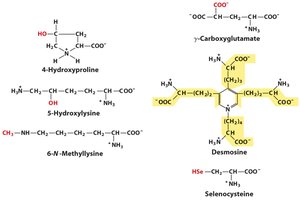
Non-Standard Amino Acids: Selenocysteine (Sec, the 21st amino acid) and pyrrolysine (Pyl, the 22nd amino acid) are incorporated into proteins by unique mechanisms.
Derived Amino Acids: Formed by post-translational modifications (e.g., hydroxyproline, methyllysine).
Essential and Nonessential Amino Acids
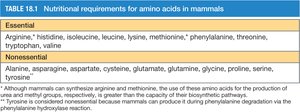
Essential amino acids cannot be synthesized by the human body and must be obtained from the diet, while nonessential amino acids can be synthesized endogenously.
Essential Amino Acids: Histidine, isoleucine, leucine, lysine, methionine, phenylalanine, threonine, tryptophan, valine, and (conditionally) arginine and tyrosine.
Nonessential Amino Acids: Alanine, asparagine, aspartate, cysteine, glutamate, glutamine, glycine, proline, serine, tyrosine.
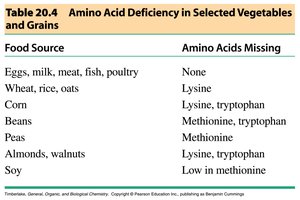
Complete Proteins: Contain all essential amino acids (e.g., animal proteins).
Incomplete Proteins: Lacking one or more essential amino acids (e.g., plant proteins).
Food Source | Amino Acids Missing |
|---|---|
Eggs, milk, meat, fish, poultry | None |
Wheat, rice, oats | Lysine |
Corn | Lysine, tryptophan |
Beans | Methionine, tryptophan |
Peas | Methionine |
Almonds, walnuts | Lysine, tryptophan |
Soy | Low in methionine |
Metabolic Classification: Glucogenic and Ketogenic Amino Acids
Amino acids are classified based on their metabolic fate: whether they generate glucose (glucogenic), ketone bodies (ketogenic), or both.
Glucogenic Amino Acids: Yield pyruvate or citric acid cycle intermediates that can be converted to glucose.
Ketogenic Amino Acids: Yield acetyl-CoA or acetoacetyl-CoA, precursors for ketone bodies or fatty acids.
Some amino acids are both glucogenic and ketogenic (e.g., isoleucine, phenylalanine, tryptophan, tyrosine).
Acid-Base Properties of Amino Acids
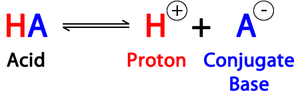
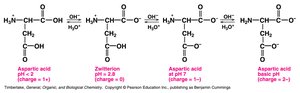
Amino acids can act as both acids and bases due to their amino and carboxyl groups. In aqueous solution, they exist as zwitterions at a specific pH called the isoelectric point (pI).
Zwitterion: A molecule with both positive and negative charges but overall neutral.
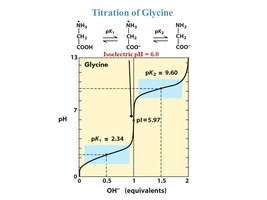
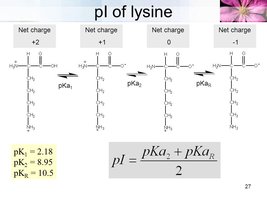
Isoelectric Point (pI): The pH at which the amino acid has no net charge.
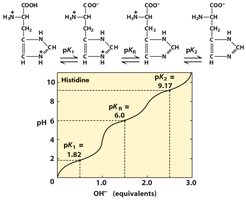
pKa Values: Each ionizable group (carboxyl, amino, and sometimes side chain) has a characteristic pKa.
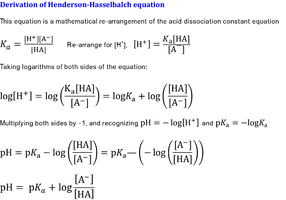
Henderson-Hasselbalch Equation: Used to calculate the pH or pKa of a buffer system.
Titration Curves and Isoelectric Points
The titration curve of an amino acid shows how its charge changes with pH. The pI is found at the point where the molecule has no net charge.
Example: Glycine has two pKa values (carboxyl and amino groups). The pI is the average of these two pKa values.
Acidic and Basic Amino Acids: Have additional ionizable groups, resulting in three pKa values and a different pI.
Separation of Amino Acids: Electrophoresis
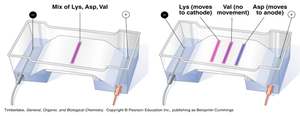
Electrophoresis is a laboratory technique used to separate amino acids based on their isoelectric points. Amino acids migrate in an electric field according to their net charge at a given pH.
Principle: At pH below pI, amino acids are positively charged and move toward the cathode; above pI, they are negatively charged and move toward the anode.
Application: Used to analyze mixtures of amino acids and proteins.
Peptide Bond Formation and Properties
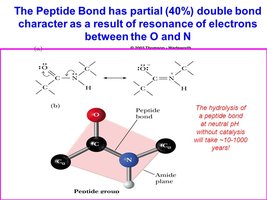
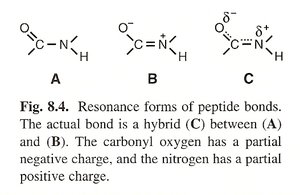
Amino acids are linked by peptide bonds to form peptides and proteins. The peptide bond is an amide linkage with unique chemical properties.
Formation: The carboxyl group of one amino acid reacts with the amino group of another, releasing water (condensation reaction).
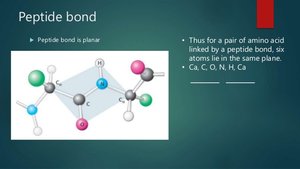
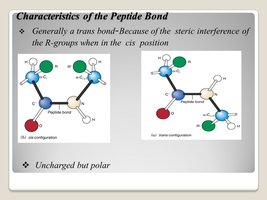
Properties: Peptide bonds are planar, rigid, and have partial double-bond character due to resonance. Most peptide bonds are in the trans configuration.
Naming: Peptides are named from the N-terminus to the C-terminus, with -yl endings for all but the last amino acid.
Reactions of Amino Acid Functional Groups
Amino acids undergo various chemical reactions involving their amino, carboxyl, and side chain groups. These reactions are important in metabolism and protein modification.
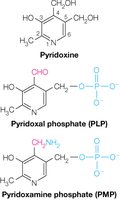
Transamination: Transfer of an amino group to a keto acid, catalyzed by aminotransferases and requiring pyridoxal phosphate (PLP) as a coenzyme.
Oxidative Deamination: Removal of an amino group as ammonia, primarily from glutamate, feeding into the urea cycle.
Post-Translational Modifications: Methylation, acetylation, and formation of disulfide bonds (e.g., in cysteine) are common modifications affecting protein function.

Summary Table: Properties of Common Amino Acids
Amino Acid | Abbreviation | pKa (COOH) | pKa (NH2) | Side Chain pKa | Type |
|---|---|---|---|---|---|
Alanine | Ala, A | 2.3 | 9.7 | - | Nonpolar |
Arginine | Arg, R | 2.2 | 9.0 | 12.5 | Basic |
Aspartic acid | Asp, D | 2.1 | 9.8 | 3.9 | Acidic |
Glutamic acid | Glu, E | 2.2 | 9.7 | 4.3 | Acidic |
Lysine | Lys, K | 2.2 | 9.2 | 10.5 | Basic |
Serine | Ser, S | 2.2 | 9.2 | - | Polar |
Clinical Relevance: Inborn Errors of Amino Acid Metabolism
Genetic disorders can affect amino acid metabolism, leading to diseases such as phenylketonuria (PKU) and maple syrup urine disease (MSUD).
Phenylketonuria (PKU): Deficiency in phenylalanine hydroxylase leads to accumulation of phenylalanine, causing intellectual disability if untreated.
Maple Syrup Urine Disease (MSUD): Deficiency in branched-chain alpha-keto acid dehydrogenase leads to accumulation of leucine, isoleucine, and valine, resulting in neurological damage and characteristic sweet-smelling urine.
Additional info: For further study, refer to chapters on protein structure, enzyme catalysis, and metabolic pathways in standard general chemistry and biochemistry textbooks.
