 Back
BackAqueous Reactions and Gas Laws: Core Concepts and Applications
Study Guide - Smart Notes
 Tailored notes based on your materials, expanded with key definitions, examples, and context.
Oxidation-Reduction (Redox) Reactions in Aqueous Solutions
General Principles of Redox Reactions
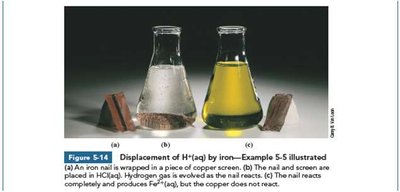
Oxidation-reduction (redox) reactions involve the transfer of electrons between chemical species, resulting in changes in oxidation states. These reactions are fundamental to many chemical processes, including corrosion, metabolism, and industrial synthesis.
Oxidation: The loss of electrons by a substance, resulting in an increase in its oxidation state.
Reduction: The gain of electrons by a substance, resulting in a decrease in its oxidation state.
Half-reactions: Redox reactions can be split into two half-reactions: one for oxidation and one for reduction.
Example:
Oxidation half-reaction:
Reduction half-reaction:
Assigning Oxidation States
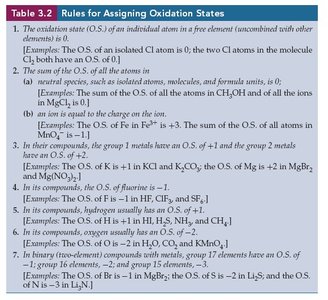
Oxidation states (O.S.) are used to keep track of electron transfer in redox reactions. The following rules help assign oxidation states to elements in compounds and ions:
Rule | Description |
|---|---|
1 | The O.S. of an atom in its elemental form is 0. |
2 | The O.S. of a monoatomic ion is equal to its charge. |
3 | In compounds, group 1 metals have O.S. of +1, group 2 metals +2, and aluminum +3. |
4 | Hydrogen is usually +1, oxygen is usually -2, and fluorine is always -1 in compounds. |
5 | The sum of O.S. in a neutral compound is 0; in a polyatomic ion, it equals the ion's charge. |
Identifying Redox Reactions
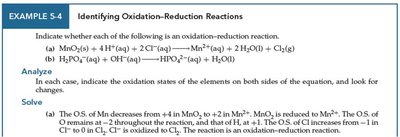
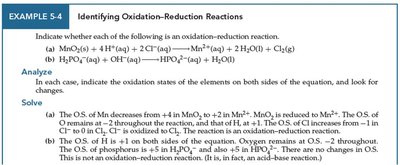
To determine if a reaction is a redox reaction, check for changes in oxidation states of elements between reactants and products. If any element's oxidation state changes, the reaction is redox.
Example:
Mn changes from +7 to +2 (reduction), Cl changes from -1 to 0 (oxidation).
Balancing Redox Equations
Redox equations must be balanced for both mass and charge. The process differs slightly depending on whether the reaction occurs in acidic or basic solution.
Acidic Medium:
Balance all atoms except H and O.
Add H2O to balance O atoms.
Add H+ to balance H atoms.
Balance charges by adding electrons.
Combine half-reactions, ensuring electrons cancel.
Basic Medium:
Follow the acidic steps first.
Add OH- to both sides to neutralize H+ and form H2O.
Cancel water molecules as needed.
Gas Laws and Properties of Gases
Properties of Gases and Pressure Units
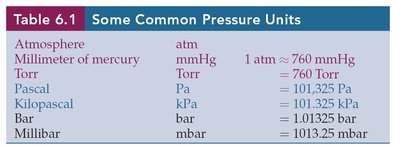
Gases are characterized by their pressure, volume, temperature, and amount (in moles). Pressure is measured in several units, including atmospheres (atm), millimeters of mercury (mmHg), torr, pascals (Pa), and kilopascals (kPa).
Unit | Symbol | Equivalent |
|---|---|---|
Atmosphere | atm | 1 atm = 760 mmHg = 760 Torr = 101.325 kPa |
Millimeter of mercury | mmHg | 1 mmHg = 1 Torr |
Pascal | Pa | 1 atm = 101,325 Pa |
Kilopascal | kPa | 1 atm = 101.325 kPa |
Measuring Gas Pressure: The Barometer
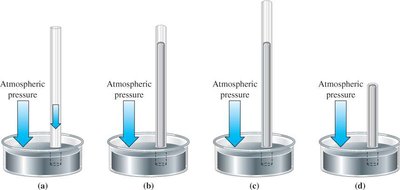
Gas pressure is commonly measured using a barometer, which relies on the height of a mercury column to indicate atmospheric pressure.
Simple Gas Laws
The behavior of gases is described by several empirical laws:
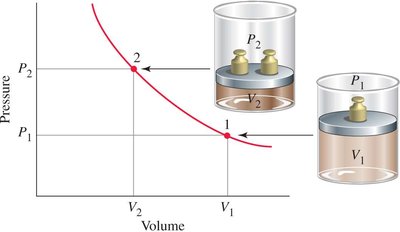
Boyle's Law: At constant temperature and amount, the pressure of a gas is inversely proportional to its volume. Equation:
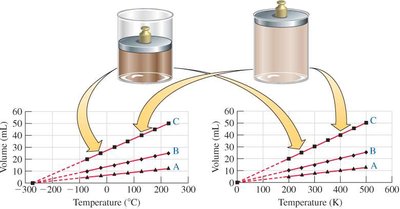
Charles's Law: At constant pressure and amount, the volume of a gas is directly proportional to its temperature (in Kelvin). Equation:
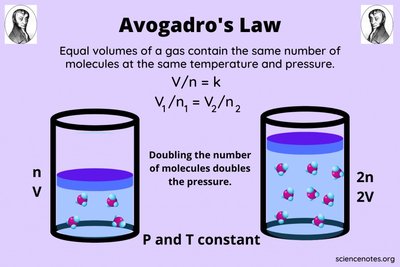
Avogadro's Law: At constant temperature and pressure, the volume of a gas is directly proportional to the number of moles. Equation:
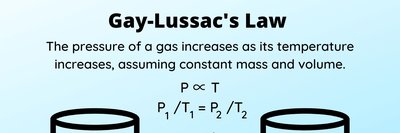
Gay-Lussac's Law: At constant volume and amount, the pressure of a gas is directly proportional to its temperature (in Kelvin). Equation:
Standard Temperature and Pressure (STP)
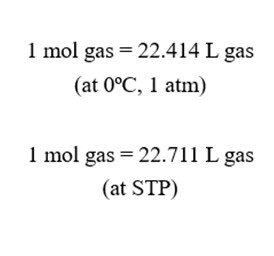
STP is defined as 0°C (273.15 K) and 1 atm (or 1 bar). At STP, one mole of an ideal gas occupies:
22.414 L at 0°C and 1 atm
22.711 L at 0°C and 1 bar
The Ideal Gas Law
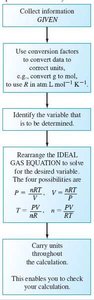
The ideal gas law combines the simple gas laws into a single equation:
Equation:
Where:
P = pressure (kPa or atm)
V = volume (L)
n = amount (mol)
R = ideal gas constant (8.314 kPa·L·mol-1·K-1)
T = temperature (K)
Dalton's Law of Partial Pressures
In a mixture of non-reacting gases, the total pressure is the sum of the partial pressures of each gas:
Equation:
Kinetic Molecular Theory of Gases
The kinetic molecular theory explains the behavior of gases based on the motion of their particles:
Gas particles are in constant, random, straight-line motion.
They are separated by large distances relative to their size.
Collisions between particles are elastic (no energy lost).
No intermolecular forces act between particles.
The average kinetic energy is proportional to temperature.

Applications and Worked Examples
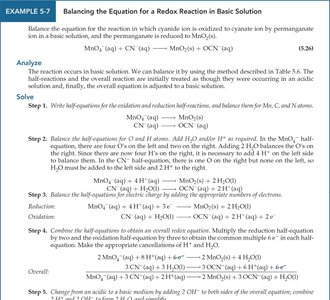
Balancing Redox Equations in Basic Solution
Example: Balance the equation for the reaction in which cyanide ion is oxidized to cyanate ion by permanganate in basic solution.
Stepwise balancing involves writing half-reactions, balancing atoms and charges, and combining the half-reactions.
Calculating Gas Volumes and Pressures
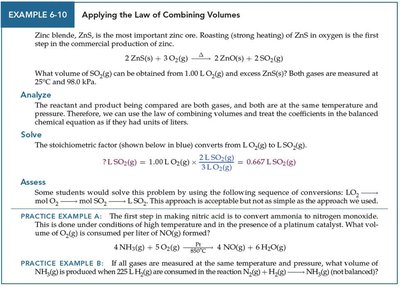
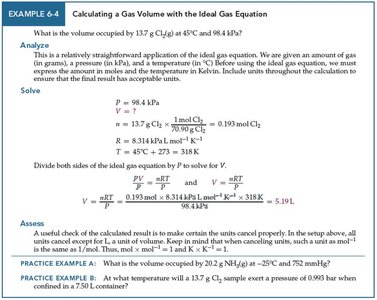
Example: Calculate the volume occupied by 13.7 g Cl2(g) at 45°C and 98.4 kPa using the ideal gas law.
Convert mass to moles, temperature to Kelvin, and solve for V using .
Using the Ideal Gas Law in Stoichiometry
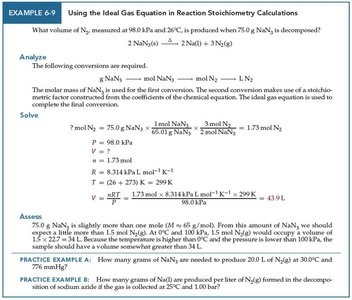
Example: What volume of N2 is produced when 75.0 g NaN3 is decomposed at 98.0 kPa and 25°C?
Use stoichiometric factors and the ideal gas law to relate mass of reactant to volume of gas produced.
Summary Table: Gas Laws
Law | Equation | Variables Held Constant |
|---|---|---|
Boyle's Law | n, T | |
Charles's Law | n, P | |
Avogadro's Law | P, T | |
Gay-Lussac's Law | n, V | |
Ideal Gas Law | None |
