 Back
BackAtomic Structure and Quantum Theory: Mini-Textbook Study Notes
Study Guide - Smart Notes
 Tailored notes based on your materials, expanded with key definitions, examples, and context.
Atomic Structure
Historical Development of Atomic Theory
The concept of the atom has evolved through history, beginning with philosophical ideas and advancing to scientific theories based on experimental evidence.
Democritus’s Philosophy: Democritus (430 BCE) proposed that matter is composed of indivisible and indestructible particles called atoms.
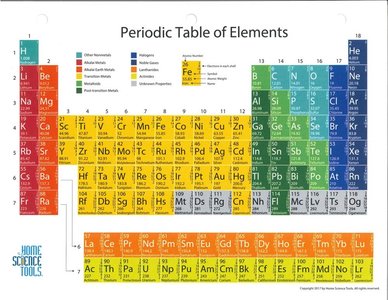
Dalton’s Atomic Theory: John Dalton used experimental methods to formalize the concept of atoms into a scientific theory. Key points include:
Matter consists of indivisible atoms.
All atoms of a given element have identical properties and mass; atoms of different elements differ in mass.
Compounds are formed by atoms of different elements combining in fixed ratios.
Chemical reactions involve reorganization of atoms; atoms are neither created nor destroyed.
Discovery of Subatomic Particles
Atoms are composed of three fundamental subatomic particles: electrons, protons, and neutrons.
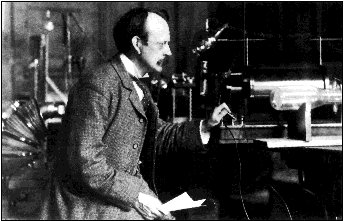
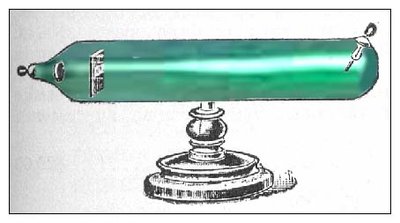
Electrons: Discovered by J. J. Thomson in 1897 using the cathode ray experiment. Electrons are negatively charged particles.
Protons: Atoms are electrically neutral, implying the existence of positively charged protons to balance electrons.
Neutrons: Neutrons are neutral particles found in the nucleus.
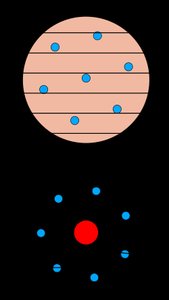
Rutherford’s Gold Foil Experiment: Ernest Rutherford disproved the plum pudding model and demonstrated the existence of a dense, positively charged nucleus.
Structure of the Atom
An atom consists of a nucleus (containing protons and neutrons) and electrons moving rapidly around it. The nucleus is the site of strong interactions between nucleons.
Atomic Number (Z): Number of protons in the nucleus.
Mass Number (A): Total number of protons and neutrons (A = Z + N).
Size: Atom ≈ 10-10 m; Nucleus ≈ 10-15 m.
Subatomic Particle Properties:
Particle
Symbol
Charge
Mass (kg)
Electron
e-
-q
9.110 × 10⁻³¹
Proton
p+
+q
1.673 × 10⁻²⁷
Neutron
n0
0
1.673 × 10⁻²⁷
Atomic Mass and Isotopes
The atomic mass unit (amu or u) is defined as one-twelfth the mass of a carbon-12 atom. Atomic masses of other elements are given relative to this standard.
Atomic Mass Calculation:
Atomic mass of hydrogen in amu:
Isotopes: Atoms of the same element with different mass numbers. Average atomic mass is calculated using the relative abundance and atomic mass of each isotope.
Isotope
Relative Abundance (%)
Atomic Mass (amu)
C-12
98.892
12
C-13
1.108
13.00335
C-14
2 × 10⁻¹⁰
14.00317
Average Atomic Mass Formula:
Molecular Mass and Formula Mass
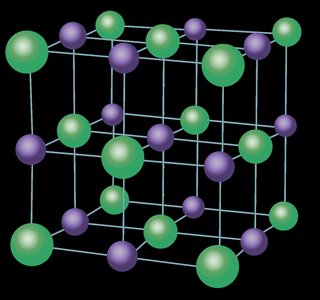
Molecular mass is the sum of atomic masses of all elements in a molecule. Formula mass is used for substances with a 3-D structure (e.g., ionic compounds).
Molecular Mass Example:
Methane (CH4):
Water (H2O):
Glucose (C6H12O6):
Formula Mass Example:
Sodium chloride (NaCl):
The Mole and Avogadro’s Number
The mole is a unit for counting atoms and molecules, defined as the amount of substance containing as many entities as there are atoms in 12 g of carbon-12.
Avogadro’s Number: entities per mole.
Molar Mass: The mass of one mole of a substance in grams; numerically equal to the atomic mass in u.
Water: 18.02 g/mol
Sodium chloride: 58.5 g/mol
Bohr Model and Quantum Model
Bohr Model of the Atom
The Bohr model describes electrons as moving in discrete shells around the nucleus, each shell corresponding to a principal quantum number (n).
Shells: K, L, M, N (n = 1, 2, 3, ...)
Maximum Electrons per Shell:
K: 2 electrons
L: 8 electrons
M: 18 electrons
Valence Electrons: Atoms in the same column have the same number of valence electrons and similar properties.
Guided Tutorial: Phosphorus Example
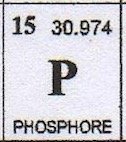
Phosphorus (P) is in the 3rd period and 15th column of the periodic table.
Atomic Number: Z = 15
Molar Mass: 30.974 g/mol
Most Abundant Isotope: A = 31
Composition: 15 protons, 16 neutrons, 15 electrons
Electronic Configuration: (K)2 (L)8 (M)5
To resemble a noble gas: Needs 3 more electrons to complete its octet.
Charge: Nucleus: ; Electron cloud:
Mass Defect:
Binding Energy:
From Bohr Model to Quantum Model
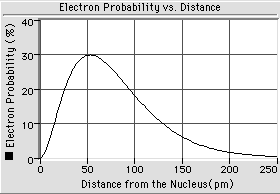
The quantum model describes electrons as waves and uses probability distributions to locate electrons. Each element has a unique emission spectrum, known as its "atomic fingerprint."
Electrons as Waves: Diffraction and interference phenomena.
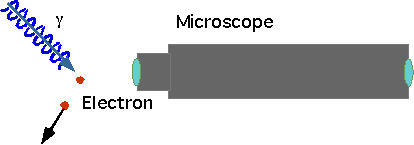
Heisenberg Uncertainty Principle: It is impossible to know both the velocity and position of an electron simultaneously.
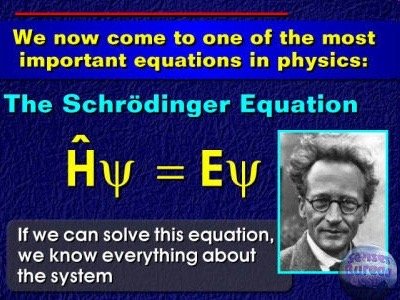
Schrödinger Wave Equation: Defines quantized energy levels and the probability of finding an electron.
Atomic Orbitals and Quantum Numbers
Atomic orbitals are regions of space where electrons are likely to be found. Quantum numbers describe the properties of these orbitals.
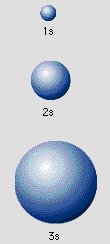
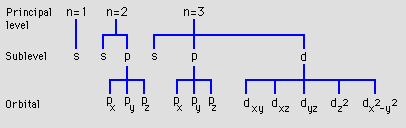
Principal Quantum Number (n): Indicates main energy level and size of the orbital. Number of orbitals per level:
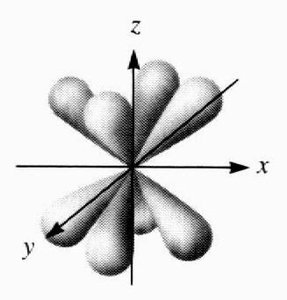
Angular Momentum Quantum Number (l): Indicates shape of the orbital (s, p, d, f).

Magnetic Quantum Number (ml): Specifies the orientation of the orbital.
Spin Quantum Number (ms): Indicates the spin state of the electron (+½ or -½). Each orbital can hold two electrons with opposite spins.
Electron Configuration Principles
Electron configuration describes the arrangement of electrons in an atom.
Aufbau Principle: Electrons fill the lowest energy orbitals first.
Pauli Exclusion Principle: No two electrons can have the same set of four quantum numbers.
Hund’s Rule: Orbitals of equal energy are singly occupied before any is doubly occupied.
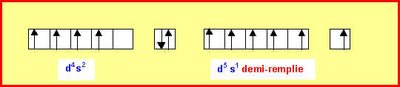
Noble Gases: Have complete octets and are chemically inert.
Order of Subshell Filling: Not strictly sequential; follows the pattern: 1s, 2s, 2p, 3s, 3p, 4s, 3d, 4p, etc.
Electron Configuration Examples
Electron configurations for selected elements:
Hydrogen (1s1): 1 electron in the 1s orbital.
Lithium (3Li): 1s2 2s1
Titanium (22Ti): 1s2 2s2 2p6 3s2 3p6 4s2 3d2
Oxygen (8O): 1s2 2s2 2p4
Chlorine (17Cl): 1s2 2s2 2p6 3s2 3p5

Summary Table: Quantum Numbers and Orbitals
Quantum Number | Symbol | Property | Possible Values |
|---|---|---|---|
Principal | n | Energy level, size | 1, 2, 3, ... |
Angular Momentum | l | Shape | 0 (s), 1 (p), 2 (d), 3 (f) |
Magnetic | ml | Orientation | -l to +l |
Spin | ms | Spin direction | +½, -½ |
Key Equations
Mass Defect:
Binding Energy:
Average Atomic Mass:
Additional info:
Quantum mechanics provides a probabilistic model for electron location, replacing the deterministic Bohr model.
Electron probability distributions and radial distribution curves are used to visualize atomic orbitals.
