 Back
BackAtomic Structure: Historical Models and Experimental Discoveries
Study Guide - Smart Notes
 Tailored notes based on your materials, expanded with key definitions, examples, and context.
Atomic Structure
Dalton's Atomic Theory
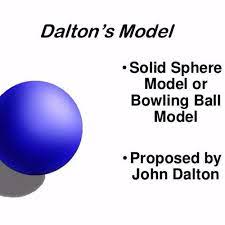
John Dalton proposed one of the earliest models of the atom, describing atoms as indivisible, solid spheres. This model laid the foundation for modern atomic theory by suggesting that atoms are the fundamental building blocks of matter.
Atoms are tiny, hard spheres that cannot be split up.
Each element consists of identical atoms unique to that element.
Atoms combine in simple whole-number ratios to form compounds.
Electricity and the Atom
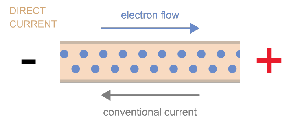
Electricity played a crucial role in the development of atomic theory. The study of static electricity and electric currents led to the discovery of subatomic particles and the internal structure of the atom.
Static electricity has been observed since ancient times.
Continuous electric current was developed in the nineteenth century, enabling new experiments with matter.
Properties of Electrical Charges
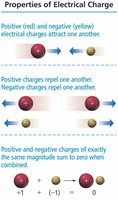
Understanding the behavior of electrical charges is fundamental to atomic structure. Charges interact according to specific rules:
Opposite charges attract each other.
Like charges repel each other.
Charges are additive; the sum of positive and negative charges can result in neutrality.
Electrolysis
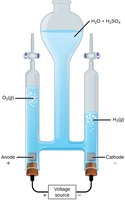
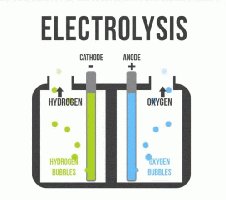
Electrolysis is a chemical process driven by electricity, demonstrating that atoms can be decomposed into their elements. This process provided evidence that atoms are not indivisible.
Electrolysis of water produces hydrogen and oxygen gases.
It shows that electrical energy can cause chemical changes.
Discovery of the Electron
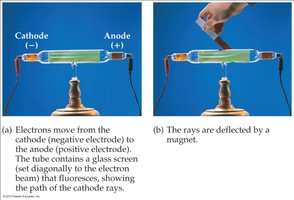
J.J. Thomson's experiments with cathode rays in 1897 led to the discovery of the electron, a subatomic particle smaller than the atom itself. This overturned Dalton's idea of indivisible atoms.
Cathode rays are streams of negatively charged particles (electrons).
Electrons travel from the cathode (negative electrode) to the anode (positive electrode) in a straight line.
The electron's mass is about 1/2000 that of a hydrogen atom.
Electrons are present in all substances and have the same properties regardless of the material.
Measuring the Electron
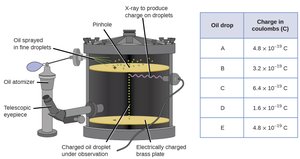
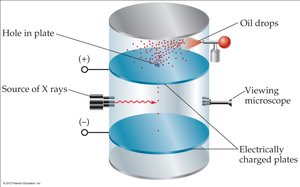
J.J. Thomson measured the charge-to-mass ratio of the electron, but the actual charge and mass were determined later by Robert Millikan's oil-drop experiment.
Charge/mass ratio of the electron: C/g
Millikan determined the charge of a single electron: C
Electron mass: g
Discovery of X-Rays
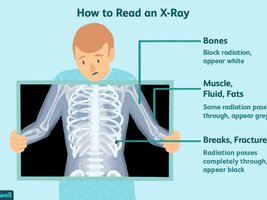
Wilhelm Roentgen discovered X-rays in 1895 using a cathode ray tube. X-rays are a high-energy form of electromagnetic radiation and provided new tools for probing atomic structure.
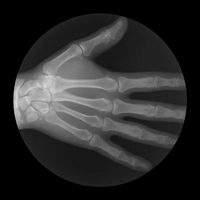
X-rays can penetrate matter and are used in medical imaging.
Radioactivity and Subatomic Particles
Radioactivity is the spontaneous emission of radiation from unstable atoms. This phenomenon revealed that atoms are composed of smaller particles.
Discovered by Henri Becquerel, Marie Curie, and Pierre Curie.
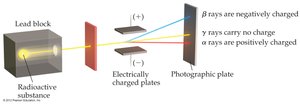
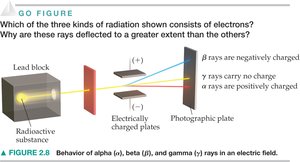
Three types of radiation (Ernest Rutherford):
Alpha particles (α): positively charged, helium nuclei
Beta particles (β): negatively charged, high-speed electrons
Gamma rays (γ): high-energy electromagnetic radiation, no charge
Thomson's Plum Pudding Model
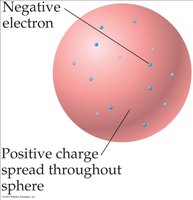
Thomson proposed the "plum pudding" model of the atom, where electrons are embedded in a positively charged sphere, like raisins in a pudding. This model attempted to explain the electrical neutrality of atoms.
Electrons are scattered throughout a diffuse positive charge.

Rutherford's Gold Foil Experiment and the Nuclear Model
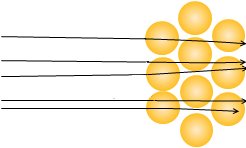
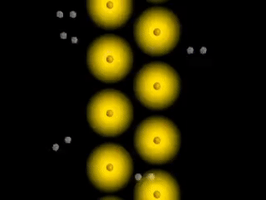
Ernest Rutherford's gold foil experiment demonstrated that atoms are mostly empty space with a small, dense, positively charged nucleus at the center. This led to the nuclear model of the atom.
Most alpha particles passed through the foil, but some were deflected at large angles.
Conclusion: Atoms have a tiny, dense nucleus containing protons (and later, neutrons).
Summary Table: Subatomic Particles
Particle | Symbol | Charge | Relative Mass | Location |
|---|---|---|---|---|
Proton | p+ | +1 | 1 | Nucleus |
Neutron | n0 | 0 | 1 | Nucleus |
Electron | e- | -1 | ~0 (1/1836 of proton) | Outside nucleus |
Key Experiments and Their Conclusions
Cathode Ray Tube (Thomson): Discovery of the electron
Gold Foil Experiment (Rutherford): Discovery of the nucleus
Oil-Drop Experiment (Millikan): Measurement of electron charge
Radioactivity (Becquerel, Curie): Discovery of alpha, beta, and gamma radiation
Additional info: The development of atomic theory involved a series of experiments that revealed the existence of subatomic particles and the internal structure of the atom, leading to the modern understanding of atomic structure.
