 Back
Atoms and Elements: Foundations of Modern Atomic Theory
Study Guide - Smart Notes
 Tailored notes based on your materials, expanded with key definitions, examples, and context.
Atoms and Elements
Brownian Motion: Atoms Confirmed
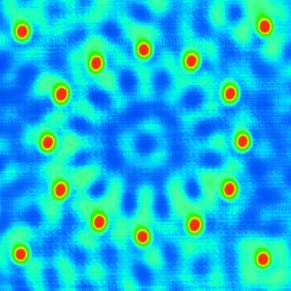
Brownian motion is the random, jittery movement of microscopic particles suspended in a fluid, first observed by Robert Brown in 1827. This phenomenon was later explained by Albert Einstein in 1905, who showed that the motion results from collisions with the molecules of the surrounding fluid, confirming the particulate nature of matter. Jean Perrin's experiments in 1908 validated Einstein's model, ending the debate about the existence of atoms.
Early Ideas about the Building Blocks of Matter
Ancient Greek philosophers Leucippus and Democritus proposed that matter is composed of small, indivisible particles called atomos. Their ideas were largely ignored for nearly 2000 years due to the influence of Plato and Aristotle, who believed matter was continuous. The scientific revolution in the 16th century revived the atomic concept, culminating in John Dalton's atomic theory in the early 1800s.
Modern Atomic Theory and the Laws That Led to It
Atomic theory is based on three fundamental laws:
Law of Conservation of Mass: In a chemical reaction, matter is neither created nor destroyed. The total mass of reactants equals the total mass of products.
Law of Definite Proportions: All samples of a given compound have the same proportions of their constituent elements. For example, water always decomposes into hydrogen and oxygen in an 8:1 mass ratio.
Law of Multiple Proportions: When two elements form more than one compound, the masses of one element that combine with a fixed mass of the other are in ratios of small whole numbers.
Law | Description | Example |
|---|---|---|
Conservation of Mass | Mass is conserved in reactions | Na + Cl2 → NaCl: Mass of reactants = Mass of product |
Definite Proportions | Fixed ratio of elements in compounds | H2O: 8g O to 1g H |
Multiple Proportions | Whole number ratios in different compounds | CO vs CO2: O/C ratios 1.33:1 and 2.67:1 |
Discovery of the Electron
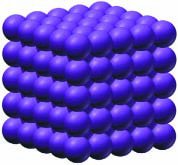
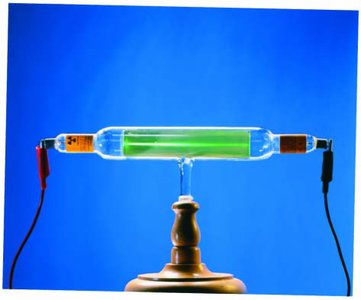
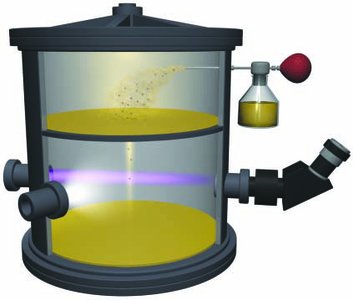
J. J. Thomson discovered the electron through experiments with cathode rays. He found that these rays were composed of negatively charged particles much lighter than atoms. Robert Millikan later measured the charge of the electron using the oil drop experiment, determining the fundamental charge as C.
The Structure of the Atom
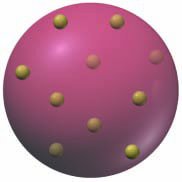
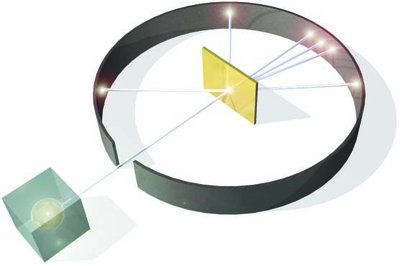
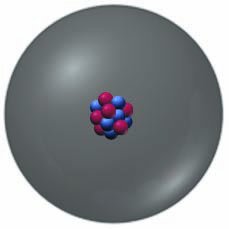
Thomson's plum-pudding model suggested electrons were embedded in a positively charged sphere. Ernest Rutherford's gold foil experiment disproved this, showing that atoms have a small, dense nucleus containing most of the mass and positive charge, surrounded by electrons in mostly empty space. James Chadwick later discovered the neutron, explaining the additional mass in the nucleus.
Subatomic Particles: Protons, Neutrons, and Electrons
Atoms are composed of three fundamental particles:
Proton: Mass ≈ 1 amu, charge +1
Neutron: Mass ≈ 1 amu, charge 0
Electron: Mass ≈ 0.00055 amu, charge -1
Particle | Mass (kg) | Mass (amu) | Charge (C) | Charge (relative) |
|---|---|---|---|---|
Proton | 1.67262 × 10⁻²⁷ | 1.00727 | +1.60218 × 10⁻¹⁹ | +1 |
Neutron | 1.67493 × 10⁻²⁷ | 1.00866 | 0 | 0 |
Electron | 0.00091 × 10⁻²⁷ | 0.00055 | -1.60218 × 10⁻¹⁹ | -1 |

Elements: Defined by Their Numbers of Protons
The number of protons in the nucleus (atomic number, Z) defines the element. Each element has a unique chemical symbol and atomic number. For example, helium (He) has Z = 2, carbon (C) has Z = 6.

Isotopes: When the Number of Neutrons Varies
Isotopes are atoms of the same element with different numbers of neutrons, resulting in different mass numbers (A). Isotopes are represented as or X-A. The natural abundance of isotopes is the relative percentage found in nature.
Symbol | Protons | Neutrons | Mass Number (A) | Natural Abundance (%) |
|---|---|---|---|---|
Ne-20 | 10 | 10 | 20 | 90.48 |
Ne-21 | 10 | 11 | 21 | 0.27 |
Ne-22 | 10 | 12 | 22 | 9.25 |
Ions: Losing and Gaining Electrons
Atoms can lose or gain electrons to form ions. Cations are positively charged (loss of electrons), and anions are negatively charged (gain of electrons). The number of electrons in an ion differs from the number of protons.
Finding Patterns: The Periodic Law and the Periodic Table
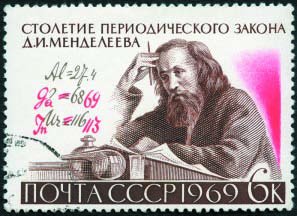
The periodic law states that when elements are arranged in order of increasing atomic number, certain sets of properties recur periodically. The periodic table organizes elements into groups (columns) and periods (rows), with similar properties grouped together.
Classification of Elements
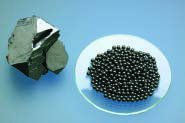
Metals: Good conductors, malleable, ductile, shiny, tend to lose electrons.
Nonmetals: Poor conductors, varied states, tend to gain electrons.
Metalloids: Intermediate properties, often semiconductors.
Atomic Mass: The Average Mass of an Element’s Atoms
Atomic mass is the weighted average of the masses of an element's isotopes, based on their natural abundances. It is calculated as:
Mass Spectrometry: Measuring the Mass of Atoms and Molecules
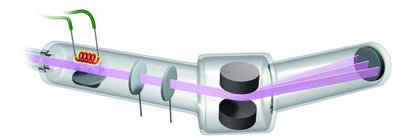
Mass spectrometry separates ions by mass, allowing determination of atomic masses and isotope abundances. The mass spectrum displays peaks for each isotope, with intensity proportional to abundance.
Molar Mass: Counting Atoms by Weighing Them
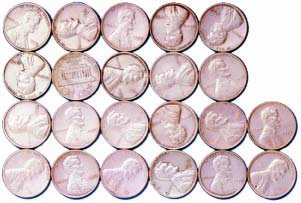
The mole (mol) is the amount of substance containing particles (Avogadro's number). The molar mass (g/mol) of an element is numerically equal to its atomic mass (amu). This allows conversion between mass, moles, and number of atoms:
Summary Table: Key Terms and Concepts
Term | Definition |
|---|---|
Atom | Smallest unit of an element |
Isotope | Atoms of same element with different neutrons |
Ion | Charged atom (cation or anion) |
Mole | 6.022 × 10²³ particles |
Molar Mass | Mass of 1 mol of substance |
Atomic Number (Z) | Number of protons |
Mass Number (A) | Protons + Neutrons |
Periodic Law | Recurring properties by atomic number |
Example Calculations
Law of Definite Proportions: For water,
Atomic Mass Calculation: amu (for chlorine)
Mole Conversion:
Additional info:
Mass spectrometry is also used to analyze molecules and biological samples.
Periodic table organization helps predict chemical behavior and ion formation.
