 Back
BackAtoms and Elements: Foundations of Modern Chemistry
Study Guide - Smart Notes
 Tailored notes based on your materials, expanded with key definitions, examples, and context.
Atoms and Elements
Definition and Importance of Atoms
Atoms are the fundamental building blocks of matter. Understanding their structure and properties is essential for comprehending the nature of all substances. - Atom: The smallest identifiable unit of an element, indivisible by chemical means. - Element: A substance composed entirely of one type of atom. - There are about 91 naturally occurring elements, with over 20 synthetic elements created by scientists.
Early Ideas About the Building Blocks of Matter
The concept of atoms originated in ancient Greece, but scientific evidence supporting their existence emerged much later. - Leucippus and Democritus: Proposed that matter is composed of small, indestructible particles called "atomos." - They suggested that different kinds of atoms exist, varying in shape and size, and move randomly through empty space. 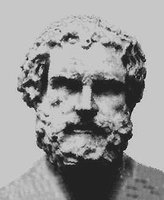 - Plato and Aristotle: Rejected atomic theory, believing matter had no smallest parts and was made of fire, air, earth, and water in various proportions.
Scientific Approach and Dalton's Atomic Theory
The scientific method led to the acceptance of atomic theory. - John Dalton: Provided evidence for the existence of atoms and formulated the atomic theory. 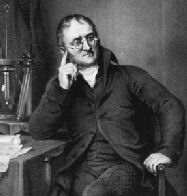 - Dalton's atomic theory states: 1. Each element is composed of tiny, indestructible particles called atoms. 2. All atoms of a given element have the same mass and properties. 3. Atoms combine in simple, whole-number ratios to form compounds. 4. Atoms of one element cannot change into atoms of another element; they only rearrange during chemical reactions.
Connecting Macroscopic and Microscopic Worlds
Atoms link the observable properties of matter to its microscopic structure. - Example: Hydrogen and oxygen atoms combine to form water molecules. 
Modern Atomic Theory and Fundamental Laws
The Law of Conservation of Mass
- Antoine Lavoisier: Formulated the law stating that matter is neither created nor destroyed in a chemical reaction. - Implication: The total mass of substances remains constant during a reaction.
The Law of Definite Proportions
- Joseph Proust: Observed that all samples of a compound have the same proportions of constituent elements. - Example: Water always decomposes into 16.0 g oxygen and 2.0 g hydrogen, a mass ratio of 8:1.
The Law of Multiple Proportions
- John Dalton: When two elements form different compounds, the masses of one element that combine with a fixed mass of the other are in small whole-number ratios. - Example: Carbon monoxide (CO) and carbon dioxide (CO2) have oxygen-to-carbon mass ratios of 1.33:1 and 2.67:1, respectively.
Discovery of Subatomic Particles
Thomson's Model and the Electron
- J.J. Thomson: Discovered the electron, a negatively charged particle much smaller than atoms. - Electrons are present in all types of substances. - Thomson measured the charge-to-mass ratio of the electron: coulombs/g. 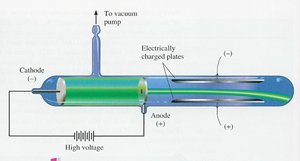
Millikan's Oil Drop Experiment
- Robert Millikan: Determined the charge of a single electron by measuring the electric field needed to halt oil drops. - The charge of each drop was always a whole-number multiple of the fundamental electron charge.
Structure of the Atom: Plum-Pudding Model
- Thomson proposed that electrons are embedded in a positively charged sphere, like "plums" in "pudding."
Radioactivity and Rutherford's Gold Foil Experiment
- Radioactivity: Spontaneous emission of radiation by atoms, discovered by Henri Becquerel and studied by Marie and Pierre Curie. - Ernest Rutherford: Directed alpha particles at gold foil, observing unexpected deflections. - Concluded that atoms contain a dense, positively charged nucleus surrounded by electrons in mostly empty space. - Proposed the nuclear theory: 1. Most mass and all positive charge are in the nucleus. 2. Most volume is empty space with dispersed electrons. 3. Number of electrons equals number of protons, making atoms neutral.
Neutrons
- James Chadwick: Discovered neutrons, neutral particles in the nucleus with mass similar to protons. - Helium has two protons and two neutrons; hydrogen has one proton and no neutrons.
Subatomic Particles and Atomic Structure
Types of Subatomic Particles
- Protons (p+): Positively charged, mass ≈ 1 amu. - Neutrons (n0): Neutral, mass ≈ 1 amu. - Electrons (e-): Negatively charged, mass ≈ 1/1836 amu. - The charge of protons and electrons is equal in magnitude but opposite in sign.
Atomic Number and Mass Number
- Atomic Number (Z): Number of protons in the nucleus; defines the element. - Mass Number: Total number of protons and neutrons in the atom.
Isotopes
- Atoms of the same element with different numbers of neutrons are called isotopes. - Isotopes have the same atomic number but different mass numbers. - Example: Carbon has isotopes , , , . - Natural abundance refers to the relative amount of each isotope in a sample.
Ions
- Atoms can lose or gain electrons during chemical changes, forming ions. - Cations: Positively charged ions (loss of electrons). - Anions: Negatively charged ions (gain of electrons).
The Periodic Table and Classification of Elements
Structure of the Periodic Table
- Elements are arranged by increasing atomic number. - Each element has a unique chemical symbol (one or two letters). - Rows are called periods; columns are called groups.
Groups and Periodicity
- Elements in the same group have similar properties. - Noble Gases (Group 8A): Unreactive, stable (e.g., helium, neon, argon). - Alkali Metals (Group 1A): Highly reactive metals (e.g., sodium, lithium). - Alkaline Earth Metals (Group 2A): Fairly reactive metals (e.g., calcium, magnesium). - Halogens (Group 7A): Very reactive nonmetals (e.g., fluorine, chlorine).
Classification of Elements
- Metals: Left and middle of the table; good conductors, malleable, ductile, shiny, tend to lose electrons. - Nonmetals: Right side; poor conductors, not malleable or ductile, tend to gain electrons. - Metalloids: Border the stair-step line; exhibit mixed properties, often semiconductors.
Main-Group and Transition Elements
- Main-group elements: Properties predictable based on position. - Transition elements: Properties less predictable.
Atomic Mass and Mole Concept
Atomic Mass
- Atomic mass: Average mass of an element's atoms, weighted by natural abundance of isotopes. - Example: Chlorine's atomic mass is calculated from its isotopes: amu.
Mole Concept
- Mole (mol): Quantity containing entities (Avogadro's number). - 1 mole of has a mass of 12 g. - Molar mass: Mass of one mole of substance (g/mol), numerically equal to atomic mass in amu. - Example: 1 mole of chlorine = 35.45 g.
Conversions Using Moles
- Molar mass is a conversion factor between grams and moles. - Avogadro's number is a conversion factor between atoms/molecules and moles. - Example calculation: 1. Find moles of Hg in 75.0 g Hg: 2. Find number of Hg atoms:
Summary Table: Subatomic Particles
Particle | Symbol | Charge | Approximate Mass (amu) |
|---|---|---|---|
Proton | p+ | +1 | 1 |
Neutron | n0 | 0 | 1 |
Electron | e- | -1 | 1/1836 |
Summary Table: Classification of Elements
Type | Location | Properties |
|---|---|---|
Metals | Left/middle | Conductive, malleable, ductile, shiny, lose electrons |
Nonmetals | Right | Poor conductors, not malleable/ductile, gain electrons |
Metalloids | Border stair-step | Mixed properties, semiconductors |
Key Equations
Average Atomic Mass: Mole Calculations: Mass Number: Atomic Number: Charge of Ion:
Additional info:
- The notes expand on brief points to provide academic context, definitions, and examples. - Tables are recreated for clarity and classification. - Images are included only when directly relevant to the explanation.
