 Back
BackAtoms, Elements, and Compounds: Foundations of Matter and Atomic Structure
Study Guide - Smart Notes
 Tailored notes based on your materials, expanded with key definitions, examples, and context.
Atoms, Elements, and Compounds
Classifying Matter
Chemistry is the study of matter, its properties, the changes it undergoes, and the energy associated with these changes. Matter is anything that has mass and volume, forming the 'stuff' of the universe. Understanding how matter is classified is fundamental to general chemistry.
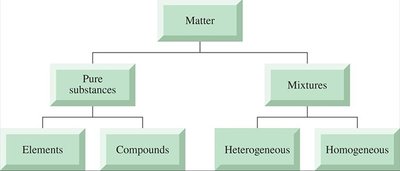
Matter can be divided into pure substances and mixtures.
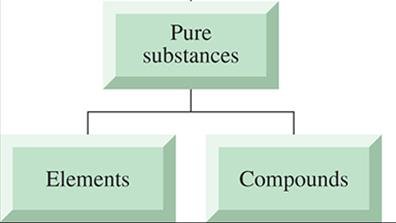
Pure substances have a definite, fixed composition and distinct properties. They are further classified as elements and compounds.
Mixtures consist of two or more elements and/or compounds physically intermingled. They do not require chemical reactions to form or separate.
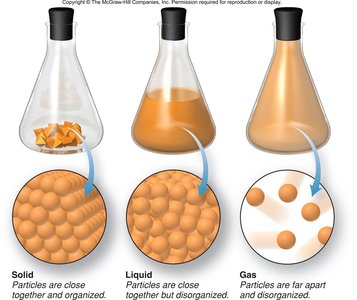
States of Matter
Solids: Fixed shape and definite volume; particles are close together and organized.
Liquids: Indefinite shape but definite volume; particles are close together but disorganized.
Gases: Indefinite shape and volume; particles are far apart and disorganized.
Pure Substances
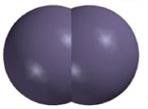
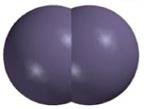
Elements: Simplest type of pure substance with unique physical and chemical properties. Contains only one type of atom (e.g., O2, N2, Ar).
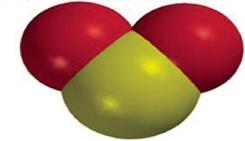
Compounds: Pure substances composed of two or more different elements chemically combined (e.g., H2O, CO2). Can be decomposed into elements by chemical reactions.
Mixtures
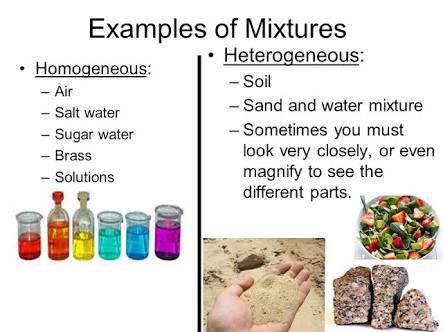
Heterogeneous mixtures: Composition varies throughout (e.g., milk, sand and water mixture).
Homogeneous mixtures: Uniform composition throughout (e.g., air, salt water, sugar water).
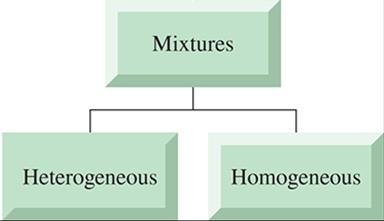
Classification Table
The following table summarizes the classification of matter:
Matter | Pure Substances | Mixtures |
|---|---|---|
Elements Compounds | Heterogeneous Homogeneous |
Atoms and Atomic Structure
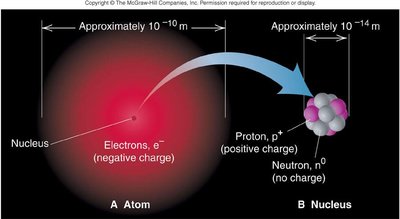
Atoms are the smallest unit of an element that retains the chemical properties of the element. They are the basic building blocks of all matter and are composed of subatomic particles: protons, neutrons, and electrons.
Protons: Positively charged, located in the nucleus.
Neutrons: No charge, located in the nucleus.
Electrons: Negatively charged, orbit the nucleus.
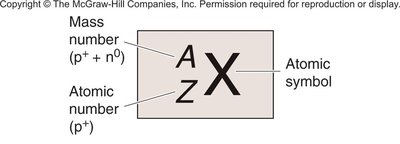
Atomic number (Z): Number of protons in the nucleus; defines the element.
Mass number (A): Sum of protons and neutrons.
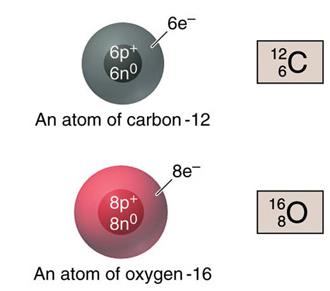
Isotopes: Atoms of the same element with different numbers of neutrons.
Electron Shells and Valence Electrons
Electrons occupy specific energy levels or shells around the nucleus. The outermost shell contains the valence electrons, which are responsible for chemical bonding and reactivity.
Valence electrons: Electrons in the outermost shell; determine chemical properties.
Electron shells: Energy levels where electrons reside; each shell can hold a specific number of electrons.
Physical and Chemical Properties
Properties of matter are classified as either physical or chemical:
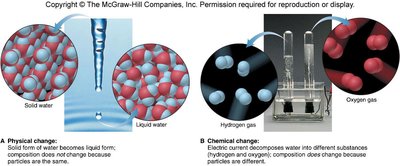
Physical properties: Can be observed without changing the composition (e.g., shape, melting point, boiling point, density).
Chemical properties: Can only be observed during a chemical change (e.g., flammability, corrosiveness).
Physical change: Alters appearance but not composition (e.g., melting ice).
Chemical change: Alters composition, producing new substances (e.g., burning wood).
Extensive and Intensive Properties
Properties of matter can also be classified as extensive or intensive:
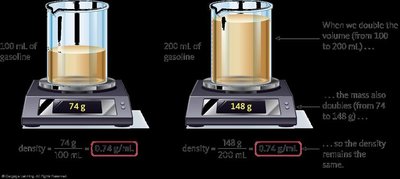
Extensive properties: Depend on the amount of substance (e.g., mass, volume).
Intensive properties: Independent of sample size (e.g., density, temperature).
Atomic Theory and Historical Models
The development of atomic theory has shaped our understanding of matter:
Democritus (460 BC): Proposed that matter consists of indivisible atoms.
John Dalton (Early 1800s): Developed atomic theory, stating that all matter consists of atoms, atoms of one element are identical, and compounds are formed from specific ratios of atoms.
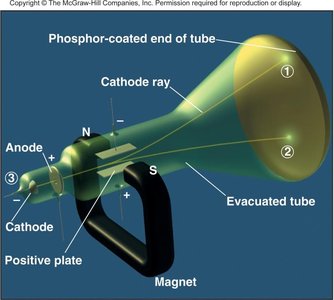
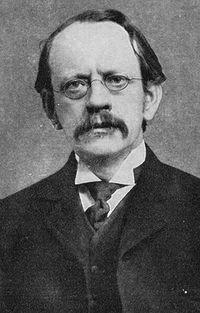
J.J. Thomson (1897): Discovered the electron and proposed the 'plum-pudding' model.
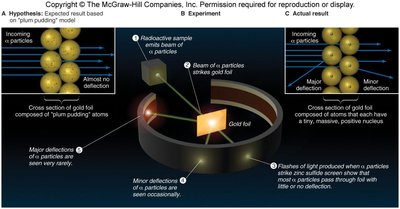
Ernest Rutherford: Discovered the nucleus through the alpha-scattering experiment.
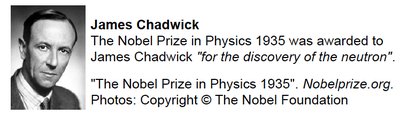
James Chadwick (1932): Discovered the neutron.

Atomic Number, Mass Number, and Isotopes
Each element is defined by its atomic number (number of protons). The mass number is the sum of protons and neutrons. Isotopes are atoms of the same element with different numbers of neutrons.
Atomic symbol: Represents the element, mass number, and atomic number.
Isotopes: Example: Carbon-12 and Oxygen-16.
Light, Atomic Structure, and the Bohr Atom
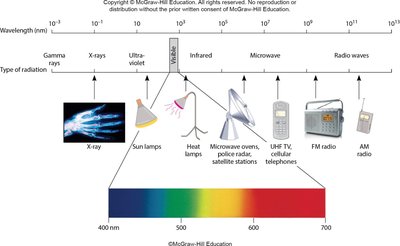
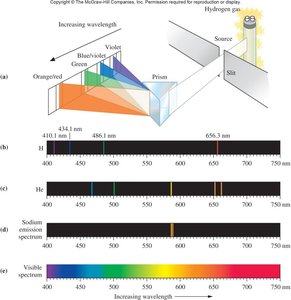
Electrons in atoms can be excited to higher energy levels and emit light when they return to lower energy levels. Understanding electromagnetic radiation is key to atomic structure.
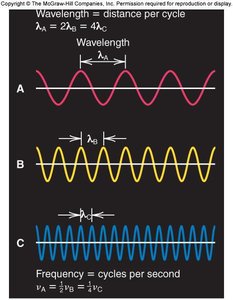
Electromagnetic radiation: Travels in waves; speed of light is m/s.
Wave equation: where is speed, is frequency, is wavelength.
Bohr model: Electrons travel in quantized orbits; energy levels are discrete.
Energy of Light and Electron Transitions
The energy of light is proportional to its frequency. Electrons transition between energy levels by absorbing or emitting photons.
Energy equation: where is Planck's constant ( J·s).
Bohr energy equation: where J.
Transition energy:
Rydberg equation:
Summary Table: Subatomic Particles
Particle | Charge | Mass (amu) |
|---|---|---|
Proton (p+) | +1 | 1 |
Neutron (n0) | 0 | 1 |
Electron (e-) | -1 | 1/1800 |
Key Equations
Wave equation:
Energy of photon:
Bohr energy levels:
Transition energy:
Rydberg equation:
Examples and Applications
Classification of coconut water: Mixture (contains water, minerals, sugars).
Physical change: Boiling water becomes steam (no change in composition).
Chemical change: Burning wood (composition changes, new substances formed).
Additional info:
Atomic mass unit (amu) is defined as the mass of one proton or one neutron.
Electrons are much lighter than protons and neutrons.
Emission spectra are used in spectroscopy to analyze electronic structure.
