 Back
BackAtoms, Elements, Compounds, and Chemical Bonds: Essential Concepts for General Chemistry
Study Guide - Smart Notes
 Tailored notes based on your materials, expanded with key definitions, examples, and context.
States of Matter
Solids, Liquids, and Gases
Understanding the three primary states of matter is fundamental in chemistry. Each state is characterized by distinct physical properties:
Solids: Have a fixed shape and volume.
Liquids: Have a fixed volume but assume the shape of their container.
Gases: Have neither fixed shape nor volume; they expand to fill their container.
Physical vs. Chemical Changes
Changes in matter can be classified as physical or chemical:
Physical Change: Alters the state or appearance of matter without changing its composition. Example: Water freezing to ice.
Chemical Change: Involves the rearrangement of atoms, resulting in new substances. Example: Combustion of hydrogen to form water.
Classification of Matter
Types of Matter
Matter is anything that occupies space and has mass. It can be classified as:
Atoms: The basic units of matter.
Elements: Pure substances consisting of only one type of atom.
Molecules: Groups of atoms bonded together.
Compounds: Substances formed from two or more elements chemically bonded.
Mixtures: Physical combinations of two or more substances.
Atoms and Elements
Atomic Structure
Atoms consist of protons, neutrons, and electrons:
Protons: Positively charged particles in the nucleus.
Neutrons: Neutral particles in the nucleus.
Electrons: Negatively charged particles orbiting the nucleus.
The number of protons defines the element (atomic number), and in a neutral atom, the number of electrons equals the number of protons.
Atomic Mass and Isotopes
Atomic mass is the sum of protons and neutrons. Isotopes are atoms of the same element with different numbers of neutrons.
Example: Neon has three isotopes: Ne-20, Ne-21, Ne-22.
Average atomic mass is calculated using the natural abundance of each isotope:
Sample Calculation
For Neon:
Ne-20: 90.48%
Ne-21: 0.27%
Ne-22: 9.25%
Periodic Table and Ionic Charge Trends
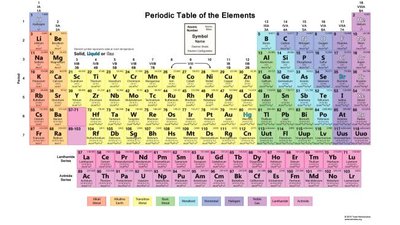
Periodic Table Overview
The periodic table organizes elements by increasing atomic number and groups elements with similar properties.
Ionic Charge Trends
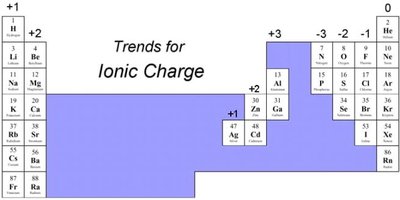
Elements tend to form ions with characteristic charges based on their group in the periodic table:
Group 1: +1
Group 2: +2
Group 13: +3
Group 15: -3
Group 16: -2
Group 17: -1
Group 18: 0 (noble gases)
Chemical Bonds
Ionic and Covalent Bonds
Chemical bonds are the forces holding atoms together in compounds:
Ionic Bonds: Formed between metals and nonmetals by transfer of electrons.
Covalent Bonds: Formed between nonmetals by sharing electrons.
Formulas and Naming Compounds
Compounds are represented by chemical formulas. Naming conventions differ for ionic and molecular compounds:
Ionic Compounds: Name of metal (or transition metal with Roman numeral for charge) + name of nonmetal (ending in "-ide") or polyatomic ion.
Molecular Compounds: Prefix + name of first nonmetal, prefix + name of second nonmetal (ending in "-ide"). The prefix "mono" is not used for the first element.
Numerical Prefixes for Molecular Compounds
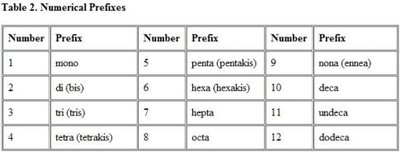
Prefixes indicate the number of atoms in molecular compounds:
Number | Prefix | Number | Prefix | Number | Prefix |
|---|---|---|---|---|---|
1 | mono | 5 | penta | 9 | nona |
2 | di | 6 | hexa | 10 | deca |
3 | tri | 7 | hepta | 11 | undeca |
4 | tetra | 8 | octa | 12 | dodeca |
Polyatomic Ions
Common Polyatomic Ions
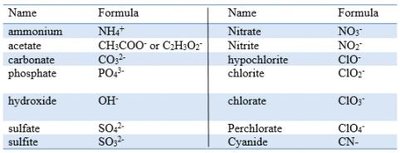
Polyatomic ions are charged groups of covalently bonded atoms. Familiarity with their names and formulas is essential for naming compounds:
Name | Formula | Name | Formula |
|---|---|---|---|
ammonium | NH4+ | nitrate | NO3- |
acetate | CH3COO- | nitrite | NO2- |
carbonate | CO32- | hypochlorite | ClO- |
phosphate | PO43- | chlorite | ClO2- |
hydroxide | OH- | chlorate | ClO3- |
sulfate | SO42- | perchlorate | ClO4- |
sulfite | SO32- | cyanide | CN- |
Empirical and Molecular Formulas
Determining Formulas
The empirical formula shows the simplest ratio of elements in a compound, while the molecular formula gives the actual number of atoms of each element in a molecule.
Example: Benzene's molecular formula is C6H6, empirical formula is CH.
To determine the molecular formula:
Calculate the empirical formula mass.
Divide the molar mass by the empirical formula mass to find the multiplier (N).
Multiply the empirical formula by N.
Avogadro's Number and Moles
Avogadro's Number
One mole of any substance contains particles (atoms, molecules, or ions).
Scientific Notation and Metric Prefixes
Metric Prefixes
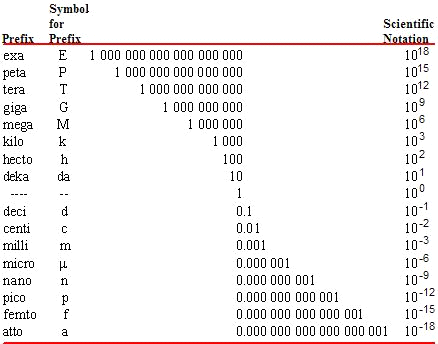
Metric prefixes are used to express quantities in scientific notation:
Prefix | Symbol | Value | Scientific Notation |
|---|---|---|---|
exa | E | 1,000,000,000,000,000,000 | 1018 |
peta | P | 1,000,000,000,000,000 | 1015 |
tera | T | 1,000,000,000,000 | 1012 |
giga | G | 1,000,000,000 | 109 |
mega | M | 1,000,000 | 106 |
kilo | k | 1,000 | 103 |
hecto | h | 100 | 102 |
deka | da | 10 | 101 |
-- | -- | 1 | 100 |
deci | d | 0.1 | 10-1 |
centi | c | 0.01 | 10-2 |
milli | m | 0.001 | 10-3 |
micro | μ | 0.000001 | 10-6 |
nano | n | 0.000000001 | 10-9 |
pico | p | 0.000000000001 | 10-12 |
femto | f | 0.000000000000001 | 10-15 |
atto | a | 0.000000000000000001 | 10-18 |
Summary Table: Atoms, Elements, Molecules, Compounds, Mixtures
Type | Atoms | Elements | Molecules | Compounds | Mixture |
|---|---|---|---|---|---|
A | 3 | 1 | 0 | 0 | No |
B | 9 | 3 | 3 | 3 | Yes |
C | 6 | 1 | 3 | 0 | No |
Additional info:
Some content was inferred and expanded for clarity and completeness, such as definitions and formula derivations.
Tables were recreated and expanded for academic context.
