 Back
Atoms, Molecules, and Ions: Structure, Properties, and Nomenclature
Study Guide - Smart Notes
 Tailored notes based on your materials, expanded with key definitions, examples, and context.
Atoms, Molecules, and Ions
Atomic Structure and the Discovery of the Nucleus
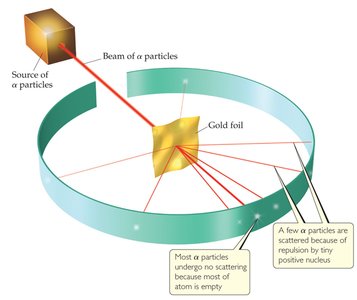
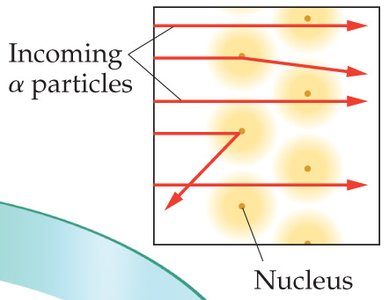
The structure of the atom was elucidated through key experiments, most notably Rutherford’s α-scattering experiment. This experiment demonstrated that atoms consist of a tiny, dense, positively charged nucleus surrounded by electrons occupying most of the atom’s volume.
Rutherford’s α-scattering experiment: Alpha particles were directed at a thin gold foil. Most passed through, but a few were deflected, indicating a dense nucleus.
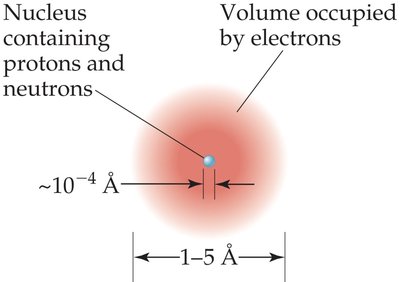
Conclusion: The atom is mostly empty space, with a central nucleus containing protons and neutrons.
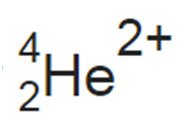
Alpha particle: An α particle is a helium nucleus, denoted as .
Subatomic Particles: Protons, Neutrons, and Electrons
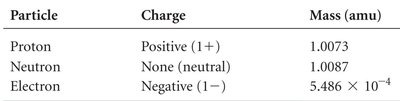
Atoms are composed of three fundamental particles: protons, neutrons, and electrons. The nucleus contains protons and neutrons, while electrons occupy the surrounding space.
Proton: Positive charge (+1), mass ≈ 1 amu
Neutron: Neutral, mass ≈ 1 amu
Electron: Negative charge (-1), mass ≈ amu
Atomic mass unit (amu): 1 amu = g
Particle | Charge | Mass (amu) |
|---|---|---|
Proton | Positive (1+) | 1.0073 |
Neutron | None (neutral) | 1.0087 |
Electron | Negative (1−) | 5.486 × 10⁻⁴ |
Atomic Number, Mass Number, and Atomic Weight
Each element is defined by its atomic number (number of protons). The mass number is the sum of protons and neutrons. Atomic weight is the weighted average mass of an element’s isotopes.
Atomic number (Z): Number of protons in the nucleus
Mass number (A): (N = number of neutrons)
Atomic weight: Weighted average of isotopic masses
Isotopes
Isotopes are atoms of the same element (same number of protons) but different numbers of neutrons. Isotopes have nearly identical chemical properties but different physical properties.
Example: and both have 6 protons, but $^{13}\mathrm{C}$ has 7 neutrons.
Isotope notation: where A = mass number, Z = atomic number, X = element symbol
Symbol | Number of Protons | Number of Electrons | Number of Neutrons |
|---|---|---|---|
6 | 6 | 6 | |
6 | 6 | 7 |

The Periodic Table
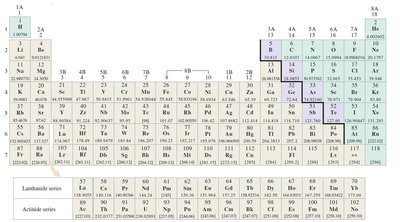
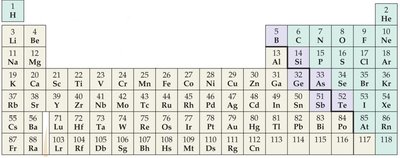
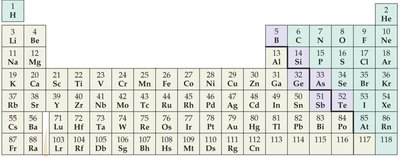
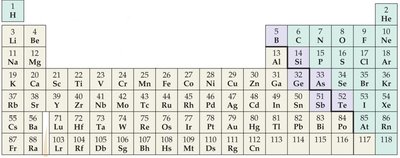
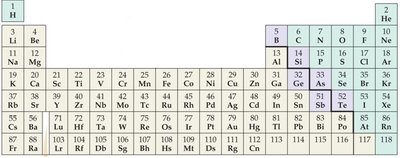
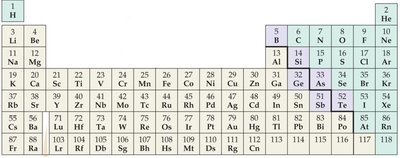
The periodic table organizes elements by increasing atomic number and groups elements with similar chemical properties. Groups (columns) and periods (rows) are key structural features.
Groups: Elements in the same column have similar properties.
Periods: Elements in the same row have increasing atomic number.
Alkali metals (Group 1A): Tend to lose 1 electron
Alkaline earth metals (Group 2A): Tend to lose 2 electrons
Chalcogens (Group 6A): Tend to gain 2 electrons
Halogens (Group 7A): Tend to gain 1 electron
Noble gases (Group 8A): Do not gain or lose electrons
Cations, Anions, and Ionic Compounds
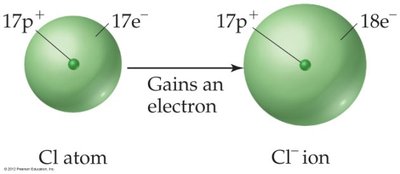
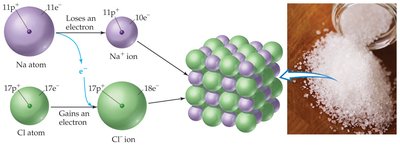
Atoms can gain or lose electrons to form ions. Metals tend to lose electrons, forming cations (positive ions), while nonmetals tend to gain electrons, forming anions (negative ions). Ionic compounds are formed from the electrostatic attraction between cations and anions.
Cation: Formed by loss of electrons (e.g., Na+)
Anion: Formed by gain of electrons (e.g., Cl−)
Ionic compound: Combination of cation and anion (e.g., NaCl)
Molecular compound: Formed by nonmetals sharing electrons
Naming Ionic Compounds
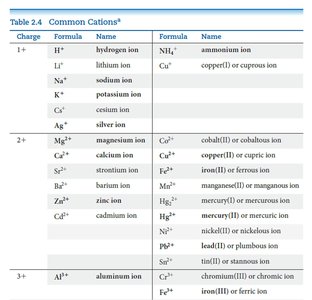
Ionic compounds are named by stating the cation first, followed by the anion. For cations with multiple possible charges, the charge is indicated in parentheses using Roman numerals.
Single charge cations: Groups 1A, 2A, Ag+, Zn2+, Cd2+, Al3+
Multiple charge cations: Fe2+ (iron(II)), Fe3+ (iron(III)), Cu+ (copper(I)), Cu2+ (copper(II))
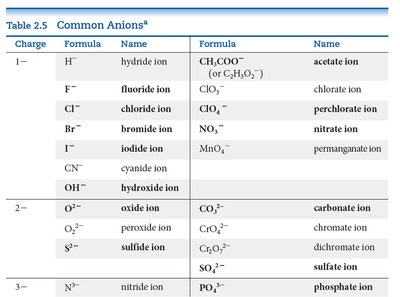
Anions: Named by adding -ide (e.g., oxide, fluoride, cyanide, hydroxide)
Oxyanions: Anions containing oxygen (e.g., chlorate, chlorite, carbonate, phosphate)
Compound naming: Name of cation + name of anion (e.g., CaCl2 is calcium chloride)
Charge | Formula | Name |
|---|---|---|
1+ | Na+ | sodium ion |
2+ | Mg2+ | magnesium ion |
3+ | Al3+ | aluminum ion |
Charge | Formula | Name |
|---|---|---|
1− | Cl− | chloride ion |
2− | O2− | oxide ion |
3− | N3− | nitride ion |
Naming Molecular Compounds
Molecular compounds are named using Greek prefixes to indicate the number of atoms. The first element is named as is, and the second element’s name ends in -ide.
Prefixes: mono-, di-, tri-, tetra-, penta-, hexa-, etc.
Example: P4S10 is tetraphosphorus decasulfide; SO2 is sulfur dioxide; Cl2O is dichlorine monoxide
Naming Acids
Acids are named based on the anion they contain. If the anion ends in -ide, the acid name begins with "hydro-" and ends with "-ic." If the anion ends in -ate or -ite, the acid name ends in "-ic" or "-ous," respectively.
Example: Cl− (chloride) forms HCl (hydrochloric acid); S2− (sulfide) forms H2S (hydrosulfuric acid)
Example: ClO3− (chlorate) forms HClO3 (chloric acid); ClO2− (chlorite) forms HClO2 (chlorous acid)
Summary Table: Key Concepts
Concept | Definition |
|---|---|
Atom | Smallest unit of an element, contains protons, neutrons, electrons |
Isotope | Atoms of same element with different numbers of neutrons |
Cation | Positively charged ion (loss of electrons) |
Anion | Negatively charged ion (gain of electrons) |
Ionic compound | Compound formed from cation and anion |
Molecular compound | Compound formed from nonmetals sharing electrons |
Additional info: The notes include periodic table images and tables of common ions, which are essential for understanding atomic structure, isotopes, and chemical nomenclature. All content is directly relevant to General Chemistry Chapter 2: Atoms, Molecules, and Ions.
