 Back
Chapter 8: Basic Concepts of Chemical Bonding – General Chemistry Study Notes
Study Guide - Smart Notes
 Tailored notes based on your materials, expanded with key definitions, examples, and context.
Basic Concepts of Chemical Bonding
Introduction to Chemical Bonds
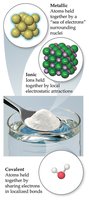
Chemical bonds are the forces that hold atoms together in compounds. There are three primary types of chemical bonds: ionic, covalent, and metallic. Each type of bond arises from different interactions between electrons and nuclei of atoms.
Ionic Bonds: Result from electrostatic attraction between oppositely charged ions, typically formed between metals and nonmetals.
Covalent Bonds: Involve the sharing of electrons between nonmetal atoms.
Metallic Bonds: Involve a 'sea of electrons' that are free to move around, holding metal atoms together.
Lewis Symbols and the Octet Rule
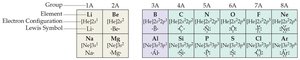
G. N. Lewis introduced a method to represent valence electrons using dots around the element symbol, known as Lewis symbols. The octet rule states that atoms tend to gain, lose, or share electrons to achieve eight valence electrons, similar to the electron configuration of noble gases.
Ionic Bonding
Formation of Ionic Bonds
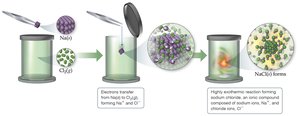
Ionic bonds are typically formed between metals (which lose electrons easily) and nonmetals (which gain electrons easily). The process is highly exothermic due to the strong attraction between the resulting ions.
Electron Transfer in Ionic Bonding
One atom (usually a metal) donates an electron to another atom (usually a nonmetal), resulting in the formation of cations and anions. The transfer is often represented with arrows in Lewis structures.

Properties of Ionic Substances
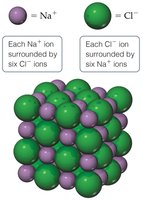
Brittle and crystalline in structure
High melting points
Cleave along smooth planes due to their well-defined 3D lattice
Energetics of Ionic Bonding: The Born–Haber Cycle
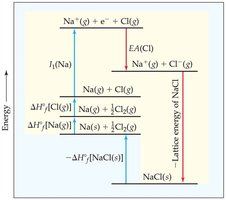
The Born–Haber cycle is used to analyze the energetics of ionic compound formation. It considers the energy changes involved in converting elements to ions and then forming the ionic solid.
Energy is required to convert elements to gaseous atoms (endothermic).
Energy is required to create cations (endothermic).
Energy is released when anions are formed (exothermic).
Formation of the ionic solid releases a large amount of energy (exothermic).
Lattice Energy
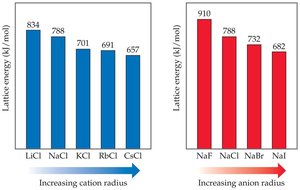
Lattice energy is the energy required to completely separate one mole of a solid ionic compound into its gaseous ions. It is a measure of the strength of the ionic bonds in a solid.
Lattice energy increases with increasing ionic charge and decreasing ionic radius.
Electron Configuration of Ions
Main group metals lose electrons to achieve the electron configuration of the previous noble gas.
Nonmetals gain electrons to achieve the configuration of the nearest noble gas.
Transition metals lose valence electrons first, then d-electrons as needed for the ion's charge.
Covalent Bonding
Nature of Covalent Bonds
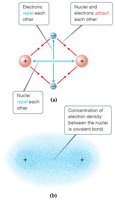
Covalent bonds involve the sharing of electrons between atoms. The stability of the bond depends on the balance between attractive and repulsive electrostatic forces.
Attractions: Between electrons and nuclei
Repulsions: Between electrons and between nuclei
Lewis Structures for Covalent Molecules
Lewis structures are used to represent the sharing of electrons in covalent bonds. Each atom aims to achieve a noble gas configuration by sharing electrons.

Number of Bonds for Nonmetals
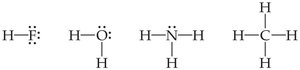
The number of bonds a nonmetal forms is typically equal to the number of electrons needed to complete its octet.
Lone Pairs and Bonding Pairs
Lone pairs: Electrons located on only one atom
Bonding pairs: Shared electrons between two atoms
Multiple Bonds
Atoms can share more than one pair of electrons, resulting in single, double, or triple bonds. Multiple bonds are generally stronger and shorter than single bonds.


Bond Polarity and Electronegativity
Polarity of Bonds
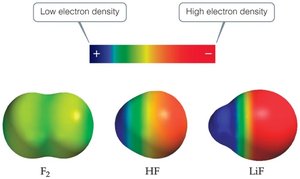
Bond polarity describes the distribution of electron density in a covalent bond. If electrons are shared equally, the bond is nonpolar; if not, the bond is polar.
Electronegativity
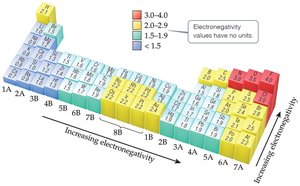
Electronegativity is the ability of an atom to attract electrons in a chemical bond. It generally increases across a period and decreases down a group in the periodic table.
Electronegativity and Polar Covalent Bonds
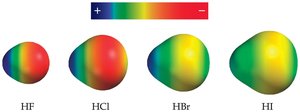
The greater the difference in electronegativity between two atoms, the more polar the bond. Partial charges develop, but electrons are not fully transferred.
Dipole Moments
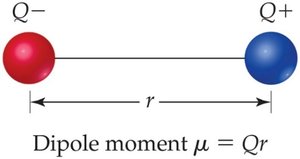
A dipole moment arises when two equal but opposite charges are separated by a distance. It is a measure of bond polarity and is calculated as:
where is the magnitude of the charge and is the distance between charges. Dipole moments are measured in debyes (D).
Identifying Ionic vs. Covalent Compounds
Metal + nonmetal: usually ionic
Nonmetal + nonmetal: usually covalent
Exceptions exist, especially with transition metals and high oxidation states
Physical properties (e.g., melting point) can help distinguish bond type
Writing Lewis Structures
Steps for Drawing Lewis Structures
Sum the valence electrons from all atoms (adjust for overall charge).
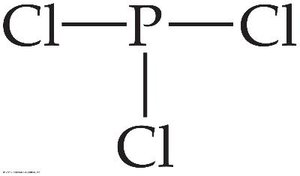
Write the symbols for the atoms, connect them with single bonds.
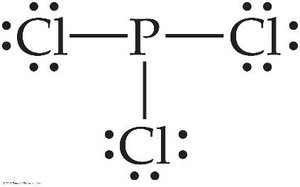
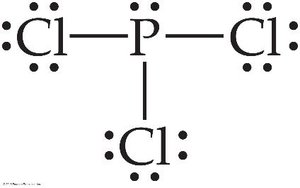
Complete the octets around atoms bonded to the central atom.
Place any remaining electrons on the central atom.
If the central atom lacks an octet, form multiple bonds as needed.
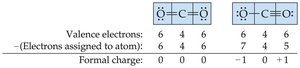
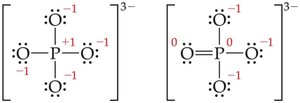
Assign formal charges to each atom to determine the most stable structure.


Formal Charge
Formal charge is calculated as:
The best Lewis structure minimizes formal charges and places negative charges on the most electronegative atoms.
Resonance and Exceptions to the Octet Rule
Resonance Structures
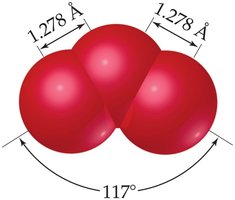
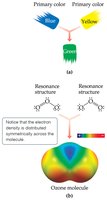
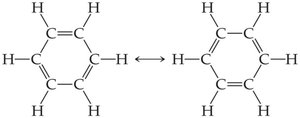
Some molecules cannot be adequately described by a single Lewis structure. Resonance structures are used to represent delocalized electrons within molecules like ozone (O3) and benzene (C6H6).

Exceptions to the Octet Rule
Odd number of electrons: Molecules with an odd number of electrons (e.g., NO) are rare and often highly reactive.
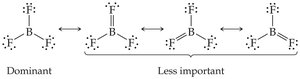
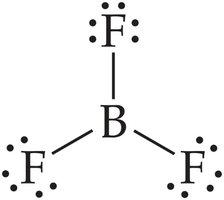
Fewer than eight electrons: Elements like boron can form stable compounds with less than an octet (e.g., BF3).
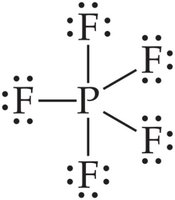
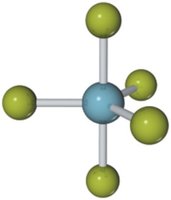
More than eight electrons (expanded octet): Elements in period 3 or higher can have more than eight valence electrons (e.g., PF5, phosphate ion).

Bond Enthalpy and Bond Length
Average Bond Enthalpies
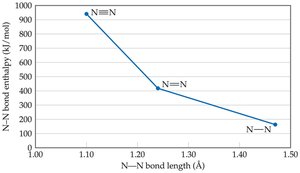
Bond enthalpy is the energy required to break a bond in one mole of a gaseous substance. It is always positive (endothermic). Multiple bonds are stronger and shorter than single bonds.
Bond Enthalpy and Bond Length Relationship
As the number of bonds between two atoms increases, the bond length decreases and the bond enthalpy increases.
Summary Table: Types of Chemical Bonds
Bond Type | Formation | Example | Properties |
|---|---|---|---|
Ionic | Electron transfer (metal + nonmetal) | NaCl | High melting point, crystalline, brittle |
Covalent | Electron sharing (nonmetal + nonmetal) | H2O | Lower melting point, molecules |
Metallic | Delocalized electrons (metal atoms) | Fe, Cu | Conductive, malleable, ductile |
Additional info: These notes cover the essential concepts of chemical bonding, including the formation, properties, and energetics of ionic and covalent bonds, as well as exceptions to the octet rule and the concept of resonance. Understanding these principles is foundational for further study in molecular geometry, chemical reactivity, and materials science.
