 Back
BackBuffers: Composition, Function, and pH Calculations
Study Guide - Smart Notes
 Tailored notes based on your materials, expanded with key definitions, examples, and context.
Buffers and Their Role in Chemistry
Introduction to Buffers
A buffer is a solution that resists significant changes in pH when small amounts of strong acid or base are added. Buffers are essential in both laboratory and biological systems to maintain a stable pH environment, which is crucial for many chemical and biochemical processes.
What is a Buffer?
Definition: A buffer is typically composed of a weak acid and its conjugate base, or a weak base and its conjugate acid.
Function: Buffers stabilize the pH of a solution by neutralizing added acids (H+) or bases (OH-).
pH Indicator: A pH indicator is a substance added in small amounts to a solution to visually determine its pH by color change.
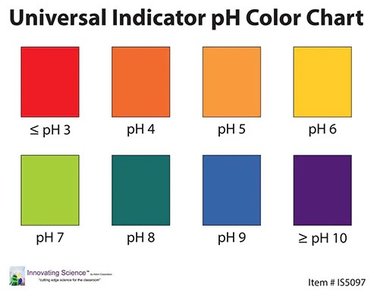
Example: When a drop of concentrated NaOH (a strong base) or HCl (a strong acid) is added to a buffer solution, the pH changes only slightly, as opposed to a non-buffered solution where the pH changes drastically.
Buffer Composition and Mechanism
How Buffers Work
Buffers function through the equilibrium between a weak acid (HA) and its conjugate base (A-):
When a base (OH-) is added, it reacts with the weak acid (HA) to form water and the conjugate base (A-).
When an acid (H+) is added, it reacts with the conjugate base (A-) to form the weak acid (HA).
This equilibrium allows the buffer to absorb added H+ or OH- ions, minimizing pH changes.
Buffer Action: Stepwise Example
Initial pH: The buffer starts at a pH near the pKa of the weak acid.
Addition of Base: Adding a small amount of NaOH increases the concentration of A- and decreases HA, but the pH changes only slightly.
Addition of Acid: Adding a small amount of HCl increases HA and decreases A-, with minimal pH change.
Exceeding Buffer Capacity: Adding large amounts of acid or base overwhelms the buffer, causing significant pH changes.
Buffer Calculations and Stoichiometry
Stoichiometric Calculations in Buffers
Buffer calculations often involve determining the new concentrations of acid and base after addition of strong acid or base, followed by calculation of the new pH.
Example Reaction:
Suppose we start with 100 molecules of HA at equilibrium. Adding 40 molecules of NaOH will convert some HA to A-:
Initial: 100 HA, 0 H+, 0 A-
After reaction: 60 HA, 0 H+, 40 A-
Further additions of acid or base can be tracked using stoichiometric tables (ICE tables) to determine the resulting concentrations and pH.
Common Buffer Systems
Examples of Weak Acid–Conjugate Base Pairs
Weak Acid | Conjugate Base | Ka | pKa |
|---|---|---|---|
Lactic acid | Lactate ion | 1.4 × 10⁻⁴ | 3.85 |
Acetic acid | Acetate ion | 1.8 × 10⁻⁵ | 4.74 |
Carbonic acid | Hydrogen carbonate ion | 4.2 × 10⁻⁷ | 6.38 |
Dihydrogen phosphate | Hydrogen phosphate ion | 6.2 × 10⁻⁸ | 7.21 |
Hypochlorous acid | Hypochlorite ion | 3.5 × 10⁻⁸ | 7.46 |
Ammonium ion | Ammonia | 5.6 × 10⁻¹⁰ | 9.25 |
Hydrogen carbonate | Carbonate ion | 4.8 × 10⁻¹¹ | 10.32 |
Phosphate-buffered saline (PBS) is a common buffer used in biological and biochemical experiments to maintain stable pH and salt concentration.
Applications of Buffers
Phosphate Buffered Saline (PBS)
Diluting biological samples: Maintains pH when diluting proteins, antibodies, or enzymes.
Immunoassays: Used as a buffer for antibody binding and washing steps in ELISA and similar assays.
Transport medium: Maintains biological samples before analysis.
Example: Adding 10.0 mL of 0.10 M HCl or NaOH to 1 L of pure water drastically changes the pH, but the same addition to PBS buffer results in only a minor pH change:
Solution | Initial pH | After HCl | After NaOH |
|---|---|---|---|
Pure H2O | 7.00 | 3.00 | 11.00 |
PBS buffer | 7.41 | 7.26 | 7.57 |
Buffer pH Calculations
Stepwise Calculation Example
To calculate the pH after adding strong acid or base to a buffer, follow these steps:
Identify the reaction between buffer components and added acid/base.
Calculate moles of acid/base added.
Determine the limiting reactant.
Set up a stoichiometric (ICE) table to find final concentrations.
Convert moles to concentrations using the final volume.
Calculate [H+] using the buffer equilibrium expression.
Convert [H+] to pH:
Example Calculation: After adding 10.0 mL of 0.10 M NaOH to 1.000 L of PBS buffer:
Final [H2PO4-] = 0.00356 M
Final [HPO42-] = 0.00822 M
Ka = 6.2 × 10⁻⁸
[H+] = M$
pH =
Similarly, after adding 10.0 mL of 0.10 M HCl, pH = 7.26.
Summary of Buffer Concepts
Buffers are solutions that resist pH changes upon addition of small amounts of acid or base.
They are composed of a weak acid and its conjugate base (or vice versa).
Buffer calculations involve stoichiometry and equilibrium (ICE tables).
Common buffers include acetic acid/acetate, phosphate, and carbonate systems.
PBS is widely used in biological applications for its stable pH properties.
