 Back
BackChapter 1: Matter and Energy – Foundations of Chemistry
Study Guide - Smart Notes
 Tailored notes based on your materials, expanded with key definitions, examples, and context.
Introduction to Chemistry
Definition and Scope
Chemistry is the study of the composition, properties, and interactions of matter. It explores how substances combine, change, and interact with energy. Chemistry is foundational to understanding the physical world and underpins many scientific and industrial fields.
Matter and Its Properties
Definition of Matter
Matter is anything that has mass and occupies space (has volume). All physical objects are composed of matter, but not everything in the universe is matter.
Examples of matter: Water, air, wood, metals.
Non-matter: Heat and light are forms of energy and do not have mass or occupy space.
Energy
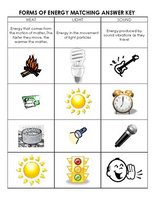
Energy is defined as the ability to do work. It is not matter, but it is essential in chemical and physical changes. Forms of energy include sunlight, sound, gamma radiation, chemical energy in bonds, and electricity.
Properties of Objects
Objects can be described by their state, size, shape, color, texture, and mass. All objects with mass occupy space.

Classification of Matter
By Physical State
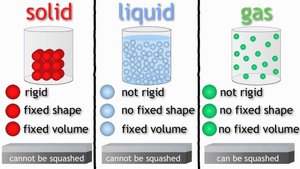
Matter exists in four physical states: solid, liquid, gas, and plasma. Each state has distinct properties regarding shape, volume, and compressibility.
Solid: Rigid, fixed shape, fixed volume, cannot be squashed.
Liquid: Not rigid, no fixed shape, fixed volume, cannot be squashed.
Gas: Not rigid, no fixed shape, no fixed volume, can be squashed (compressible).
By Chemical Constitution
Matter can also be classified as a pure substance or a mixture:
Pure substances: Have uniform chemical composition throughout and from sample to sample.
Mixtures: Composed of two or more pure substances and may or may not have uniform composition.
Pure Substances: Elements and Compounds
Pure substances are further classified as elements or compounds:
Element: A substance that cannot be broken down into simpler substances by chemical means. Elements are listed on the periodic table and may be metals or nonmetals.
Compound: A substance composed of two or more elements combined in definite proportions. Compounds have properties different from their component elements.
Mixtures: Homogeneous and Heterogeneous
Mixtures are combinations of two or more elements or compounds. Their components can be separated by physical processes. Mixtures are classified as:
Homogeneous mixtures (solutions): Have the same composition throughout (e.g., salt water, air).
Heterogeneous mixtures: Have varying properties and different compositions (e.g., sand and water, pizza).
Visual Classification Practice
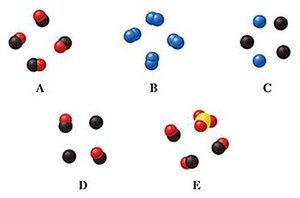
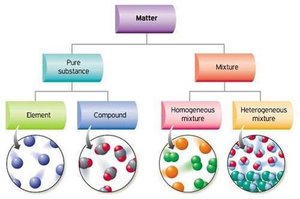
Practice distinguishing between pure substances (elements or compounds) and mixtures (homogeneous or heterogeneous) by examining molecular diagrams.
Summary Flowchart: Breakdown of Matter
The classification of matter can be summarized in a flowchart, showing the relationships between pure substances, mixtures, elements, compounds, and types of mixtures.
Elements and the Periodic Table
Element Symbols
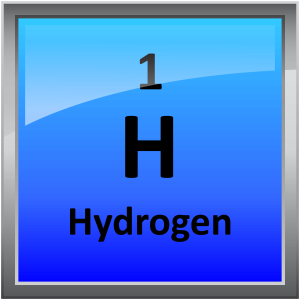
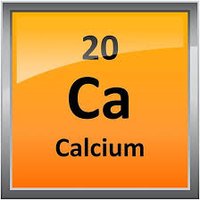
Each element is represented by a unique symbol, usually one or two letters derived from its English or Latin name (e.g., H for hydrogen, Ca for calcium).
Organization of the Periodic Table
The periodic table organizes elements into rows called periods and columns called groups or families. Elements in the same group have similar chemical properties.
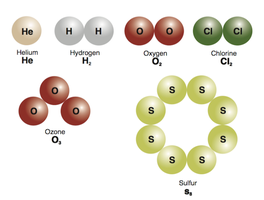
Types of Elements
Elements are classified as metals or nonmetals:
Metals: Lustrous, good conductors of electricity, usually solid at room temperature.
Nonmetals: Dull (except diamond), poor conductors, may be gases, liquids, or solids at room temperature.
Atoms and Molecules
Atoms
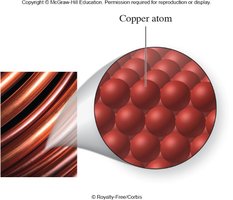
An atom is the smallest unit of an element that retains the chemical properties of that element. Atoms are the building blocks of matter.
Molecules
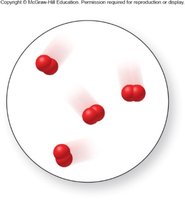
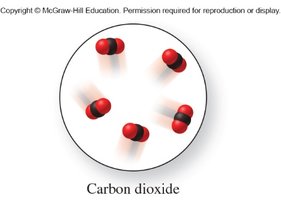
Molecules are composed of two or more atoms bound together. The atoms in a molecule can be from the same element (e.g., O2) or different elements (e.g., H2O).
Physical and Chemical Properties and Changes
Physical Properties
A physical property is a characteristic that can be observed without changing the chemical composition of a substance. Examples include density, hardness, melting and boiling points, electrical conductivity, color, temperature, and odor.
Chemical Properties
A chemical property describes the ability of a substance to undergo a specific chemical change. Examples include flammability, toxicity, acidity, reactivity, and heat of combustion. Chemical properties can only be observed during a chemical reaction.
Physical Changes
A physical change is a change in the state or properties of matter without any change in its chemical composition. Examples include melting, boiling, dissolving, and breaking.
Chemical Changes
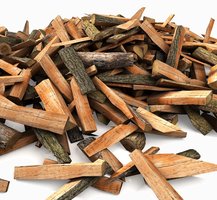
A chemical change (chemical reaction) produces one or more types of matter that differ from the matter present before the change. Examples include burning wood, rusting, and the ripening of fruit.

Summary Table: Classification of Matter
Type | Description | Examples |
|---|---|---|
Element | Cannot be broken down by chemical means; one kind of atom | Gold, copper, sulfur, helium |
Compound | Composed of two or more elements in fixed proportions; can be broken down by chemical means | Water (H2O), sodium chloride (NaCl), ammonia (NH3) |
Homogeneous Mixture | Uniform composition throughout | Salt water, air, brass |
Heterogeneous Mixture | Non-uniform composition | Sand and water, pizza, potting soil |
Key Concepts and Laws
Law of Constant Composition: A pure compound always contains the same elements in the same proportion by mass. For example, pure water is always 11% hydrogen and 89% oxygen by mass.
Practice and Application
Classify substances and mixtures based on their properties and composition.
Identify physical and chemical changes in everyday phenomena.
