 Back
BackChapter 1: Matter & Measurement – Foundations of General Chemistry
Study Guide - Smart Notes
 Tailored notes based on your materials, expanded with key definitions, examples, and context.
Introduction to Chemistry
Why Study Chemistry?
Chemistry is the study of matter, its properties, and the changes it undergoes. It is foundational to many fields, including agriculture, health sciences, and environmental studies. Understanding chemistry enables us to comprehend the composition and behavior of the world around us.
Matter and Its Classification
Atoms, Molecules, and Elements
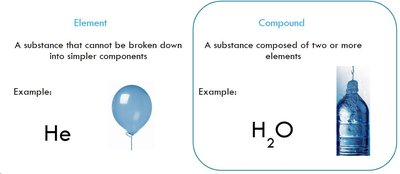
Atoms are the smallest units of an element that retain its identity. Molecules are combinations of two or more atoms bonded together. Elements are pure substances that cannot be broken down into simpler substances by chemical means.
Element: Simplest form of matter (e.g., He)
Molecule: Two or more atoms joined (e.g., H2O)
What is Matter?
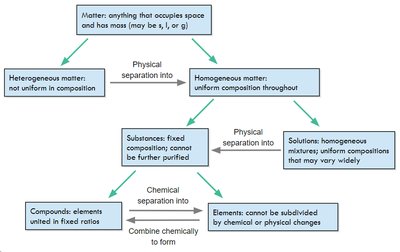
Matter is anything that occupies space and has mass. It can be classified by its physical form (solid, liquid, gas), composition (element, compound, mixture), and properties.
Physical form: Solid, liquid, gas
Composition: Pure substance or mixture
States of Matter
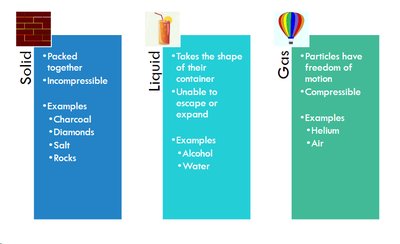
Matter exists in three primary states: solid, liquid, and gas. Each state has distinct characteristics regarding shape, volume, and particle arrangement.
Solid: Definite shape and volume, particles packed closely
Liquid: Definite volume, takes shape of container
Gas: No definite shape or volume, particles move freely
Classification of Matter by Composition
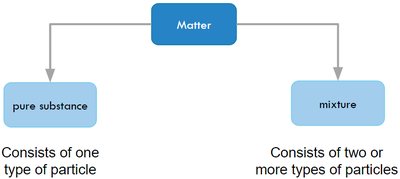
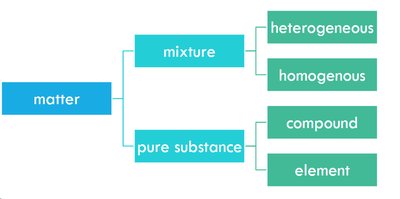
Matter can be classified as a pure substance or a mixture:
Pure Substance: Consists of only one type of particle (element or compound)
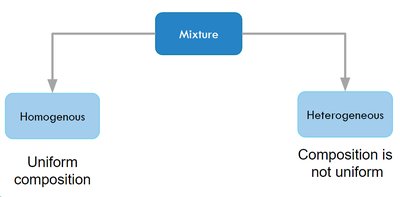
Mixture: Contains two or more types of particles (homogeneous or heterogeneous)
Separation of Mixtures
Physical Separation Techniques
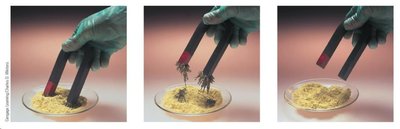
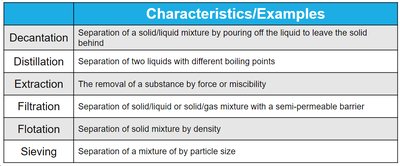
Mixtures can be separated into their components by physical means, such as magnetic separation, decantation, distillation, extraction, filtration, flotation, and sieving.
Magnetic Separation: Separates magnetic materials from mixtures
Decantation: Pouring off liquid to leave solid behind
Distillation: Separates liquids by boiling points
Filtration: Separates solids from liquids or gases using a barrier
Properties and Changes of Matter
Physical vs. Chemical Properties and Changes
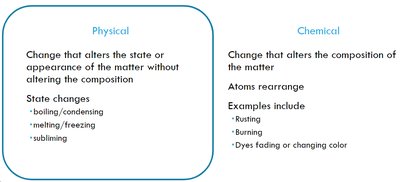
Physical properties can be observed without changing the substance's composition (e.g., color, density, melting point). Chemical properties describe a substance's ability to undergo chemical changes (e.g., flammability, reactivity).
Physical change: Alters state or appearance, not composition (e.g., melting, boiling)
Chemical change: Alters composition, atoms rearrange (e.g., rusting, burning)
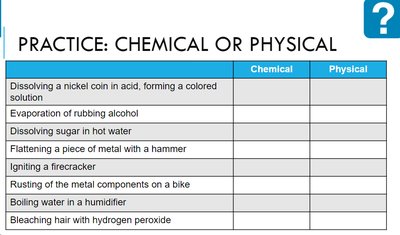
Practice: Identifying Chemical and Physical Changes
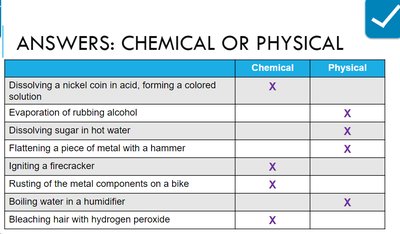
Process | Chemical | Physical |
|---|---|---|
Dissolving a nickel coin in acid | X | |
Evaporation of rubbing alcohol | X | |
Dissolving sugar in hot water | X | |
Flattening a piece of metal with a hammer | X | |
Igniting a firecracker | X | |
Rusting of the metal components on a bike | X | |
Boiling water in a humidifier | X | |
Bleaching hair with hydrogen peroxide | X |
Intensive and Extensive Properties
Intensive properties do not depend on the amount of matter (e.g., density, boiling point). Extensive properties depend on the amount of matter (e.g., mass, volume).
Density
Definition and Calculation
Density is a physical property defined as mass per unit volume. It is an intensive property, meaning it does not depend on the amount of substance.
Formula:
Common units: g/mL (solids and liquids), g/L (gases)
Example: Water has a density of 1.00 g/cm3 at 25°C.
Substance | Density (g/cm3) |
|---|---|
Air | 0.001 |
Balsa wood | 0.16 |
Ethanol | 0.79 |
Water | 1.00 |
Ethylene glycol | 1.09 |
Table sugar | 1.59 |
Table salt | 2.16 |
Iron | 7.9 |
Gold | 19.32 |
Measurement and Units
Measurement Basics
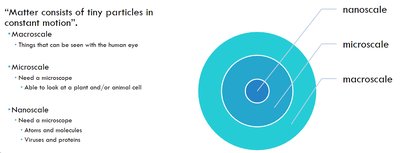
Every measurement consists of a number and a unit. Units provide a standard for comparison and are essential for communicating scientific data.
Systems of Measurement
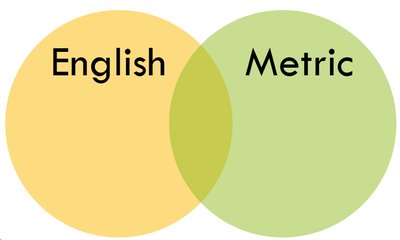
The two main systems are the metric (SI) system and the English system. Chemistry primarily uses the metric system for consistency and ease of conversion.
SI Base Units: kilogram (kg), meter (m), second (s), kelvin (K), mole (mol), ampere (A), candela (cd)
Metric Prefixes
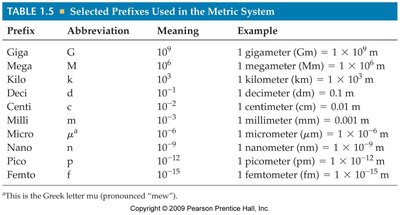
Prefixes are used to express multiples or fractions of base units. For example, kilo- (k) means 103, milli- (m) means 10-3.
Temperature
Temperature measures the average kinetic energy of particles. The Celsius and Kelvin scales are commonly used in chemistry.
Volume
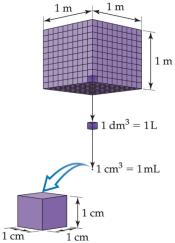
Volume is the amount of space occupied by a substance. It is a derived unit in the SI system, commonly measured in liters (L) or milliliters (mL).
1 L = 1 dm3
1 mL = 1 cm3 = 1 cc
Uncertainty, Accuracy, and Precision in Measurement
Uncertainty in Measurement
All measurements have some degree of uncertainty, usually in the last digit reported. The precision of a measuring device limits the certainty of the measurement.
Accuracy and Precision
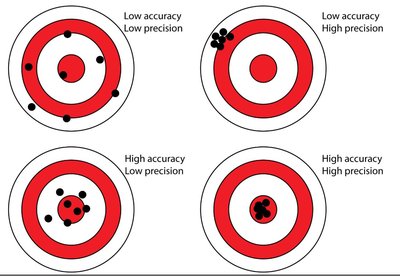
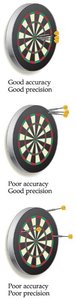
Accuracy refers to how close a measurement is to the true value. Precision refers to how close repeated measurements are to each other.
Significant Figures
Rules for Significant Figures
Significant figures reflect the precision of a measurement. The rules for counting significant figures are:
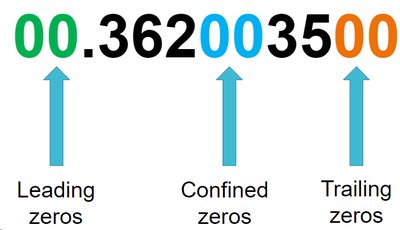
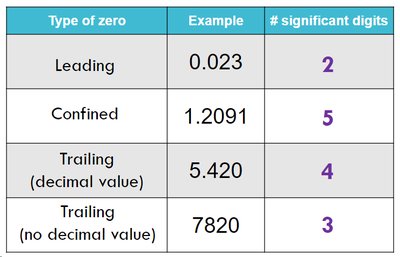
All nonzero digits are significant.
Sandwiched zeros are significant.
Leading zeros are not significant.
Trailing zeros are significant only if a decimal point is present.
Rounding and Calculations with Significant Figures
Multiplication/Division: Result has the same number of significant figures as the value with the fewest significant figures.
Addition/Subtraction: Result has the same number of decimal places as the value with the fewest decimal places.
Scientific Notation
Expressing Numbers in Scientific Notation
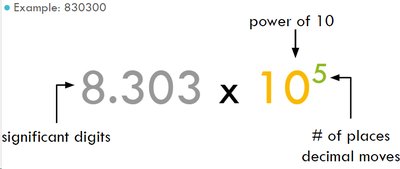
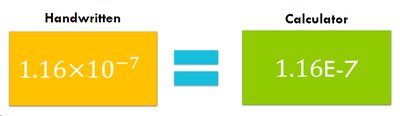
Scientific notation expresses very large or small numbers in the form , where C is a coefficient between 1 and 9, and n is an integer.
For numbers >1, n is positive.
For numbers <1, n is negative.
Rules of Exponents
Multiplying: Add exponents ()
Dividing: Subtract exponents ()
Raising to a power: Multiply exponents ()
Extracting a root: Multiply exponent by the root fraction ()
Dimensional Analysis and Unit Conversions
Dimensional Analysis
Dimensional analysis is a systematic approach to problem-solving that uses conversion factors to move from one unit to another.
Example: gives conversion factors or
Metric Conversions
To convert between metric units, use the appropriate prefix and equivalence statement. For example, 1 mg = g.
Example:
Summary Table: SI Base Units
Physical Quantity | Name of Unit | Abbreviation |
|---|---|---|
Mass | Kilogram | kg |
Length | Meter | m |
Time | Second | s |
Temperature | Kelvin | K |
Amount of substance | Mole | mol |
Electric current | Ampere | A |
Luminous intensity | Candela | cd |
Key Equations
Density:
Temperature (Kelvin):
Temperature (Celsius):
