 Back
BackChapter 1: Matter, Measurement, and Problem Solving – Study Notes
Study Guide - Smart Notes
 Tailored notes based on your materials, expanded with key definitions, examples, and context.
Chapter 1: Matter, Measurement, and Problem Solving
Matter and Its Composition
Chemistry is the scientific study of matter and the changes it undergoes. Matter is anything that occupies space and has mass, and it is composed of atoms, molecules, and compounds.
Atom: The smallest unit of an element, retaining its chemical properties.
Element: A pure substance made of only one kind of atom.
Molecule: A group of two or more atoms bonded together.
Compound: A substance composed of two or more different elements in fixed proportions.
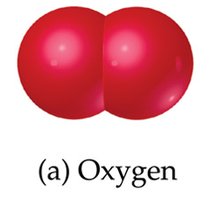
Example: Oxygen (O2) is a molecule consisting of two oxygen atoms bonded together.
The Scientific Method
The scientific method is a systematic approach to understanding nature through observation, hypothesis formation, experimentation, and the development of laws and theories.
Observation: Gathering data about the characteristics or behavior of nature.
Hypothesis: A tentative explanation of observations, which must be falsifiable.
Scientific Law: A concise statement that summarizes past observations and predicts future ones (e.g., Law of Conservation of Mass: "In a chemical reaction, matter is neither created nor destroyed.").
Theory: A well-substantiated explanation of some aspect of nature, validated by experiments (e.g., Dalton’s atomic theory).
Classification of Matter
Matter can be classified by its physical state and composition.
States of Matter: Solid, liquid, and gas.
Solid: Has a definite shape and volume. Can be crystalline (ordered structure, e.g., table salt) or amorphous (no long-range order, e.g., glass).
Classification by Composition:
Pure Substance: Made of only one component; composition is invariant.
Mixture: Composed of two or more components in variable proportions.
Types of Pure Substances:
Element: Cannot be chemically broken down into simpler substances.
Compound: Composed of two or more elements in fixed proportions.
Types of Mixtures:
Heterogeneous Mixture: Composition varies from one region to another (e.g., sand and salt mixture).
Homogeneous Mixture: Uniform composition throughout (e.g., sweetened tea).
Separation Techniques
Mixtures can be separated based on differences in physical or chemical properties.
Decanting: Pouring off liquid to separate it from solid.
Distillation: Separates components based on differences in boiling points.
Filtration: Separates solids from liquids using a filter.
Chromatography: Separates substances based on solubility differences.
Properties of Matter
Properties are characteristics used to describe matter.
Physical Properties: Can be observed without changing the substance (e.g., boiling point, density).
Chemical Properties: Can only be observed when a substance changes into another (e.g., flammability).
Intensive Properties: Independent of the amount of substance (e.g., density).
Extensive Properties: Depend on the amount of substance (e.g., mass, volume).
Physical and Chemical Changes
Changes in matter can be classified as physical or chemical.
Physical Change: Alters the state or appearance but not composition (e.g., melting ice).
Chemical Change: Alters the composition, resulting in new substances (e.g., rusting iron).
Energy in Chemistry
Energy is the capacity to do work and is fundamental to physical and chemical changes.
Kinetic Energy: Energy of motion.
Potential Energy: Energy due to position or composition.
Thermal Energy: Energy associated with temperature; a type of kinetic energy.
Law of Conservation of Energy: Energy is neither created nor destroyed in physical or chemical changes.
Units of Measurement
Measurements in chemistry use standard units, primarily the International System of Units (SI).
Length: Meter (m)
Mass: Kilogram (kg)
Time: Second (s)
Temperature: Kelvin (K)
Volume: Cubic meter (m3) or liter (L)
Temperature Scales and Conversion
Temperature can be measured in Celsius, Fahrenheit, or Kelvin. Conversion between scales is often necessary.
Kelvin: Absolute temperature scale; 0 K is absolute zero.
Conversion Formulas:
Metric System and Prefixes
The metric system uses prefixes to indicate multiples or fractions of base units.
Kilo- (k):
Centi- (c):
Milli- (m):
Derived Units: Volume and Density
Some quantities are measured using derived units, which are combinations of base units.
Volume: (units: m3 or L)
Density: (units: g/cm3 or kg/m3)
Application: Density determines whether a substance will sink or float in another.
Uncertainty and Significant Figures
Measurements have inherent uncertainty, and significant figures reflect the precision of a measurement.
Significant Figures: All nonzero digits, interior zeroes, and trailing zeroes (if a decimal is present) are significant.
Exact Numbers: Have an unlimited number of significant figures (e.g., counted objects, defined quantities).
Rules for Calculations:
Addition/Subtraction: Result has the same number of decimal places as the least precise measurement.
Multiplication/Division: Result has the same number of significant figures as the factor with the fewest significant figures.
Rounding: Round down if the digit dropped is less than 5; round up if 5 or greater.
Accuracy vs. Precision
Accuracy and precision are important concepts in measurement.
Accuracy: How close a measurement is to the true value.
Precision: How close repeated measurements are to each other.
Dimensional Analysis
Dimensional analysis is a method for solving unit conversion problems using conversion factors.
Conversion Factor: A ratio expressing how many of one unit equals another unit.
Example:
Process: Multiply the quantity by conversion factors to cancel units and obtain the desired unit.
Units Raised to a Power: When converting squared or cubed units, raise both the number and the unit to the power.
Practice Problems
Convert 120.0 °F to Kelvin:
Convert °F to °C:
Convert °C to K:
Express 325 mg in grams:
Convert 26.2 miles to inches:
Calculate the volume of a block (7.36 cm × 5.23 cm × 1.2 cm):
Summary Table: Classification of Matter
Type | Description | Example |
|---|---|---|
Element | Cannot be broken down chemically | Helium |
Compound | Composed of two or more elements in fixed proportions | Water (H2O) |
Heterogeneous Mixture | Composition varies throughout | Sand and salt mixture |
Homogeneous Mixture | Uniform composition throughout | Sweetened tea |
Additional info: Academic context and examples have been expanded for clarity and completeness.
