 Back
BackChapter 1: The Basics of Chemistry – Matter, Measurement, and Classification
Study Guide - Smart Notes
 Tailored notes based on your materials, expanded with key definitions, examples, and context.
Chapter 1: The Basics of Chemistry
Matter and Its States
Chemistry begins with the study of matter, which is defined as anything that takes up space and has mass. All physical objects and substances are forms of matter, except for phenomena like light, which will be discussed later in the course.
States of Matter: Matter exists primarily in three states: solid, liquid, and gas. There are also exotic states such as plasma.
Solid State
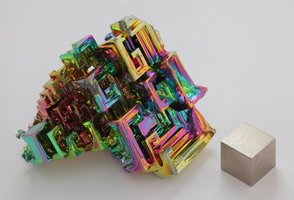
Solids have a definite shape and volume. They can be further classified as crystalline solids (with an ordered structure) or amorphous solids (without a long-range order, e.g., glass or wax).

Liquid State
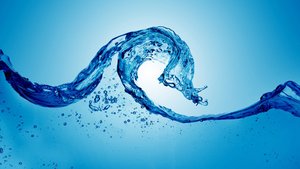
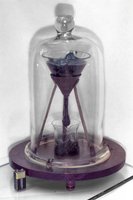
Liquids have a definite volume but an indefinite shape, adopting the shape of their container. Liquids can vary in viscosity (resistance to flow).
Gaseous State
Gases have neither definite shape nor volume. They expand to fill their container completely.

Plasma State
Plasma is an ionized gas, typically found at extremely high temperatures. It is not commonly encountered on Earth but is present in phenomena like the aurora borealis and is important for future energy technologies such as fusion power.
Properties of Matter
Properties are characteristics that can be measured. They are divided into two main types:
Intensive Properties: Independent of the amount of substance (e.g., temperature, color, density).
Extensive Properties: Dependent on the amount of substance (e.g., mass, volume, weight).
Examples:
Taste – Intensive
Smell – Intensive
Weight – Extensive
Temperature – Intensive
Volume – Extensive
Number of particles – Extensive
Color – Intensive
Flammability – Intensive
Classification of Matter
Matter can be classified based on its composition:
Pure Substances: Have a fixed composition and distinct properties. They are further divided into:
Elements: Cannot be broken down into simpler substances (e.g., Helium, Cl2).
Compounds: Composed of two or more elements chemically combined (e.g., H2O).
Mixtures: Combinations of two or more substances that retain their individual properties. They are classified as:
Homogeneous Mixtures (Solutions): Uniform composition throughout (e.g., tea with sugar, air).
Heterogeneous Mixtures: Non-uniform composition (e.g., wet sand, chocolate chip cookies).
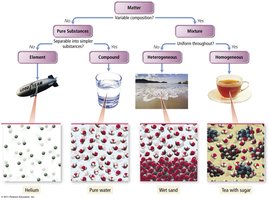
Examples of Classification
Element: Helium, Cl2, iron
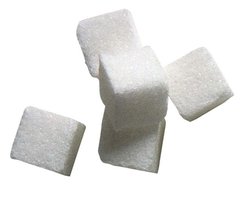
Compound: Water (H2O), sugar (C12H22O11)
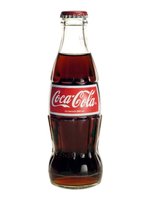
Homogeneous Mixture: Coca-Cola, air
Heterogeneous Mixture: Chocolate chip cookie, wet sand

Physical and Chemical Properties and Changes
Physical Properties are characteristics that can be observed or measured without changing the substance's identity (e.g., melting point, density, color).
Chemical Properties describe a substance's ability to undergo changes that transform it into different substances (e.g., flammability, reactivity).
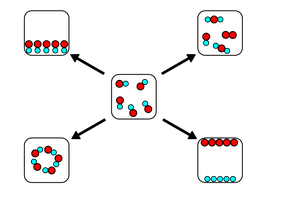
Physical Changes do not alter the chemical composition (e.g., melting, boiling, dissolving). Chemical Changes result in the formation of new substances (e.g., burning, rusting).
Measurement and the Metric System
All scientific measurements use the SI (International System of Units), which is based on the metric system. The metric system is preferred for its simplicity and ease of conversion.

Base SI Units
Length: meter (m)
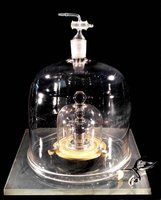
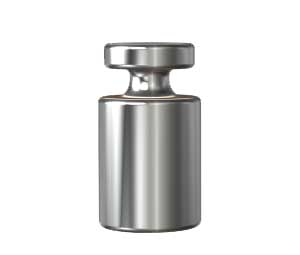
Mass: kilogram (kg)
Time: second (s)
Temperature: kelvin (K)
Amount of substance: mole (mol)
Derived Units
Derived units are combinations of base units, such as:
Area:
Volume: or Liter (L), where
Density:
Temperature Scales
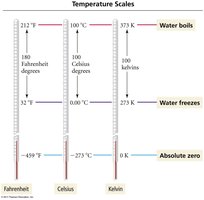
There are three main temperature scales:
Celsius (°C): Water freezes at 0°C and boils at 100°C.
Kelvin (K): Absolute temperature scale; 0 K is absolute zero.
Fahrenheit (°F): Used mainly in the United States;
Significant Figures
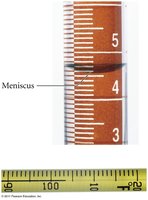
Significant figures reflect the precision of a measurement. The last digit is always uncertain. When performing calculations:
Multiplication/Division: The result should have as many significant figures as the measurement with the fewest significant figures.
Addition/Subtraction: The result should have as many decimal places as the measurement with the fewest decimal places.
Dimensional Analysis
Dimensional analysis is a systematic approach to problem-solving that uses conversion factors to move from one unit to another. It is essential for converting between different measurement systems and ensuring correct units in calculations.
Identify the given quantity and the desired unit.
Set up conversion factors so that units cancel appropriately.
Multiply through to obtain the answer in the desired units.

Example Problem
Convert 8.50 inches to centimeters. (1 inch = 2.54 cm)
Given: 8.50 inches
Conversion factor:
Calculation:
Practice Problems
Calculate the density of a liquid in g/mL if 425 mL weighs 1.05 pounds. (1 pound = 453.6 g)
Convert the speed of sound from 752 mi/hr to meters/second. (1 mile = 1609 m)
How many bottles of wine (1 bottle = 750 mL) can be held in a wine barrel with a capacity of 31 gal? (1 gal = 3.79 L)
A pound of coffee beans yields 50 cups of coffee (4 cups = 1 qt). How many milliliters of coffee can be obtained from 1.2 g of coffee beans?
Gold leaf problem: Calculate the cost to cover a 100 ft by 82 ft ceiling with gold leaf 5 millionths of an inch thick. (1 inch = 2.54 cm, density of gold = 19.32 g/cm3, $1552 per troy ounce, 1 troy ounce = 31.1034768 g)
Additional info: This chapter provides foundational concepts for understanding matter, its classification, measurement, and the importance of precision in scientific work. Mastery of these topics is essential for success in all subsequent chemistry topics.
