 Back
Chapter 10: Gases – Structure, Properties, and Laws
Study Guide - Smart Notes
 Tailored notes based on your materials, expanded with key definitions, examples, and context.
Gases: Structure and Properties
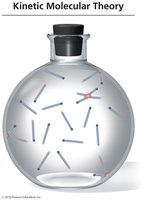
Kinetic Molecular Theory
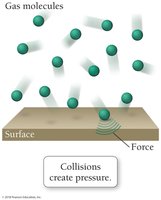
The kinetic molecular theory explains the behavior of gases at the molecular level. Gas particles move rapidly and randomly, colliding with each other and the walls of their container. These collisions are responsible for the pressure exerted by gases.
Gas particles move in straight lines until they collide.
Collisions are elastic, meaning no energy is lost.
Pressure results from the force of collisions with container walls.
Gas behavior is influenced by temperature, volume, and number of particles.
Gas Pressure and Density
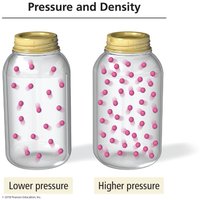
Pressure is defined as the force exerted per unit area by gas molecules. The density and concentration of gas molecules directly affect the pressure.
Higher concentration of gas molecules increases pressure.
Lower concentration results in lower pressure.
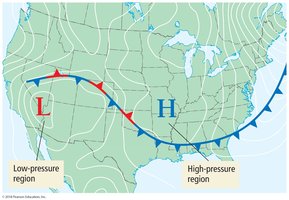
Pressure decreases with increasing altitude due to fewer gas particles.
Pressure Imbalance Effects
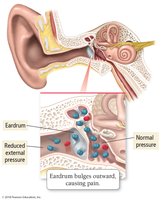
Pressure differences across membranes, such as the eardrum, can cause discomfort or injury. For example, a "popped eardrum" occurs when external and internal pressures are not balanced.
Units of Pressure
Common Pressure Units
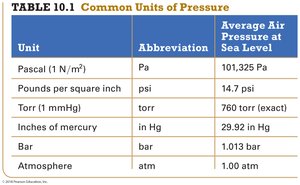
Pressure can be measured in several units, each with its own context and conversion factors.
Unit | Abbreviation | Average Air Pressure at Sea Level |
|---|---|---|
Pascal (1 N/m2) | Pa | 101,325 Pa |
Pounds per square inch | psi | 14.7 psi |
Torr (1 mmHg) | torr | 760 torr (exact) |
Inches of mercury | in Hg | 29.92 in Hg |
Bar | bar | 1.013 bar |
Atmosphere | atm | 1.00 atm |
Pressure Conversion
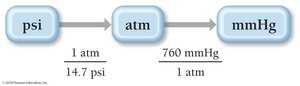
Conversion between units is essential for calculations:
1 atm = 14.7 psi
760 mmHg = 1 atm
1 mmHg = 1 torr
Measuring Gas Pressure
Barometer and Manometer
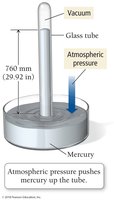
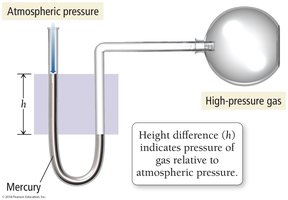
Gas pressure can be measured using instruments such as barometers and manometers. Barometers measure atmospheric pressure, while manometers measure the pressure of gases in containers.
Barometer: Uses mercury to measure atmospheric pressure.
Manometer: U-shaped tube compares gas pressure to atmospheric pressure.
Gas Laws
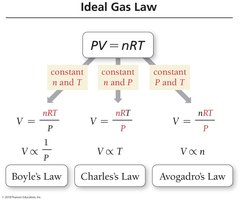
Boyle’s Law: Pressure and Volume
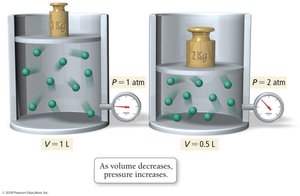
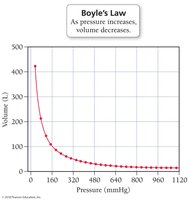
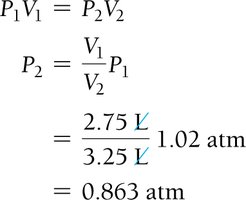
Boyle’s Law states that the volume of a gas is inversely proportional to its pressure when temperature and amount are constant.
Mathematically:
As pressure increases, volume decreases.
Graph of P vs. V is a curve; P vs. 1/V is a straight line.

Charles’s Law: Volume and Temperature
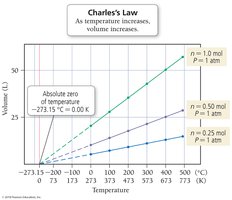
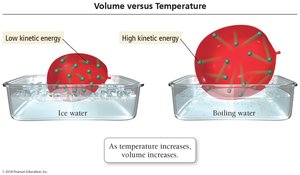
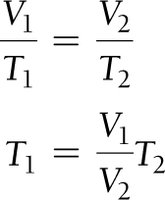
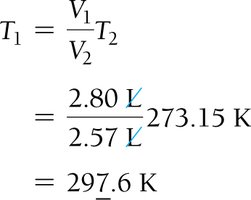
Charles’s Law states that the volume of a gas is directly proportional to its absolute temperature at constant pressure and amount.
Mathematically:
Volume increases linearly with temperature (in Kelvin).
Absolute zero is the temperature at which volume would be zero.
Avogadro’s Law: Volume and Moles
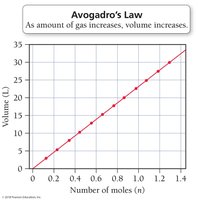
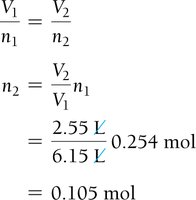
Avogadro’s Law states that the volume of a gas is directly proportional to the number of moles at constant pressure and temperature.
Mathematically:
Equal volumes of gases contain equal numbers of molecules.
Ideal Gas Law
Ideal Gas Law Equation
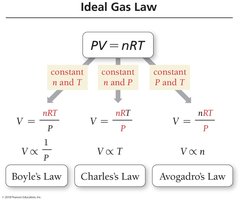
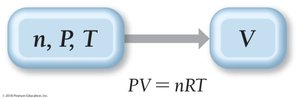
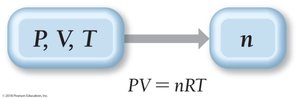
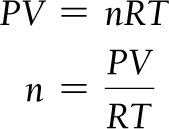
The ideal gas law combines Boyle’s, Charles’s, and Avogadro’s laws into a single equation:
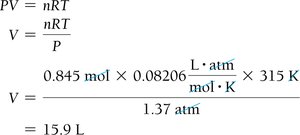
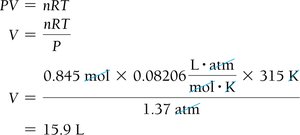
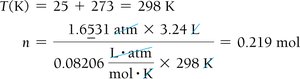
P = pressure (atm), V = volume (L), n = moles, R = 0.0821 L·atm/(mol·K), T = temperature (K)
Allows calculation of any one variable if the others are known.
Standard Conditions and Molar Volume
Standard Temperature and Pressure (STP)
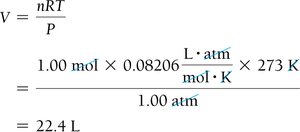
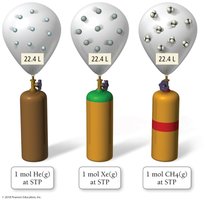
STP is defined as 1 atm pressure and 273 K (0 °C) temperature. At STP, 1 mole of any ideal gas occupies 22.4 L.
Density and Molar Mass of Gases
Gas Density
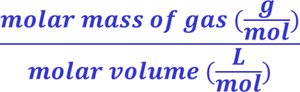
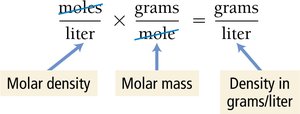
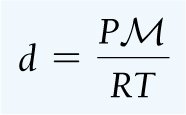
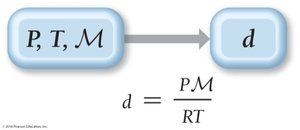
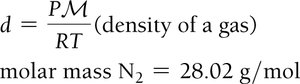
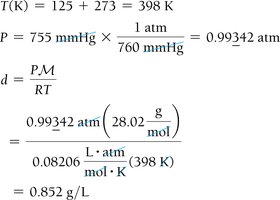
Density of a gas is the ratio of its mass to its volume, often expressed in g/L. At STP, density can be calculated using molar mass and molar volume.
Density formula:
Density is directly proportional to molar mass.
Molar Mass Determination
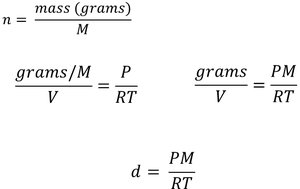
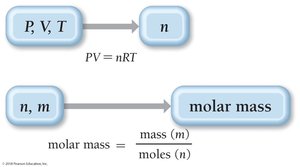
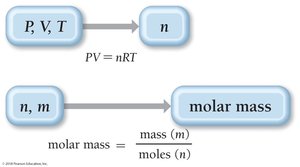
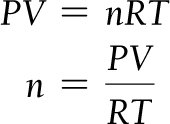
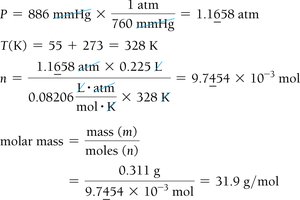
The molar mass of a gas can be determined by measuring its mass, volume, temperature, and pressure, then using the ideal gas law.
Molar mass formula:
Mixtures of Gases and Partial Pressures
Dalton’s Law of Partial Pressures
Dalton’s Law states that the total pressure of a gas mixture is the sum of the partial pressures of each component.
Each gas behaves independently in a mixture.
Mole Fraction
The mole fraction of a component in a mixture is the ratio of its moles to the total moles. The partial pressure of a gas is its mole fraction times the total pressure.
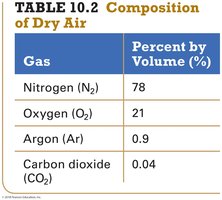
Gas | Percent by Volume (%) |
|---|---|
Nitrogen (N2) | 78 |
Oxygen (O2) | 21 |
Argon (Ar) | 0.9 |
Carbon dioxide (CO2) | 0.04 |
Summary Review: Properties of Gases
Expand to fill their container
Take the shape of their container
Low density compared to solids and liquids
Compressible
Mixtures of gases are always homogeneous
Real Gases and Deviations from Ideal Behavior
Real Gas Behavior
Real gases deviate from ideal behavior at high pressures and low temperatures. The ideal gas law assumes no intermolecular attractions and negligible molecular volume, which is not always valid.
At high pressure, molecular volume becomes significant.
At low temperature, intermolecular attractions reduce pressure.
Van der Waals equation modifies the ideal gas law to account for these factors.
Van der Waals Equation:
Where a and b are constants specific to each gas.
*Additional info: The notes cover all major aspects of Chapter 10 (Gases) in a General Chemistry course, including kinetic theory, pressure, gas laws, density, molar mass, partial pressures, and real gas behavior. All included images directly reinforce the adjacent explanations.*
