 Back
BackChapter 11: Intermolecular Forces, Liquids, and Solids – Study Notes
Study Guide - Smart Notes
 Tailored notes based on your materials, expanded with key definitions, examples, and context.
Intermolecular Forces, Liquids, and Solids
Introduction to States of Matter
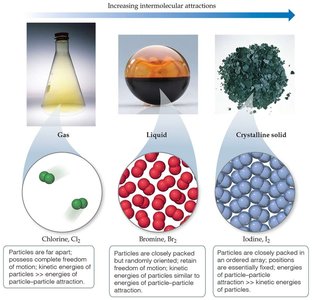
The physical state of a substance—solid, liquid, or gas—is determined by the balance between the kinetic energy of its particles and the strength of the intermolecular forces acting between them. Solids and liquids are known as the condensed phases due to their relatively high densities compared to gases.
Solids: Particles are closely packed in a fixed arrangement; they retain their own shape and are virtually incompressible.
Liquids: Particles are close together but can move past one another; they assume the shape of their container and are also virtually incompressible.
Gases: Particles are far apart, move freely, and fill the volume and shape of their container; they are compressible and have low density.
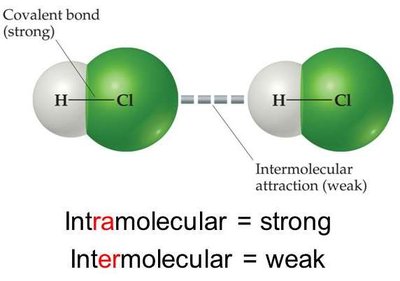
Intramolecular vs. Intermolecular Forces
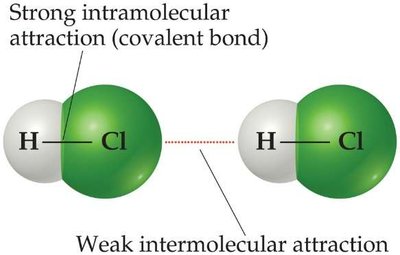
Intramolecular forces are the strong chemical bonds (such as covalent, ionic, or metallic bonds) that hold atoms together within a molecule. Intermolecular forces are weaker attractions or repulsions between molecules or particles. These forces are crucial in determining the physical properties of substances, such as boiling and melting points.
Intramolecular forces: Strong, responsible for molecule formation (e.g., covalent bonds).
Intermolecular forces: Weaker, responsible for interactions between molecules (e.g., hydrogen bonding, dipole-dipole, dispersion).
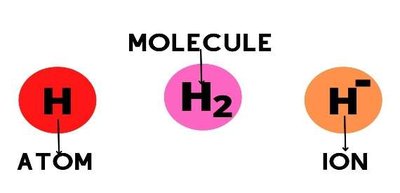
Types of Particles
In chemistry, the term particle can refer to an atom, a molecule, or an ion. Understanding the differences between these is essential for discussing intermolecular forces.
Atom: The smallest unit of an element.
Molecule: Two or more atoms bonded together.
Ion: An atom or molecule with a net electric charge due to the loss or gain of electrons.
Characteristic Properties of the States of Matter
The properties of solids, liquids, and gases are summarized in the following table, which highlights how intermolecular forces influence these properties.
State | Shape | Compressibility | Flow | Diffusion |
|---|---|---|---|---|
Gas | Assumes volume and shape of container | Compressible (low density) | Flows readily | Rapid |
Liquid | Assumes shape of container portion | Virtually incompressible (high density) | Flows readily | Slow |
Solid | Retains own shape | Virtually incompressible (high density) | Does not flow | Very slow |
Relative Strength of Molecular Attractions
Intermolecular attractions are generally much weaker than the chemical bonds within molecules. For example, hydrogen bonds are not true chemical bonds but are a type of intermolecular force.
Melting and Boiling Points: Chemical vs. Intermolecular Forces
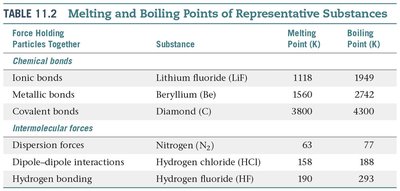
The strength of the forces holding particles together directly affects melting and boiling points. Substances with strong chemical bonds have much higher melting and boiling points than those held together by intermolecular forces.
Force Holding Particles Together | Substance | Melting Point (K) | Boiling Point (K) |
|---|---|---|---|
Ionic bonds | Lithium fluoride (LiF) | 1118 | 1949 |
Metallic bonds | Beryllium (Be) | 1560 | 2742 |
Covalent bonds | Diamond (C) | 3800 | 4300 |
Dispersion forces | Nitrogen (N2) | 63 | 77 |
Dipole-dipole interactions | Hydrogen chloride (HCl) | 158 | 188 |
Hydrogen bonding | Hydrogen fluoride (HF) | 190 | 293 |
Types of Intermolecular Forces
Intermolecular forces are categorized by their origin and strength, from weakest to strongest:
London dispersion forces (van der Waals): Present in all molecules, especially significant in nonpolar compounds.
Dipole-dipole forces: Occur between polar molecules with permanent dipoles.
Hydrogen bonding: A special, strong dipole-dipole interaction involving H bonded to N, O, or F.
Ion-dipole forces: Occur between ions and polar molecules, important in solutions.
These forces determine many physical properties, such as boiling and melting points, viscosity, and solubility.
London Dispersion Forces
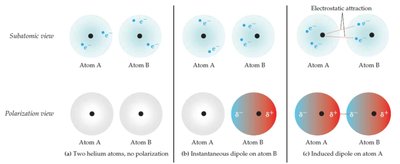
London dispersion forces arise from temporary fluctuations in electron distribution, creating instantaneous dipoles that induce dipoles in neighboring particles. The ease with which the electron cloud can be distorted is called polarizability.
Present in all atoms and molecules.
Strength increases with the number of electrons and molecular size.
More significant in larger, heavier, and more polarizable molecules.
Factors Affecting Dispersion Forces
Number of electrons: More electrons mean stronger dispersion forces.
Size/molecular weight: Larger atoms/molecules have more polarizable electron clouds.
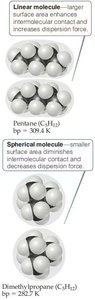
Shape: Linear molecules have greater surface area for contact, increasing dispersion forces compared to spherical molecules.
Polarisability and Boiling Point
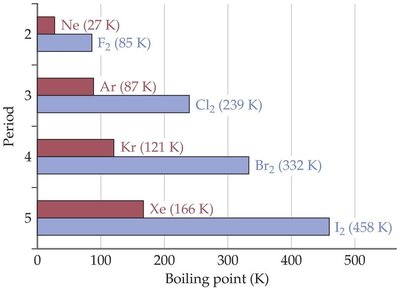
As polarizability increases, so does the boiling point, due to stronger London dispersion forces. This trend is evident in the halogens:
Molecule | Electrons | Polarisability | Boiling Point (°C) |
|---|---|---|---|
F2 | 18 | Low | -188 |
Cl2 | 34 | Medium | -34 |
Br2 | 70 | High | +59 |
I2 | 106 | Very High | +184 |
Dipole–Dipole Interactions
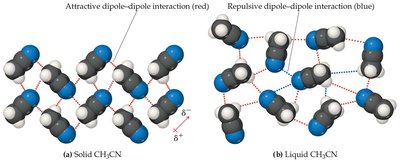
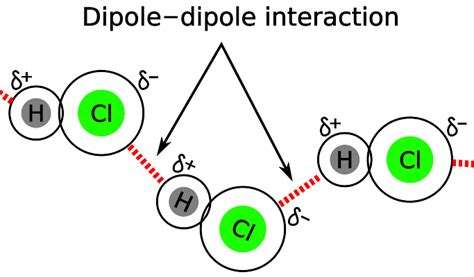
Dipole–dipole forces occur between polar molecules, where the positive end of one molecule is attracted to the negative end of another. These interactions are effective only when molecules are close together and are present alongside dispersion forces.
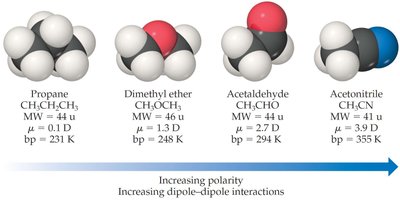
Stronger in molecules with greater polarity.
For molecules of similar size, the more polar molecule has a higher boiling point.
Comparing Dipole–Dipole and Dispersion Forces
For molecules of similar size and shape, dipole–dipole interactions dominate. For larger molecules, dispersion forces can outweigh dipole–dipole interactions, as seen in the boiling points of HCl (polar) and Br2 (nonpolar):
HCl (polar, dipole–dipole + dispersion): Boiling point = -85°C
Br2 (nonpolar, dispersion only): Boiling point = +59°C
This demonstrates that large, polarizable molecules can have higher boiling points due to strong dispersion forces, even if they are nonpolar.
Effect of Molecular Polarity on Boiling Point
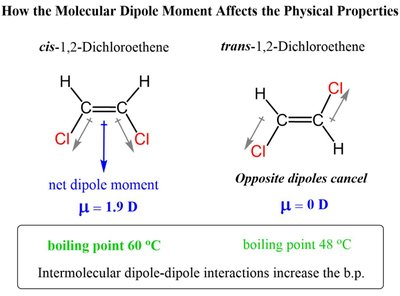
For molecules with similar mass, increased polarity leads to higher boiling points due to stronger dipole–dipole interactions.
Boiling Point Trends in Groups
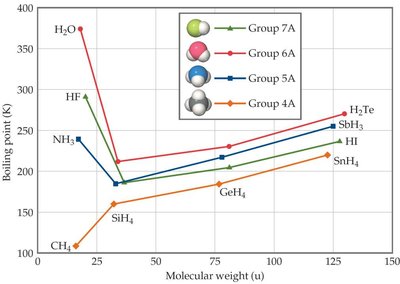
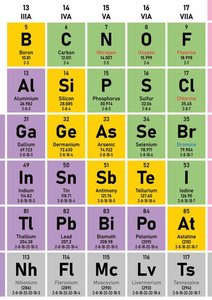
Within a group of the periodic table, boiling points generally increase with molecular size due to stronger dispersion forces. However, for period 2 elements, hydrogen bonding can cause deviations from this trend, as seen in water (H2O) and hydrogen fluoride (HF).
Summary Table: Types of Intermolecular Forces
Type of Force | Occurs Between | Relative Strength | Example |
|---|---|---|---|
London dispersion | All molecules/atoms | Weakest | I2, N2 |
Dipole–dipole | Polar molecules | Intermediate | HCl, CH3Cl |
Hydrogen bonding | H with N, O, or F | Strong (for IMF) | H2O, HF |
Ion–dipole | Ion and polar molecule | Strongest (for IMF) | Na+ in H2O |
Key Takeaways
Intermolecular forces are much weaker than intramolecular (chemical) bonds but are crucial for determining physical properties.
London dispersion forces are present in all substances and increase with molecular size and polarizability.
Dipole–dipole interactions are significant in polar molecules and increase with molecular polarity.
Hydrogen bonding is a particularly strong type of dipole–dipole interaction.
Boiling and melting points reflect the strength of intermolecular forces present in a substance.
