 Back
BackChapter 13: Solutions and Colligative Properties – Study Notes
Study Guide - Smart Notes
 Tailored notes based on your materials, expanded with key definitions, examples, and context.
Chapter 13: Solutions and Colligative Properties
Solution Terminology
Solutions are homogeneous mixtures composed of a solute dissolved in a solvent. The properties and behavior of solutions depend on the nature and amount of solute and solvent present.
Unsaturated Solution: Contains less solute than the maximum amount that can dissolve at a given temperature.
Saturated Solution: Contains the maximum amount of solute that can dissolve at a given temperature; additional solute will not dissolve.
Supersaturated Solution: Contains more solute than is present in a saturated solution at the same temperature; usually unstable.
Concentrated vs. Dilute: A concentrated solution has a relatively large amount of solute, while a dilute solution has a small amount. These terms are relative and depend on context.
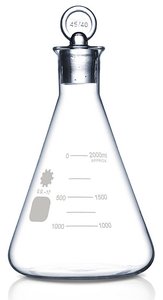
Example: Dissolving 1 g, 2000 g, and 4000 g of sugar in 1 L of water at different temperatures demonstrates unsaturated, saturated, and supersaturated solutions, respectively.
Miscibility and Solubility
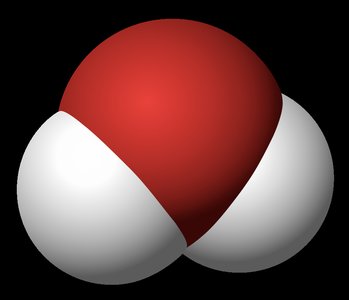
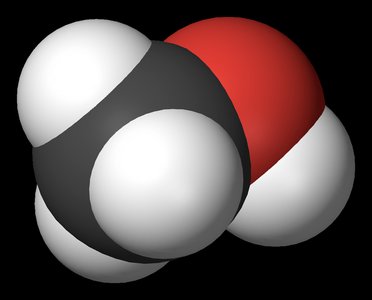
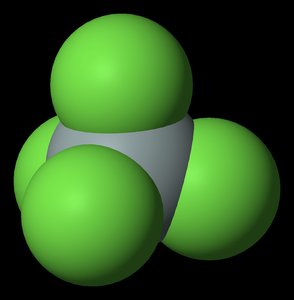
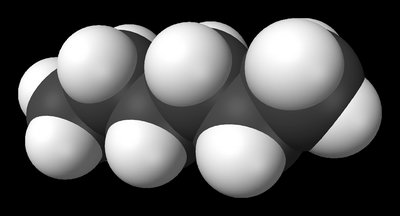
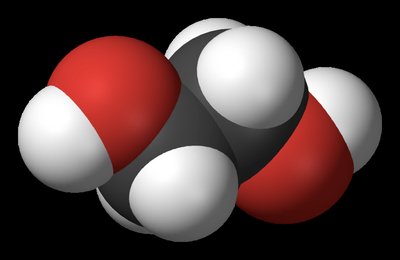
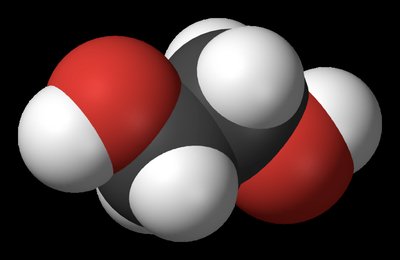
Miscibility refers to the ability of two liquids to mix in all proportions, forming a homogeneous solution. Water is miscible with polar substances like ethanol and ethylene glycol, but immiscible with nonpolar substances like carbon tetrachloride and hexane.
Concentration Units and Interconversions
Several units are used to express solution concentration, each useful in different contexts:
Molarity (M): Moles of solute per liter of solution. $M = \frac{\text{moles of solute}}{\text{liters of solution}}$
Molality (m): Moles of solute per kilogram of solvent. $m = \frac{\text{moles of solute}}{\text{kilograms of solvent}}$
Mole Fraction (\(\chi\)): Ratio of moles of a component to total moles in the mixture. $\chi = \frac{\text{moles of component}}{\text{total moles in mixture}}$
Density is often used to convert between mass and volume when interconverting concentration units.


Example Problems
Calculate the molality of a 30.0% H2SO4 solution with density 1.26 g/mL.
Find the mole fraction of sugar in a soda containing 39.0 g sugar in 394 g total mass.
Determine the molarity of a nitric acid solution that is 68.0% by mass with density 1.513 g/mL.



Energetics of Solution Formation
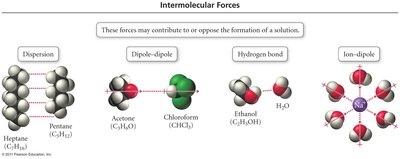
The formation of a solution involves breaking intermolecular forces in the solute and solvent and forming new interactions between solute and solvent particles. The overall energy change (enthalpy of solution) determines whether the process is endothermic or exothermic.
Solute-solute interactions: Must be overcome to disperse solute particles.
Solvent-solvent interactions: Must be overcome to make room for solute particles.
Solvent-solute interactions: Formed as solute particles are surrounded by solvent molecules.
Temperature and Solubility
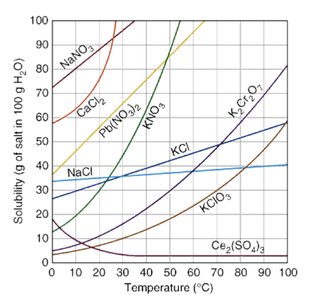
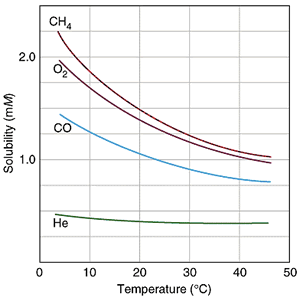
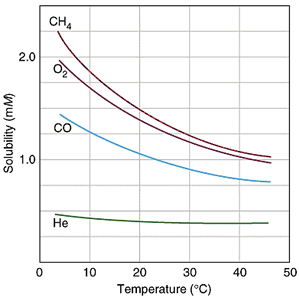
Solubility of solids generally increases with temperature, while the solubility of gases decreases as temperature rises. This is explained by kinetic molecular theory and the energetics of dissolution.
Henry’s Law
Henry’s Law describes the relationship between the solubility of a gas in a liquid and the partial pressure of that gas above the liquid:
$C = k_H \cdot P$
C: Concentration of dissolved gas (mol/L)
kH: Henry’s Law constant (mol/L·atm)
P: Partial pressure of the gas (atm)
Example: Calculating the amount of CO2 dissolved in a carbonated beverage at a given pressure.
Colligative Properties
Colligative properties depend on the number of solute particles in solution, not their identity. These include vapor pressure lowering, boiling point elevation, freezing point depression, and osmotic pressure.
Vapor Pressure Lowering (Raoult’s Law)
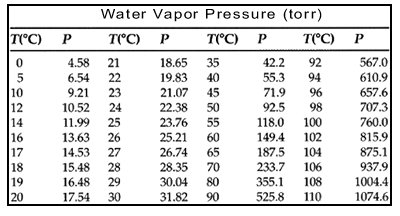
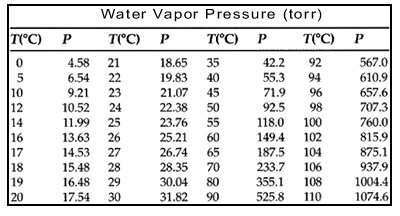
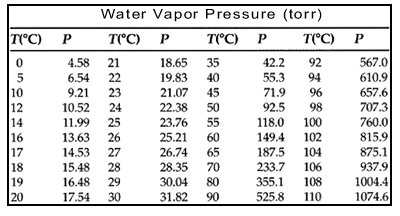
The vapor pressure of a solvent above a solution is lower than that of the pure solvent:
$P_{\text{solution}} = \chi_{\text{solvent}} \cdot P^\circ_{\text{solvent}}$
\(\chi_{\text{solvent}}\): Mole fraction of solvent
$P^\circ_{\text{solvent}}$: Vapor pressure of pure solvent



Freezing Point Depression and Boiling Point Elevation
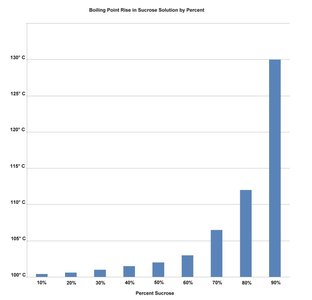
Adding a solute to a solvent lowers the freezing point and raises the boiling point of the solution. The changes are given by:
$\Delta T_f = K_f \cdot m$
$\Delta T_b = K_b \cdot m$
$K_f$ and $K_b$: Freezing point depression and boiling point elevation constants (°C·kg/mol)
$m$: Molality of the solution
For electrolytes, the van’t Hoff factor ($i$) is included:
$\Delta T_f = i \cdot K_f \cdot m$
$\Delta T_b = i \cdot K_b \cdot m$



Osmotic Pressure
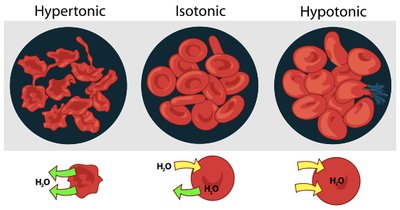
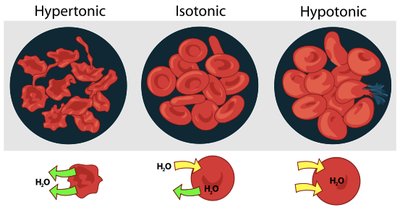
Osmosis is the flow of solvent through a semi-permeable membrane from a region of lower solute concentration to higher solute concentration. The osmotic pressure ($\Pi$) required to stop this flow is given by:
$\Pi = MRT$
M: Molarity of the solution
R: Gas constant (0.0821 L·atm·mol−1·K−1)
T: Temperature in Kelvin
van’t Hoff Factor (i)
The van’t Hoff factor ($i$) accounts for the number of particles a solute produces in solution. For non-electrolytes, $i = 1$. For electrolytes, $i$ equals the number of ions formed per formula unit.
Example: NaCl dissociates into Na+ and Cl−, so $i = 2$.
Summary Table: Colligative Properties and Equations
Property | Equation | Key Variables |
|---|---|---|
Vapor Pressure Lowering | $\Delta P = \chi_{\text{solute}} P^\circ_{\text{solvent}}$ | Mole fraction, vapor pressure |
Boiling Point Elevation | $\Delta T_b = i K_b m$ | van’t Hoff factor, molality |
Freezing Point Depression | $\Delta T_f = i K_f m$ | van’t Hoff factor, molality |
Osmotic Pressure | $\Pi = i M R T$ | van’t Hoff factor, molarity, temperature |
Key Takeaways
Understand and calculate solution concentrations using molarity, molality, and mole fraction.
Predict and explain colligative properties and their dependence on the number of solute particles.
Apply Henry’s Law to gas solubility problems.
Relate solution properties to real-world phenomena such as antifreeze, ocean water freezing, and osmotic pressure in biological systems.
