 Back
BackChapter 13: Solutions – Properties, Preparation, and Applications
Study Guide - Smart Notes
 Tailored notes based on your materials, expanded with key definitions, examples, and context.
Solutions: Homogeneous Mixtures
Definition and Importance
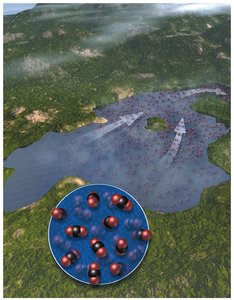
A solution is a homogeneous mixture of two or more substances. Solutions are prevalent in everyday life and in nature, such as in oceans, blood plasma, and even the air we breathe. The tragedy at Lake Nyos, Cameroon, is a real-world example where a solution of carbon dioxide in water led to a catastrophic event when the gas was suddenly released due to a pressure change.

Components of Solutions
Solvent: The component present in the greatest amount; it dissolves the solute.
Solute: The component present in a lesser amount; it is dissolved by the solvent.
In aqueous solutions, water is the solvent.
Common Types of Solutions
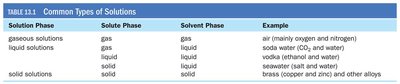
Solutions can exist in various phases, depending on the physical states of the solute and solvent.
Solution Phase | Solute Phase | Solvent Phase | Example |
|---|---|---|---|
Gaseous solutions | Gas | Gas | Air (mainly oxygen and nitrogen) |
Liquid solutions | Gas | Liquid | Soda water (CO2 and water) |
Liquid solutions | Liquid | Liquid | Vodka (ethanol and water) |
Liquid solutions | Solid | Liquid | Seawater (salt and water) |
Solid solutions | Solid | Solid | Brass (copper and zinc) and other alloys |
Solubility and Solution Formation
Solubility and Saturation
Solubility is the amount of solute (usually in grams) that dissolves in a given amount of solvent at a specific temperature. Solutions can be classified as:
Saturated: Contains the maximum amount of solute that can dissolve under the given conditions.
Unsaturated: Contains less than the maximum amount of solute; more solute can dissolve.
Supersaturated: Contains more than the maximum amount of solute; excess solute will precipitate out.
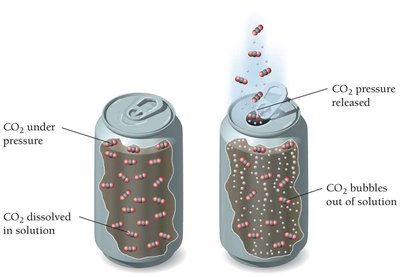
Supersaturation can occur with changes in temperature or pressure, as seen in soda cans or the Lake Nyos event.
Factors Affecting Solubility
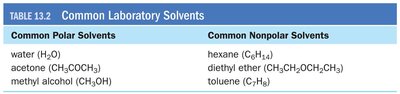
Nature of solute and solvent: "Like dissolves like"—polar solvents dissolve polar solutes, nonpolar solvents dissolve nonpolar solutes.
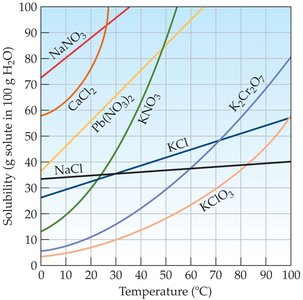
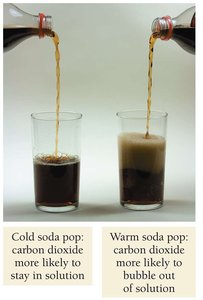
Temperature: Solubility of solids in water generally increases with temperature; for gases, solubility decreases with increasing temperature.
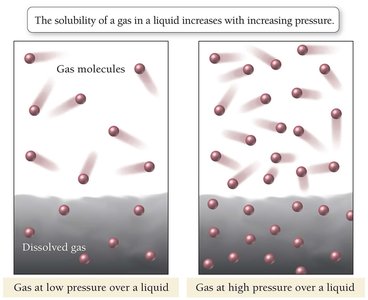
Pressure: For gases, solubility increases with increasing pressure (Henry's Law).
How Solids Dissolve in Water
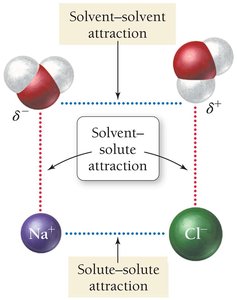
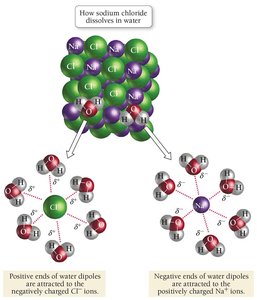
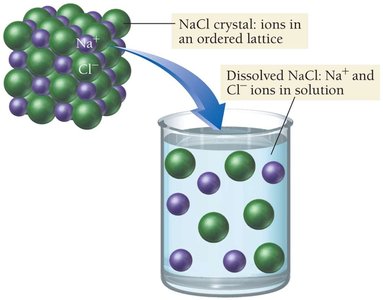
When an ionic solid like NaCl dissolves in water, the solvent–solute attractions must overcome the solute–solute and solvent–solvent attractions. Water molecules surround and separate the ions, dispersing them throughout the solution.
Electrolyte and Nonelectrolyte Solutions
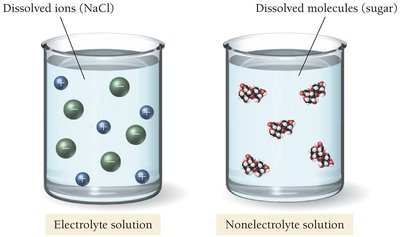
Electrolyte solutions: Contain dissolved ions and conduct electricity (e.g., NaCl in water).
Nonelectrolyte solutions: Contain dissolved molecules and do not conduct electricity (e.g., sugar in water).
Solubility and Temperature
The solubility of most solids increases with temperature, while the solubility of gases decreases as temperature rises.
Henry's Law
Henry's Law states that the solubility of a gas in a liquid is directly proportional to the pressure of the gas above the liquid.
Concentration Units and Calculations
Mass Percent
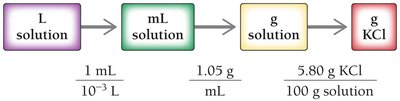
Mass percent expresses the concentration of a solution as grams of solute per 100 grams of solution.
Formula:
Alternative:


Using Mass Percent in Calculations
Mass percent can be used as a conversion factor to relate the mass of solute and the mass of solution.

Molarity (M)
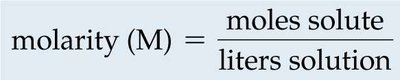
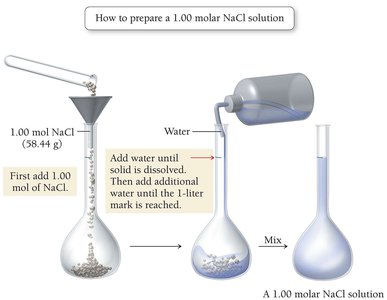
Molarity is the number of moles of solute per liter of solution. It is a common unit for expressing solution concentration in the laboratory.
Formula:
Example: Calculating Molarity
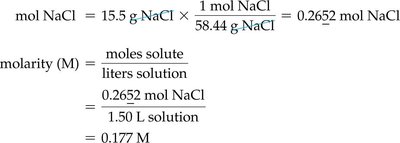
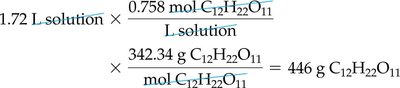
To find the molarity of a solution, convert the mass of solute to moles, then divide by the volume of solution in liters.
Using Molarity in Calculations
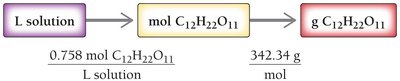
Molarity can be used to determine the amount of solute in a given volume of solution, or vice versa.

Ion Concentrations in Solution
For ionic compounds, the concentration of each ion can be determined from the formula and the overall molarity. For example, a 1.0 M CaCl2 solution contains 1.0 M Ca2+ and 2.0 M Cl−.
Solution Dilution
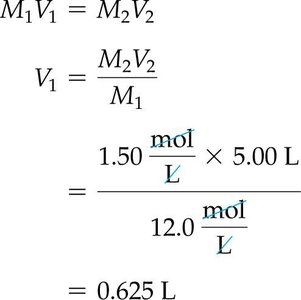
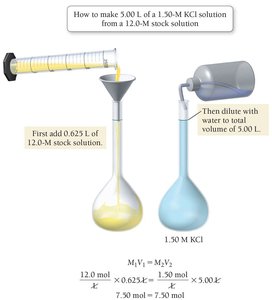
To prepare a less concentrated solution from a stock solution, use the dilution equation:
Where and are the molarity and volume of the stock solution, and and are those of the diluted solution.
Solution Stoichiometry
In reactions involving solutions, use the volume and concentration to calculate moles, then use stoichiometry to relate reactants and products.



Colligative Properties
Freezing Point Depression and Boiling Point Elevation
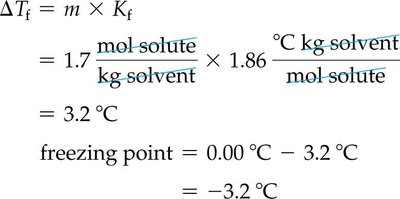
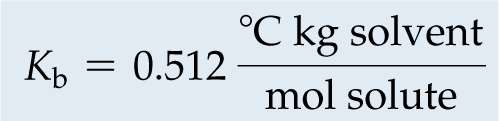
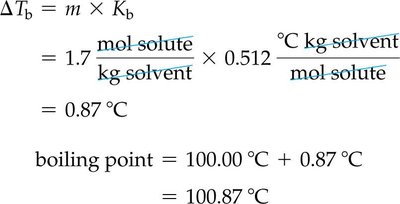
Adding a nonvolatile solute to a solvent lowers the freezing point and raises the boiling point of the solution. These effects depend only on the number of solute particles, not their identity (colligative properties).
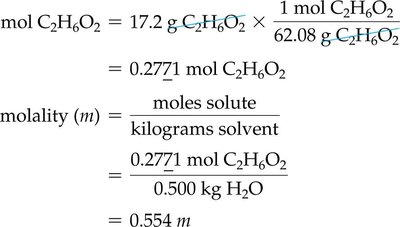
Molality (m): Moles of solute per kilogram of solvent.
Freezing point depression:
Boiling point elevation:
Everyday Chemistry: Antifreeze in Frogs
Some organisms, like wood frogs, use high concentrations of glucose as a natural antifreeze to survive freezing temperatures.

Osmosis and Osmotic Pressure
Osmosis
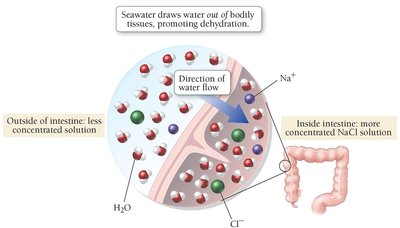
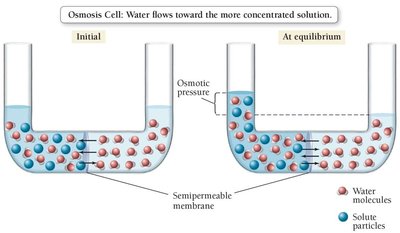
Osmosis is the flow of solvent from a less concentrated solution to a more concentrated one through a semipermeable membrane. This process is crucial in biological systems and explains why drinking seawater causes dehydration.
Red Blood Cells in Different Solutions
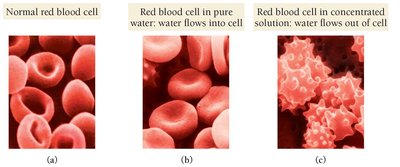
Red blood cells respond to the osmotic pressure of their environment:
In an isoosmotic solution (same concentration as bodily fluids), cells retain their normal shape.
In a hypoosmotic solution (lower concentration), water enters the cell, causing it to swell and possibly burst.
In a hyperosmotic solution (higher concentration), water leaves the cell, causing it to shrink.
Chemistry and Health: Solutions in Medicine
Intravenous (IV) solutions must be isoosmotic with bodily fluids to prevent damage to cells. A common IV solution contains 0.9 g NaCl per 100 mL of solution.
Additional info: This guide covers the core concepts of solutions, including their properties, preparation, and applications, as well as the effects of solutes on physical properties and biological systems.
