Back
BackChapter 13: Solutions – Properties, Preparation, and Applications
Study Guide - Smart Notes
 Tailored notes based on your materials, expanded with key definitions, examples, and context.
Solutions: Homogeneous Mixtures
Introduction to Solutions
Solutions are homogeneous mixtures composed of two or more substances. They are prevalent in everyday life and play a critical role in chemical, biological, and environmental processes. A solution consists of a solvent (the majority component) and one or more solutes (the minority components).
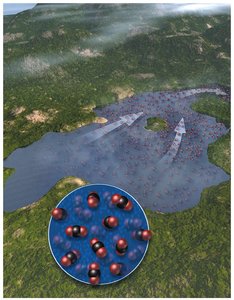
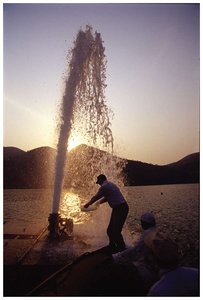
Example: The mixture of carbon dioxide and water at the bottom of Lake Nyos is a solution.
Other examples: Ocean water (salt in water), blood plasma (solids and gases in water), soda pop (CO2 in water).
Common Types of Solutions
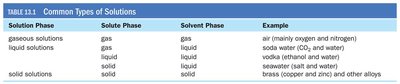
Solutions can be classified based on the physical states of their solute and solvent. The following table summarizes common types of solutions:
Solution Phase | Solute Phase | Solvent Phase | Example |
|---|---|---|---|
Gaseous solutions | Gas | Gas | Air (mainly O2 and N2) |
Liquid solutions | Gas | Liquid | Soda water (CO2 and water) |
Liquid solutions | Liquid | Liquid | Vodka (ethanol and water) |
Liquid solutions | Solid | Liquid | Seawater (salt and water) |
Solid solutions | Solid | Solid | Brass (copper and zinc) and other alloys |
Solvents and Solubility
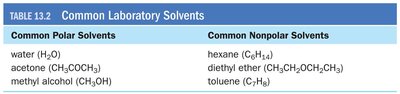
The choice of solvent is crucial in forming solutions. The general rule is "like dissolves like": polar solvents dissolve polar solutes, and nonpolar solvents dissolve nonpolar solutes. Water, a polar solvent, is the most common solvent on Earth, forming aqueous solutions.
Common Polar Solvents | Common Nonpolar Solvents |
|---|---|
Water (H2O) | Hexane (C6H14) |
Acetone (CH3COCH3) | Diethyl ether (CH3CH2OCH2CH3) |
Methyl alcohol (CH3OH) | Toluene (C7H8) |
Formation and Properties of Solutions
How Solids Dissolve in Water
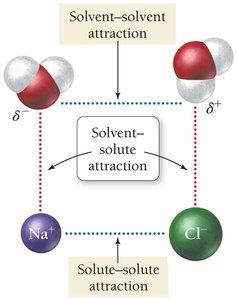
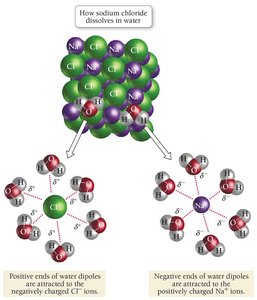
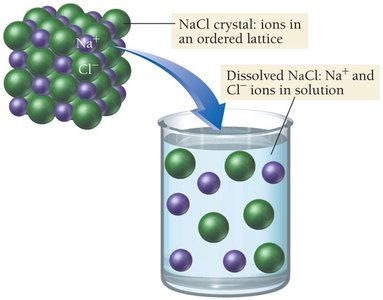
When an ionic solid such as NaCl dissolves in water, the solvent–solute attractions must overcome the solute–solute and solvent–solvent attractions. Water molecules, being polar, surround the ions and separate them from the crystal lattice.
The positive ends of water dipoles are attracted to negatively charged ions (e.g., Cl−).
The negative ends of water dipoles are attracted to positively charged ions (e.g., Na+).
Solubility and Saturation
Solubility is the amount of a compound (usually in grams) that dissolves in a certain amount of liquid. A saturated solution holds the maximum amount of solute under given conditions. An unsaturated solution holds less than the maximum, and a supersaturated solution holds more than the normal maximum, often leading to precipitation.
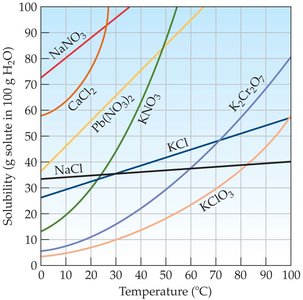
Solubility of NaCl at 25°C: 36 g per 100 g water (saturated solution).
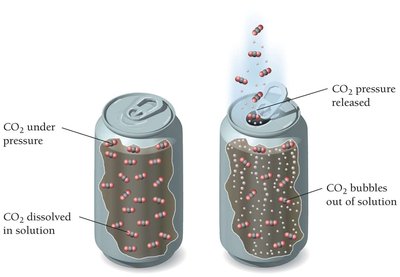
Supersaturation can occur with changes in temperature or pressure (e.g., opening a soda can).
Solubility Rules and Examples
Solubility depends on the nature of the solute and solvent. Ionic solids like calcium carbonate (CaCO3) are insoluble if the attraction between ions is stronger than the solvent–solute attraction. Polar molecular solids (e.g., sugar) are usually soluble in water, while nonpolar solids (e.g., lard) are not.
Electrolyte and Nonelectrolyte Solutions
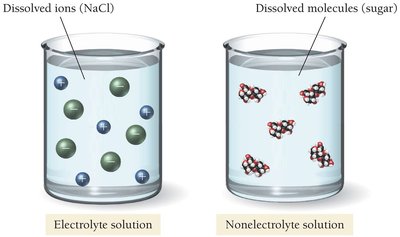
Electrolyte solutions contain dissolved ions and conduct electricity. Nonelectrolyte solutions contain dissolved molecules and do not conduct electricity.
Temperature Dependence of Solubility
Generally, the solubility of solids in water increases with increasing temperature. This property is used in purification techniques such as recrystallization.
Recrystallization
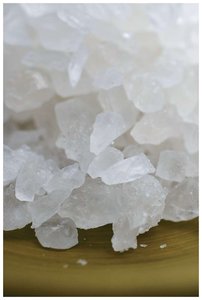
Recrystallization is a method to purify solids by dissolving them in hot solvent and then cooling the solution. As the solution cools, the solubility decreases, and pure crystals form, leaving impurities behind.
Solutions of Gases in Liquids
Solubility of Gases
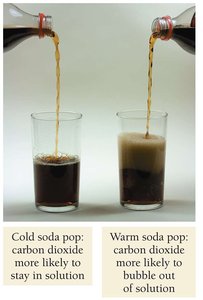
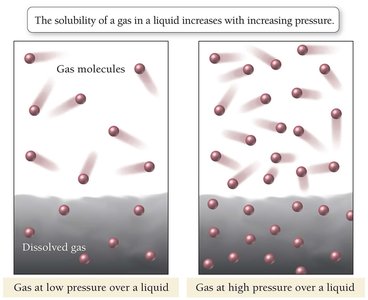
The solubility of gases in water decreases with increasing temperature. For example, warm soda pop fizzes more than cold soda pop because CO2 is less soluble at higher temperatures.
Henry's Law
According to Henry's Law, the higher the pressure of a gas above a liquid, the more soluble the gas is in the liquid. This principle explains why soda is bottled under pressure and fizzes when opened.
Specifying Solution Concentration
Mass Percent
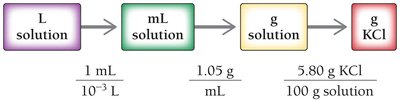
Mass percent expresses the concentration of a solution as grams of solute per 100 g of solution. It is calculated as:

Other units include parts per million (ppm) and parts per billion (ppb).
Using Mass Percent in Calculations
Mass percent can be used as a conversion factor between the mass of solute and the mass of solution.


Molarity (M)
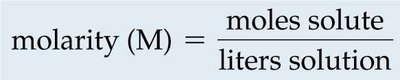
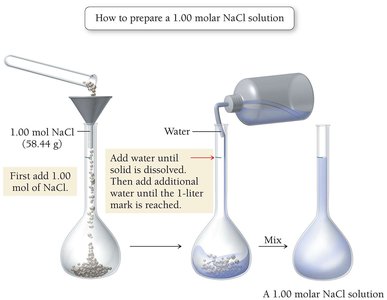
Molarity is defined as the number of moles of solute per liter of solution:
Calculating Molarity
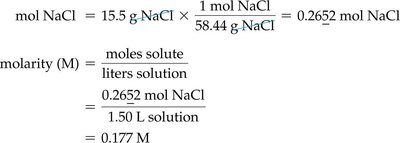
To calculate molarity, convert the mass of solute to moles and divide by the volume of solution in liters.
Using Molarity in Calculations
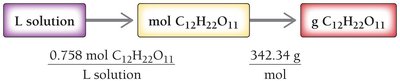
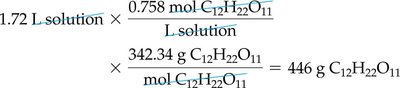
Molarity can be used to determine the amount of solute in a given volume of solution, or vice versa.

Ion Concentrations in Solution
For ionic compounds, the concentration of individual ions can be determined from the formula and the overall molarity. For example, a 1.0 M CaCl2 solution contains 1.0 M Ca2+ and 2.0 M Cl−.
Solution Dilution
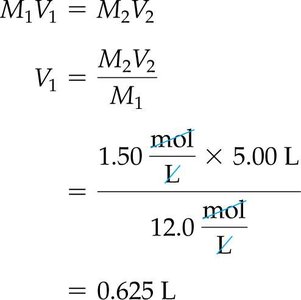
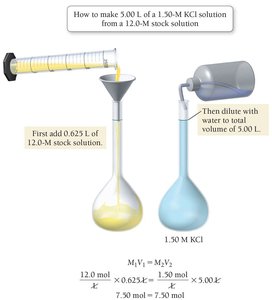
To prepare a less concentrated solution from a stock solution, use the dilution equation:
Where M1 and V1 are the molarity and volume of the initial solution, and M2 and V2 are those of the final solution.
Solution Stoichiometry
Stoichiometry with Solutions
In reactions involving solutions, the volume and concentration can be used to calculate the amount of reactants or products. The general approach is:



Colligative Properties
Freezing Point Depression and Boiling Point Elevation
Adding a nonvolatile solute to a solvent lowers the freezing point and raises the boiling point of the solution. These effects depend only on the number of solute particles, not their identity, and are called colligative properties.
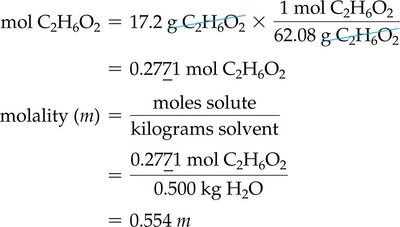
Molality (m): Number of moles of solute per kilogram of solvent.
Freezing Point Depression
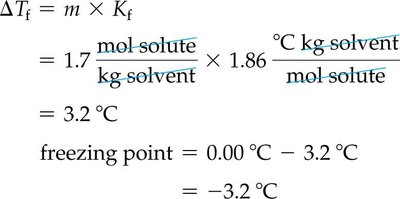
The freezing point depression is calculated as:
Where is the change in freezing point, is the molality, and is the freezing point depression constant.
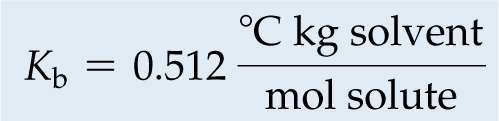
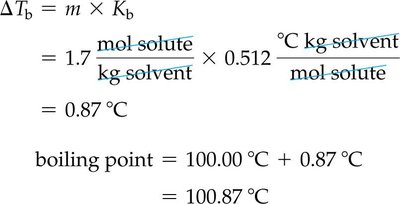
Boiling Point Elevation
The boiling point elevation is calculated as:
Where is the change in boiling point, is the molality, and is the boiling point elevation constant.
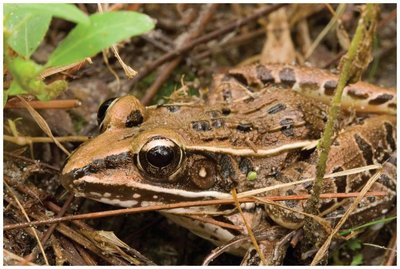
Biological Application: Antifreeze in Frogs
Some organisms, such as wood frogs, survive freezing temperatures by producing high concentrations of glucose, which acts as antifreeze and lowers the freezing point of their bodily fluids.
Osmosis and Osmotic Pressure
Osmosis
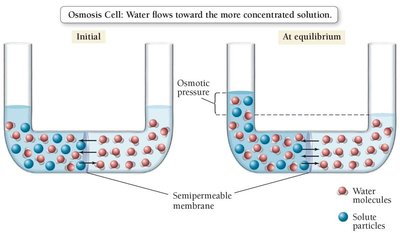
Osmosis is the flow of solvent from a less concentrated solution to a more concentrated solution through a semipermeable membrane. This process is driven by differences in solute concentration and can lead to dehydration if, for example, seawater is consumed.
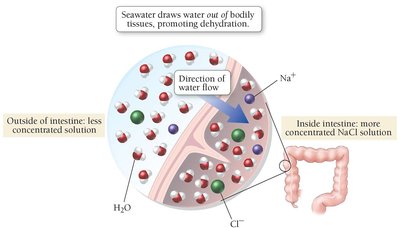
Osmotic Pressure and Cells
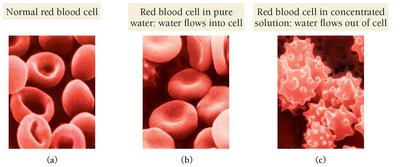
Osmotic pressure is a colligative property that depends on solute concentration. Living cells are sensitive to osmotic pressure; if placed in a hyperosmotic solution, they lose water and shrink, while in a hypoosmotic solution, they gain water and may burst. Isoosmotic solutions have the same osmotic pressure as bodily fluids and are used in medical IVs.