 Back
BackChapter 14: Acids and Bases – General Chemistry Study Notes
Study Guide - Smart Notes
 Tailored notes based on your materials, expanded with key definitions, examples, and context.
Acids and Bases: Introduction and Properties
Overview of Acids and Bases
Acids and bases are two fundamental categories of compounds in chemistry, each with distinct properties and behaviors. Understanding their characteristics, definitions, and reactions is essential for mastering general chemistry.
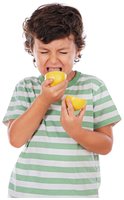
Acids have a sour taste, dissolve many metals, and turn blue litmus paper red.
Bases have a bitter taste, a slippery feel, and turn red litmus paper blue.
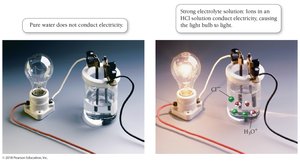
Both acids and bases are electrolytes, meaning their aqueous solutions conduct electricity.

Classification and Nomenclature of Acids
Types of Acids
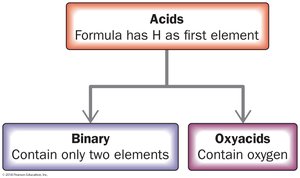
Acids are classified based on their composition and the presence of oxygen.
Binary acids: Contain hydrogen and one other nonmetal element.
Oxyacids: Contain hydrogen, oxygen, and another element (usually a nonmetal).
Naming Binary Acids
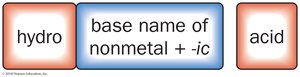
Binary acids are named using the prefix hydro-, the base name of the nonmetal, and the suffix -ic acid.
Example: HCl(aq) is hydrochloric acid.
Example: H2S(aq) is hydrosulfuric acid.
Naming Oxyacids
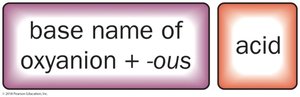
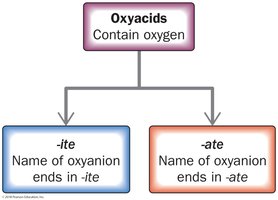
Oxyacids are named based on the polyatomic ion they contain:
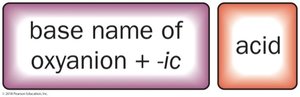
If the oxyanion ends in -ate, the acid name ends in -ic acid.
If the oxyanion ends in -ite, the acid name ends in -ous acid.
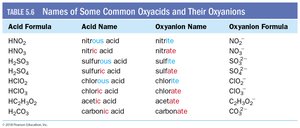
Examples of Common Oxyacids
Acid Formula | Acid Name | Oxyanion Name | Oxyanion Formula |
|---|---|---|---|
HNO2 | nitrous acid | nitrite | NO2- |
HNO3 | nitric acid | nitrate | NO3- |
H2SO3 | sulfurous acid | sulfite | SO32- |
H2SO4 | sulfuric acid | sulfate | SO42- |
HC2H3O2 | acetic acid | acetate | C2H3O2- |
Examples of Common Acids
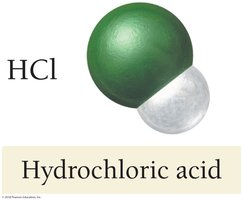
Hydrochloric Acid (HCl)
Hydrochloric acid is widely used in laboratories and industry. It is also the main component of stomach acid, aiding in digestion and killing bacteria.
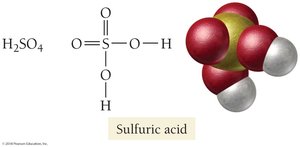
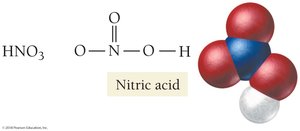
Sulfuric Acid (H2SO4) and Nitric Acid (HNO3)
Sulfuric acid is the most produced chemical in the U.S., used in fertilizers, batteries, and manufacturing. Nitric acid is used in explosives and dyes.
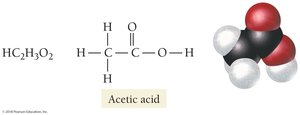
Acetic Acid and Carboxylic Acids
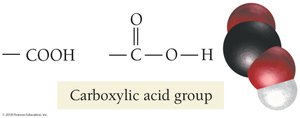
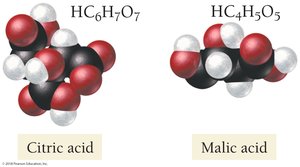
Acetic acid is found in vinegar and is an example of a carboxylic acid, which contains the carboxyl group (–COOH). Other carboxylic acids include citric acid (lemons) and malic acid (apples).
Properties and Examples of Bases
Properties of Bases
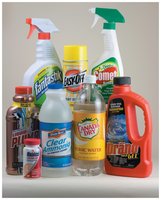
Bases are characterized by their bitter taste and slippery feel. They are commonly found in cleaning products and are less prevalent in foods due to their taste.
Examples of Common Bases
Sodium hydroxide (NaOH): Used in drain cleaners and soap making.
Potassium hydroxide (KOH): Used in industrial processes.
Sodium bicarbonate (NaHCO3): Baking soda, used as an antacid.
Arrhenius and Brønsted–Lowry Definitions
Arrhenius Definition
Arrhenius acid: Produces H+ ions in aqueous solution.
Arrhenius base: Produces OH− ions in aqueous solution.
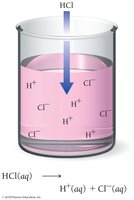

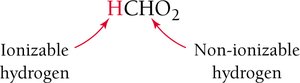
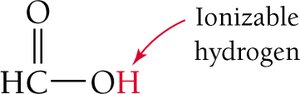
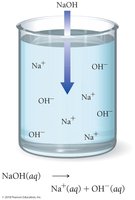
Brønsted–Lowry Definition
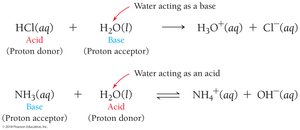
Brønsted–Lowry acid: Proton donor.
Brønsted–Lowry base: Proton acceptor.
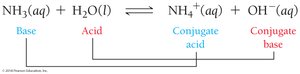


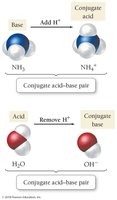
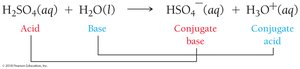
Strong and Weak Acids and Bases
Strong Acids
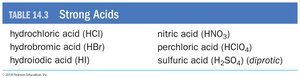
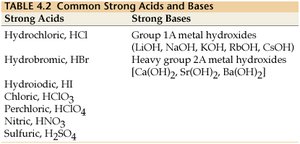
Strong acids completely ionize in solution. There are only a few strong acids, including HCl, HBr, HI, HNO3, HClO4, and H2SO4 (first proton only).
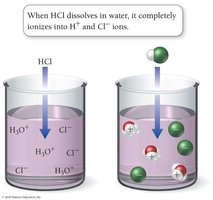
Weak Acids
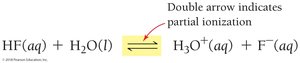
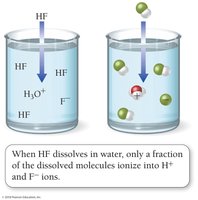
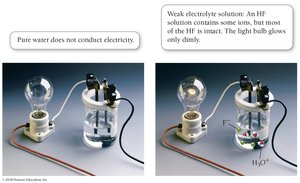
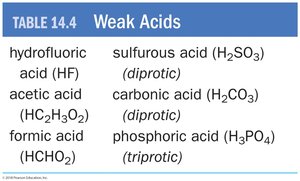
Weak acids only partially ionize in solution. Most acids are weak, including acetic acid, formic acid, and HF.
Strong Bases
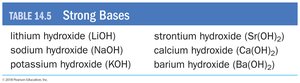
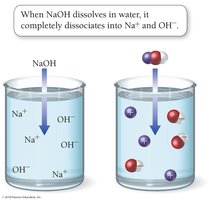
Strong bases completely dissociate in solution. These include Group 1 and heavy Group 2 metal hydroxides (e.g., NaOH, KOH, Ca(OH)2).
Weak Bases
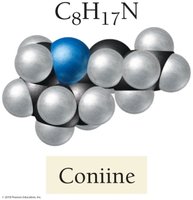
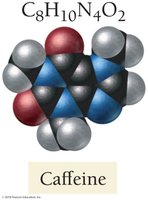
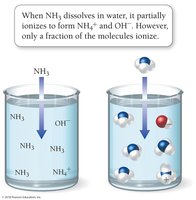
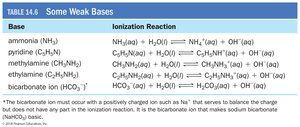
Weak bases only partially react with water to produce OH−. Ammonia (NH3) and organic amines are common weak bases.
Water: Amphoteric Nature and Self-Ionization
Amphoteric Behavior of Water
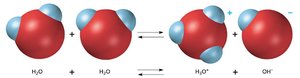
Water can act as both an acid and a base (amphoteric). It self-ionizes to produce equal concentrations of H3O+ and OH− in pure water.
Ion Product Constant for Water (Kw)
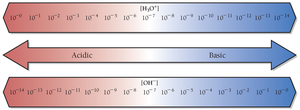
At 25°C, the ion product constant for water is:
In neutral solutions: M
Acidic solutions:
Basic solutions:
The pH and pOH Scales
Definition and Calculation
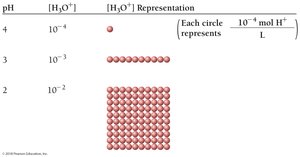
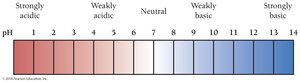
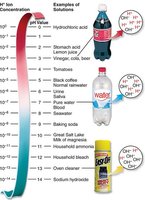
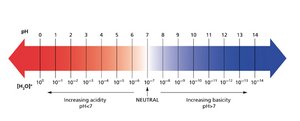
The pH scale expresses the acidity or basicity of a solution. It is defined as:
At 25°C, .
Examples of pH Calculations
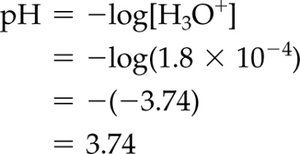
To find [H3O+] from pH:
To find [OH−] from pOH:
Reactions of Acids and Bases
Neutralization Reactions
When an acid reacts with a base, they neutralize each other, forming water and a salt. The general equation is:
Acid–Base Titration
Titration is a laboratory technique used to determine the concentration of an unknown acid or base by reacting it with a standard solution of known concentration. The equivalence point is reached when moles of H+ equal moles of OH−.
Buffers: Solutions That Resist pH Change
Buffer Systems
A buffer contains significant amounts of a weak acid and its conjugate base. Buffers resist changes in pH by neutralizing added acids or bases. Human blood is buffered by the carbonic acid/bicarbonate system.
Summary Table: Strong and Weak Acids and Bases
Strong Acids | Strong Bases |
|---|---|
HCl, HBr, HI, HNO3, HClO4, H2SO4 | LiOH, NaOH, KOH, RbOH, CsOH, Ca(OH)2, Sr(OH)2, Ba(OH)2 |
Weak Acids | Weak Bases |
|---|---|
HF, CH3COOH, H2CO3, H3PO4, HCHO2 | NH3, C5H5N, CH3NH2, C2H5NH2, HCO3- |
Key Equations and Relationships
Additional info:
All acids and bases discussed here are aqueous unless otherwise specified.
For titration calculations, always use the balanced chemical equation to determine the stoichiometric relationship between acid and base.
