 Back
BackChapter 14: Solutions – General Chemistry Study Notes
Study Guide - Smart Notes
 Tailored notes based on your materials, expanded with key definitions, examples, and context.
Solutions
Definition and Components
Solutions are homogeneous mixtures composed of two or more substances. The majority component is called the solvent, while the minority component is the solute. Solutions form due to intermolecular forces between solute and solvent particles, resulting in uniform mixing.
Solvent: The substance present in the largest amount.
Solute: The substance present in a smaller amount.
Homogeneous mixture: Appears as a single substance but contains multiple materials.
Examples: Air, seawater.
Nature’s Tendency Toward Mixing
Mixing occurs spontaneously due to the drive toward increased entropy, which is the dispersal of energy in a system. Uniform mixing is energetically favorable, even if potential energy does not decrease.
Entropy: Measure of energy dispersal; mixing increases entropy.
Spontaneous mixing: Solutions with different solute concentrations mix to achieve uniform distribution.
Solubility
Solubility and Miscibility
Solubility is the maximum amount of solute that can dissolve in a given amount of solvent. Two liquids that are mutually soluble are miscible; if not, they are immiscible. Solubility depends on the tendency toward mixing and the types of intermolecular forces.
Soluble: Substance dissolves in another (e.g., salt in water).
Insoluble: Substance does not dissolve (e.g., oil in water).
Miscible: Alcohol and water.
Immiscible: Oil and water.
Intermolecular Forces and Solution Formation
For a solution to form, solute–solute and solvent–solvent attractions must be overcome, which are endothermic processes. New solute–solvent attractions are formed, which are exothermic. The overall energetics determine whether the process is endothermic or exothermic.
Like dissolves like: Polar solutes dissolve in polar solvents; nonpolar solutes in nonpolar solvents.
Relative interactions: If solute–solvent attractions are comparable to solute–solute and solvent–solvent, a homogeneous solution forms.
Energetics of Solution Formation
Enthalpy of Solution
The formation of a solution involves three steps:
Separating the solute into constituent particles (endothermic).
Separating solvent molecules (endothermic).
Mixing solute and solvent particles (exothermic).
The overall enthalpy change () depends on the relative sizes of these energy changes.
If energy released in mixing exceeds energy required to separate, process is exothermic.
If energy required to separate exceeds energy released in mixing, process is endothermic.
Heats of Hydration
For ionic compounds in water, the heat of hydration combines the energy added to overcome water attractions and the energy released in forming ion–dipole attractions. Lattice energy (attraction between ions) and hydrogen bonding in water are key factors.
Ion–dipole interactions: Ions surrounded by water molecules; highly exothermic.
Heat of solution: Difference between heat of hydration and lattice energy.
Solution Equilibrium and Solubility Limits
Saturated, Unsaturated, and Supersaturated Solutions
The dissolution of a solute is an equilibrium process. When the rate of dissolution equals the rate of deposition, the solution is saturated. If less solute is present, the solution is unsaturated; if more, it is supersaturated.
Saturated: No more solute dissolves.
Unsaturated: More solute can dissolve.
Supersaturated: More solute than equilibrium; unstable.
Temperature and Pressure Dependence
Solubility of solids generally increases with temperature, while solubility of gases decreases with temperature. The solubility of gases increases with pressure, described by Henry’s Law:
where is solubility, is Henry’s law constant, and is partial pressure.
Concentration Units
Common Units
Concentration describes the amount of solute in a given amount of solution or solvent. Common units include:
Molarity (M): Moles of solute per liter of solution.
Molality (m): Moles of solute per kilogram of solvent.
Percent by mass: Grams of solute per 100 grams of solution.
Parts per million (ppm): Grams of solute per 1,000,000 grams of solution.
Parts per billion (ppb): Grams of solute per 1,000,000,000 grams of solution.
Mole fraction (): Fraction of moles of one component in total moles.
Converting Units
To convert between concentration units, write the given concentration as a ratio, separate numerator and denominator, and convert each part to the required unit.
Colligative Properties
Definition
Colligative properties depend only on the number of solute particles, not their identity. These include vapor pressure lowering, boiling point elevation, freezing point depression, and osmotic pressure.
Nonelectrolytes: Do not dissociate in solution.
Electrolytes: Dissociate into ions; affect colligative properties differently.
Vapor Pressure Lowering and Raoult’s Law
The vapor pressure of a solvent above a solution is lower than that of the pure solvent. Raoult’s Law describes this:
where is the vapor pressure of the solution, is the mole fraction of the solvent, and is the vapor pressure of the pure solvent.
Boiling Point Elevation and Freezing Point Depression
Adding solute raises the boiling point and lowers the freezing point of a solvent. The changes are proportional to the molal concentration of solute particles:
Boiling point elevation:
Freezing point depression:
and are solvent-specific constants.
Osmosis and Osmotic Pressure
Osmosis is the flow of solvent from low to high concentration through a semipermeable membrane. Osmotic pressure () is the pressure needed to stop this flow:
where is molarity, is the gas constant, and is temperature.
Van’t Hoff Factor
The van’t Hoff factor () accounts for the number of particles produced by dissociation of ionic compounds. It affects colligative properties:
Theoretical : Ratio of moles of particles to moles of formula units.
Measured : Often less due to ion pairing.
Mixtures and Colloids
Types of Mixtures
Mixtures can be classified as:
Solutions: Homogeneous, do not separate on standing.
Suspensions: Heterogeneous, separate on standing.
Colloids: Heterogeneous, do not separate on standing; particles can coagulate and show the Tyndall effect and Brownian motion.
Colloidal Suspensions
Colloids are stabilized by hydrophilic or hydrophobic interactions. Hydrophilic colloids are stabilized by attraction to water, while hydrophobic colloids are stabilized by charged surface repulsions.
Type | Example |
|---|---|
Sol | Paints |
Gel | Jelly |
Emulsion | Milk |
Foam | Whipped cream |
Aerosol | Fog |
Solid aerosol | Smoke |
Solid sol | Opal |
Additional info: | Table inferred from context and typical colloid types. |
Soaps and Micelles
Soaps are fatty acid salts with a hydrophilic head and hydrophobic tail, allowing them to form micelles and emulsify oily substances in water.
The Tyndall Effect
Colloids scatter light, making the path of a beam visible. This is known as the Tyndall effect.

Brownian Motion
Colloidal particles exhibit random motion due to collisions with solvent molecules, known as Brownian motion.
Examples of Colloidal Dispersions
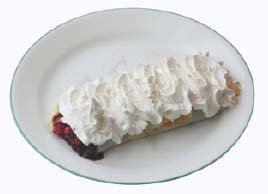
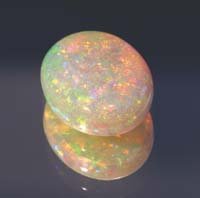
Colloidal dispersions are found in everyday life, such as smoke, whipped cream, and opal.

Summary Table: Types of Colloidal Dispersions
Type | Dispersed Phase | Dispersion Medium | Example |
|---|---|---|---|
Sol | Solid | Liquid | Paints |
Gel | Liquid | Solid | Jelly |
Emulsion | Liquid | Liquid | Milk |
Foam | Gas | Liquid | Whipped cream |
Aerosol | Liquid | Gas | Fog |
Solid aerosol | Solid | Gas | Smoke |
Solid sol | Solid | Solid | Opal |
Additional info: | Table entries inferred from context and standard chemistry references. | ||
