 Back
BackChapter 15: Chemical Kinetics – Study Notes
Study Guide - Smart Notes
 Tailored notes based on your materials, expanded with key definitions, examples, and context.
Chemical Kinetics
Introduction to Chemical Kinetics
Chemical kinetics is the branch of chemistry that studies the rates at which chemical reactions occur and the factors that influence these rates. Understanding reaction rates is crucial for controlling industrial processes, biological systems, and laboratory experiments.
Reaction rate: The speed at which reactants are converted to products, typically measured as the change in concentration of a reactant or product per unit time.
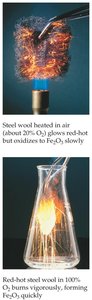
Key factors affecting reaction rates include: physical state of reactants, concentration, temperature, and the presence of a catalyst.
Factors Affecting Reaction Rates
Physical state: Reactions occur faster when reactants are in the same phase or finely divided, increasing contact surface area.
Concentration: Higher concentrations generally increase reaction rates due to more frequent collisions.
Temperature: Raising temperature increases kinetic energy, leading to more effective collisions and faster reactions.
Catalysts: Substances that increase reaction rate by lowering activation energy without being consumed.
Measuring Reaction Rates
Defining and Calculating Reaction Rate
The rate of a reaction is defined as the change in concentration of a reactant or product over a specific time interval.
General formula:
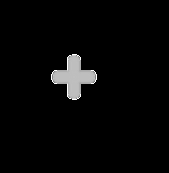
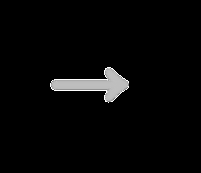
For a reaction: , the rate can be expressed for each species, accounting for stoichiometry.





Reaction Rate and Stoichiometry
Reaction rates are related to the stoichiometric coefficients of the balanced equation. For the general reaction above:
Reactant rates are negative (decreasing), product rates are positive (increasing).

Concentration vs. Time and Rate Data
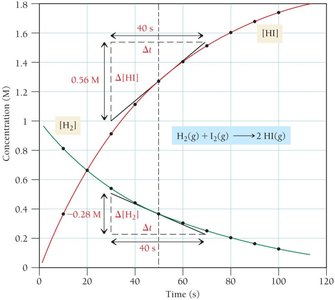
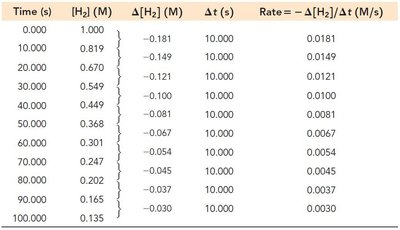
Reaction rates can be measured by monitoring concentration changes over time. The average rate is calculated over a time interval, while the instantaneous rate is the slope at a specific point.
Initial rate: The instantaneous rate at the start of the reaction.
As reactants are consumed, the rate typically decreases.
Experimental Techniques for Measuring Rates
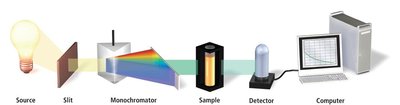
Spectroscopy: Measures absorbance or emission of light by reactants/products.
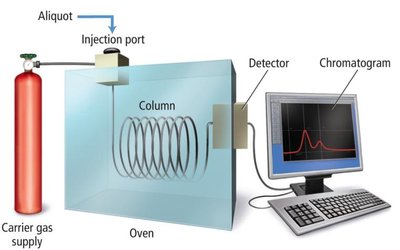
Gas Chromatography: Separates and quantifies volatile components.
Other methods: Titration, gravimetric analysis, pressure measurement.
Rate Laws and Reaction Order
Rate Law Expressions
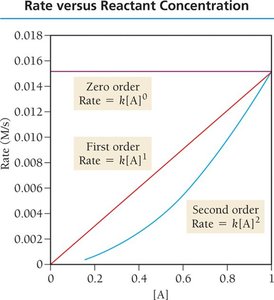
The rate law relates the reaction rate to the concentrations of reactants, each raised to a power (the order with respect to that reactant).
General form:
k: Rate constant (depends on temperature and reaction).
m, n: Reaction orders (determined experimentally).
Overall order: Sum of exponents (m + n).
Determining Rate Laws Experimentally
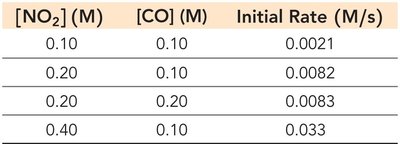
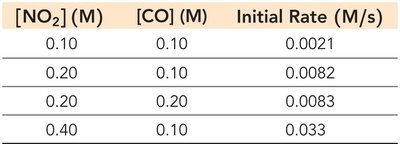
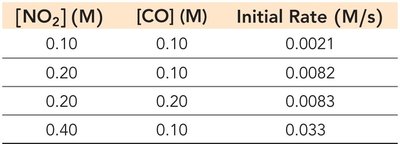
Rate laws are determined by measuring initial rates at varying reactant concentrations and analyzing how the rate changes.
Method of initial rates: Compare experiments where only one reactant concentration changes.
Use ratios and logarithms to solve for reaction orders.
Integrated Rate Laws
Zero, First, and Second Order Reactions
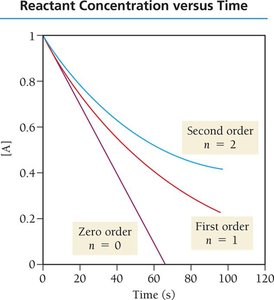
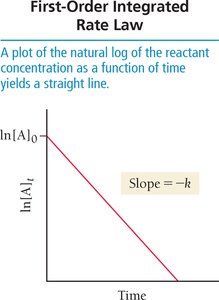
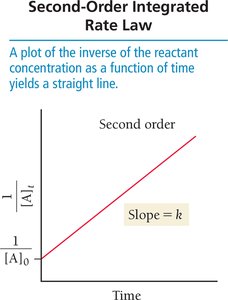
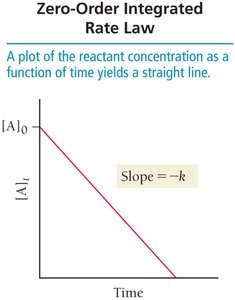
Integrated rate laws relate reactant concentration to time for different reaction orders. The form of the integrated law and the shape of the concentration vs. time plot depend on the order.
Zero order:
First order:
Second order:
Half-Life of a Reaction
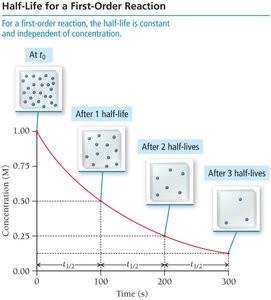
The half-life () is the time required for the concentration of a reactant to decrease by half. The expression for half-life depends on the reaction order.
First order: (independent of initial concentration)
Second order:
Zero order:
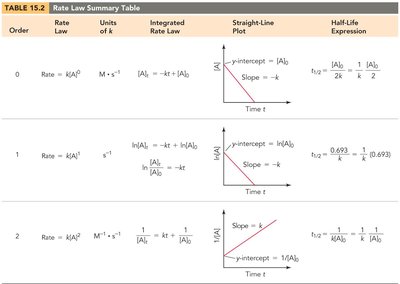
Summary Table: Rate Laws and Plots
Order | Rate Law | Units of k | Integrated Rate Law | Straight-Line Plot | Half-Life Expression |
|---|---|---|---|---|---|
0 | Rate = k | M s-1 | [A]t = [A]0 - kt | [A] vs. t | t1/2 = [A]0 / 2k |
1 | Rate = k[A] | s-1 | ln[A]t = ln[A]0 - kt | ln[A] vs. t | t1/2 = 0.693 / k |
2 | Rate = k[A]2 | M-1 s-1 | 1/[A]t = 1/[A]0 + kt | 1/[A] vs. t | t1/2 = 1 / (k[A]0) |
Temperature and Reaction Rate
Effect of Temperature
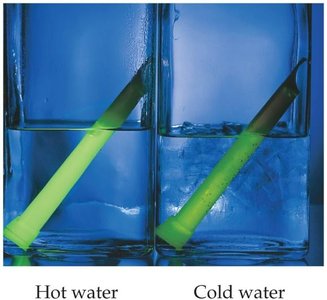
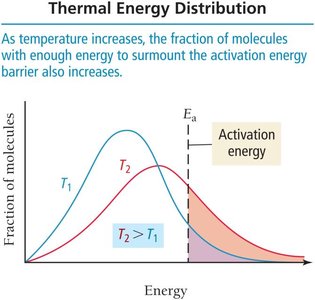
Increasing temperature generally increases reaction rates by providing more kinetic energy to reactant molecules, increasing the frequency and energy of collisions.
The Arrhenius Equation
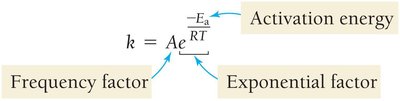
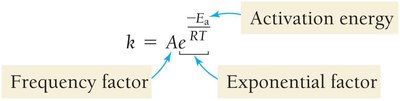
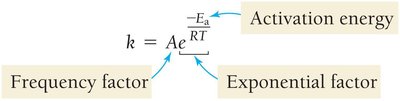
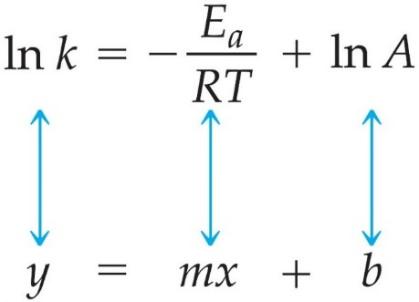
The Arrhenius equation quantitatively relates the rate constant (k) to temperature (T) and activation energy (Ea):
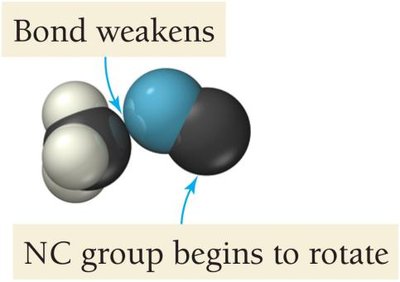
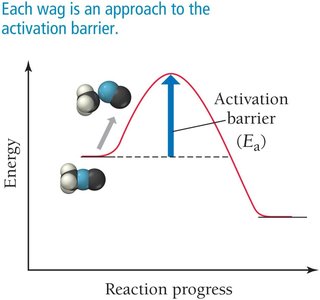
A: Frequency factor (number of approaches to the activation barrier per unit time)
Ea: Activation energy (minimum energy required for reaction)
R: Gas constant (8.314 J/mol·K)
Activation Energy and Reaction Profiles
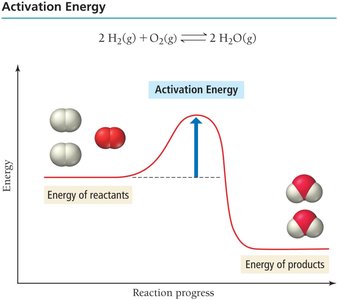
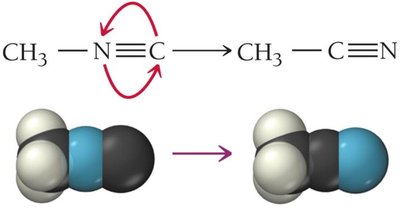
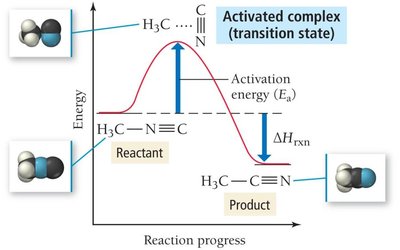
Activation energy is the energy barrier that must be overcome for reactants to be converted into products. The reaction profile shows the energy changes during the reaction, including the transition state (activated complex).
Arrhenius Plots and Calculations
By plotting versus , a straight line is obtained with a slope of . This allows determination of activation energy from experimental data.
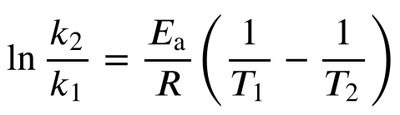
Two-point form:
Collision Theory and Reaction Mechanisms
Collision Theory
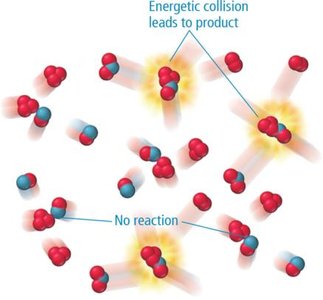
For a reaction to occur, reactant molecules must collide with sufficient energy and proper orientation. Not all collisions result in a reaction; only effective collisions do.
Frequency factor (A) in the Arrhenius equation includes both collision frequency and orientation factor.
Reaction Mechanisms
A reaction mechanism is a sequence of elementary steps that describes the pathway from reactants to products. Each step has its own rate law and activation energy.
Elementary step: A single molecular event.
Intermediate: A species produced in one step and consumed in another.
Molecularity: Number of reactant particles in an elementary step (unimolecular, bimolecular, termolecular).
Rate-determining step (RDS): The slowest step, which controls the overall reaction rate.
Catalysis
Catalysts and Their Function
Catalysts increase reaction rates by providing an alternative pathway with a lower activation energy. They are not consumed in the overall reaction.
Homogeneous catalysts: Same phase as reactants.
Heterogeneous catalysts: Different phase from reactants, often solid surfaces.
Enzymes: Biological catalysts, usually proteins, that increase rates of biochemical reactions by binding substrates at active sites.
Summary
Chemical kinetics provides a framework for understanding how and why reactions occur at different rates. Mastery of rate laws, reaction mechanisms, and the effects of temperature and catalysts is essential for predicting and controlling chemical processes.
