 Back
BackChapter 22: Organic Molecules – Structure, Nomenclature, and Functional Groups
Study Guide - Smart Notes
 Tailored notes based on your materials, expanded with key definitions, examples, and context.
Organic Molecules
Introduction to Organic Molecules
Organic molecules are compounds that contain carbon atoms, often in combination with hydrogen, oxygen, nitrogen, and other elements. They are foundational to biology, materials science, and industry, including plastics, fuels, and pharmaceuticals.
Hydrocarbons: Molecules containing only carbon and hydrogen.
Functional Groups: Specific combinations of atoms that impart characteristic chemical properties and reactivity to organic molecules.
Representations of Organic Molecules
Structural Formulas
Organic molecules can be represented in several ways to convey their structure and connectivity:
Lewis Structure: Shows all atoms and bonds explicitly, including lone pairs.
Condensed Structure: Groups atoms together, omitting some bonds for simplicity (e.g., CH3CH2CH2CH2CH2CH3).
Line-Angle Structure: Uses lines to represent carbon-carbon bonds; vertices and line ends represent carbon atoms, and hydrogens attached to carbons are implied.
Example: Hexane (C6H14) in different representations:
Lewis Structure:
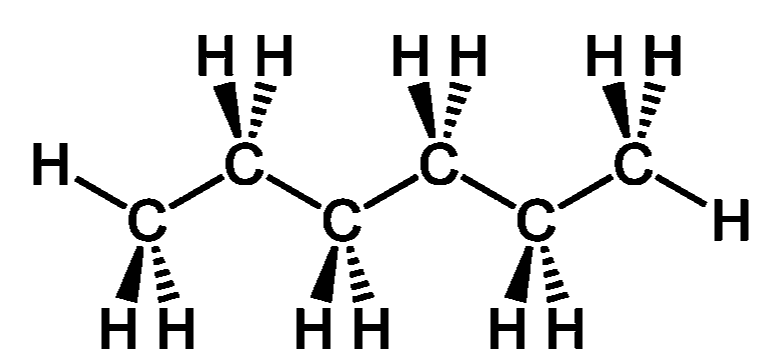
2D Structure:
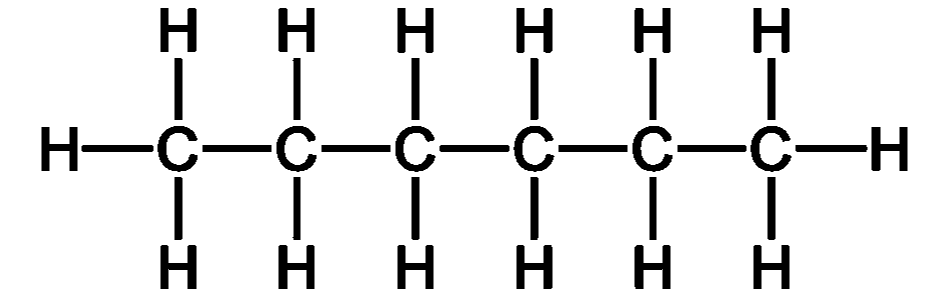
Line-Angle Structure:

In line-angle structures, hydrogens attached to carbons are not shown, but hydrogens attached to other atoms (e.g., O, N) are always shown.
Alkanes
Properties and General Formula
Alkanes are saturated hydrocarbons, meaning they contain only single bonds and have the maximum number of hydrogen atoms per carbon.
General formula:
Nonpolar and exhibit low boiling points (which increase with chain length and molar mass).
Low reactivity under standard conditions.
Naming Straight-Chain Alkanes
Straight-chain alkanes are named using a prefix that indicates the number of carbon atoms, followed by the suffix "-ane".
# Carbons | Prefix |
|---|---|
1 | meth- |
2 | eth- |
3 | prop- |
4 | but- |
5 | pent- |
6 | hex- |
7 | hept- |
8 | oct- |
9 | non- |
10 | dec- |
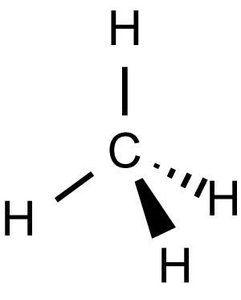
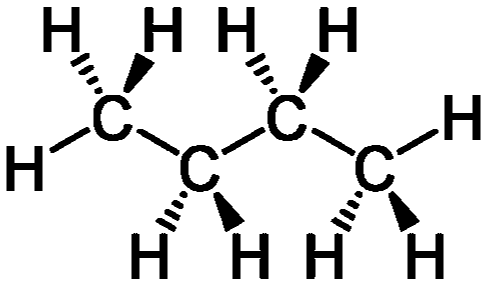
Examples:
Methane (CH4)
Butane (C4H10)
Nonane (C9H20)

Branched Alkanes and Isomerism
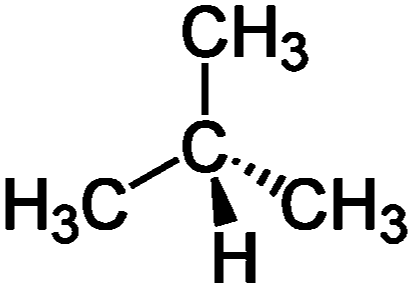
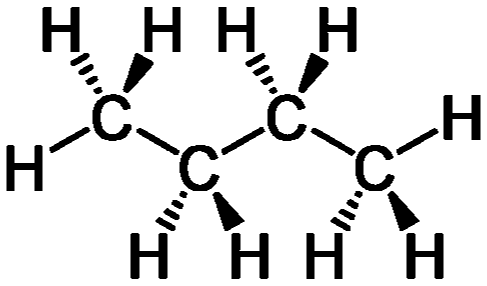
Branched alkanes are isomers of straight-chain alkanes, having the same molecular formula but different connectivity and properties.
Isomer: Compounds with the same molecular formula but different structures.
Naming Branched-Chain Alkanes
The IUPAC system for naming branched alkanes involves several steps:
Identify the parent chain: the longest continuous chain of carbon atoms.
Identify and name substituents: groups attached to the parent chain (alkyl groups end in "-yl").
Number the parent chain to give the substituents the lowest possible numbers.
List substituents in alphabetical order, using prefixes (di-, tri-, tetra-) for multiples of the same group.
Minimize the sum of location numbers for substituents (tiebreaker rule).
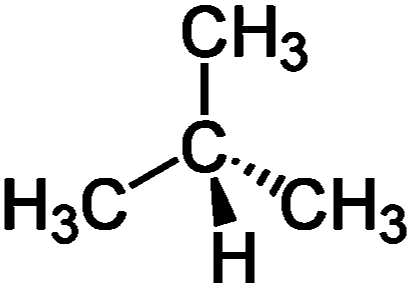
Example: 2-methylpropane
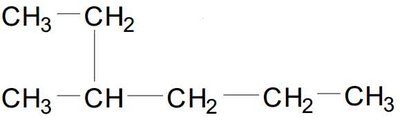
Example: 3-methylhexane
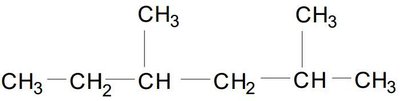
Example: 2,4-dimethylhexane
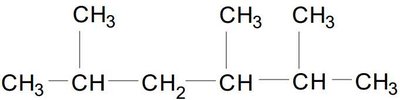
Example: 2,3,5-trimethylhexane
Example: 4-ethyl-2,3-dimethyloctane

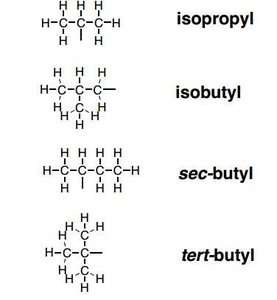
Example: 4-tert-butyl-2-methylheptane (using common names for branched substituents)
Cyclic Alkanes
Structure and Nomenclature
Cyclic alkanes are ring-shaped hydrocarbons with the general formula CnH2n. They are named by adding the prefix "cyclo-" to the alkane name.
Examples: cyclopropane (C3H6), cyclobutane (C4H8), cyclopentane (C5H10), cyclohexane (C6H12).




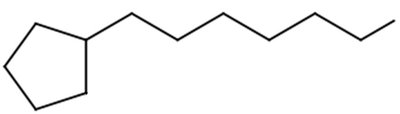
When naming, if only one substituent is present, numbering is not necessary. For multiple substituents, use the same rules as for branched alkanes, giving priority to alphabetical order and minimizing location numbers.
Alkenes and Alkynes
Unsaturated Hydrocarbons
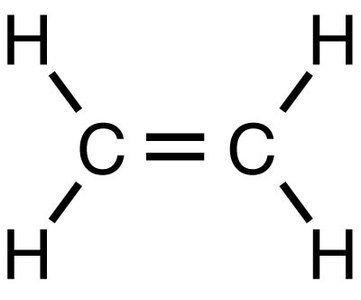
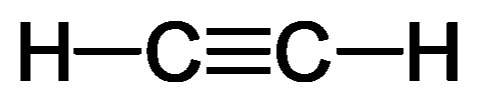
Alkenes and alkynes are hydrocarbons containing double (C=C) or triple (C≡C) bonds, respectively. These are called unsaturated because they have fewer than the maximum number of hydrogens.
Alkene: Contains at least one C=C bond; suffix "-ene".
Alkyne: Contains at least one C≡C bond; suffix "-yne".
Naming Alkenes and Alkynes
Identify the longest chain containing the double or triple bond as the parent.
Number the chain to give the multiple bond the lowest possible number.
Indicate the position of the double/triple bond and name substituents as before.
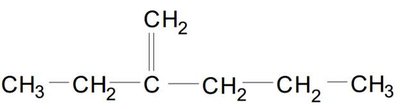
Example: 1-butene, 2-ethyl-1-pentene, 7-methyl-3-octene

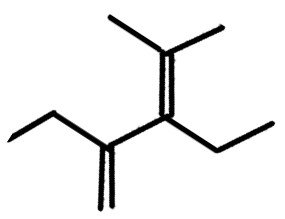
For multiple double bonds, use prefixes (di-, tri-, tetra-) and minimize location numbers (e.g., 1,3-butadiene).
Cis-Trans Isomerism in Alkenes
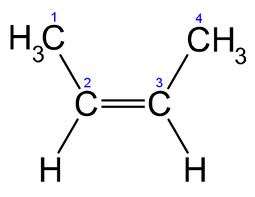
Double bonds are rigid, preventing rotation and allowing for geometric (cis-trans) isomerism:
Cis isomer: Substituents on the same side of the double bond.
Trans isomer: Substituents on opposite sides.
Isomerism in Organic Molecules
Types of Isomers
Structural isomers: Different connectivity of atoms.
Cis-trans isomers: Different spatial arrangement around double bonds.
Optical isomers: Molecules that are non-superimposable mirror images (chiral molecules).
Optical isomers contain a chiral carbon (a carbon atom bonded to four different groups). These isomers rotate plane-polarized light in opposite directions.
Functional Groups
Overview
Functional groups are specific combinations of atoms within molecules that determine characteristic chemical reactions and properties. Recognizing functional groups is essential for predicting reactivity and physical properties.
Alcohols: R–OH (hydroxyl group)
Carboxylic acids: R–COOH
Esters: R–COO–R'
Aldehydes: R–CHO
Ketones: R–CO–R'
Amines: R–NH2, R2NH, R3N
Ethers: R–O–R'
Alkyl halides: R–X (X = F, Cl, Br, I)
Alcohols
Alcohols contain a hydroxyl group (–OH) attached to a carbon atom. They are named by replacing the "-e" of the parent alkane with "-ol" and numbering the chain to give the –OH group the lowest possible number.
Example: Ethanol (CH3CH2OH), 2-butanol (CH3CH(OH)CH2CH3)
Carboxylic Acids
Carboxylic acids contain a carboxyl group (–COOH) and are named by replacing the "-e" of the parent alkane with "-oic acid". The carboxyl group is always at the end of the chain.
Example: Ethanoic acid (acetic acid), butanoic acid
Esters
Esters are formed from the reaction of a carboxylic acid and an alcohol. They are named with the alkyl group from the alcohol first, followed by the acid-derived part with the suffix "-oate".
Example: Ethyl butanoate (from ethanol and butanoic acid)
Aldehydes and Ketones
Aldehydes: Contain a terminal carbonyl group (–CHO); named by replacing "-e" with "-al".
Ketones: Contain an internal carbonyl group (–CO–); named by replacing "-e" with "-one" and indicating the position.
Amines and Ethers
Amines: Contain a C–N single bond; classified as primary, secondary, or tertiary based on the number of carbon groups attached to nitrogen.
Ethers: Contain an oxygen atom between two carbon groups (R–O–R').
Alkyl Halides
Alkyl halides contain a carbon-halogen bond. They are named by replacing the halogen suffix "-ide" with "-o" and treating it as a substituent.
Physical Properties and Intermolecular Forces (IMFs)
Boiling Points and Solubility
Functional groups influence boiling points and solubility due to differences in intermolecular forces:
Hydrocarbons (alkanes): Nonpolar, low boiling points, low solubility in water.
Alcohols, carboxylic acids: Capable of hydrogen bonding, higher boiling points, more soluble in water.
Esters, aldehydes, ketones: Intermediate properties.
Example: Boiling points (°C): propane (-42), propanone (56), 1-propanol (97), propanoic acid (141).
Reactions of Organic Molecules
Halogenation of Alkenes
Alkenes react with halogens (e.g., Br2) or haloacids (e.g., HBr) by addition across the double bond.
Oxidation of Alcohols
Primary alcohols can be oxidized to aldehydes and then to carboxylic acids.
Secondary alcohols can be oxidized to ketones.
Tertiary alcohols do not undergo oxidation under mild conditions.
Polymers
Addition and Condensation Polymers
Polymers are large molecules made from repeating units called monomers.
Addition polymers: Formed by the addition of monomers with double bonds (e.g., polyethylene from ethylene).
Condensation polymers: Formed by the reaction of two different monomers with the elimination of a small molecule (often water), e.g., polyesters and polyamides (nylon).
Biomolecules
Proteins
Proteins are polymers of amino acids linked by amide (peptide) bonds. The sequence of amino acids determines the protein's structure and function.
Primary structure: Sequence of amino acids.
Secondary structure: Local folding (α-helix, β-sheet) stabilized by hydrogen bonds.
Tertiary structure: Overall 3D shape, stabilized by IMFs and covalent bonds.
Carbohydrates
Carbohydrates are energy sources and structural components. Monosaccharides (simple sugars) can polymerize to form polysaccharides (e.g., starch, glycogen).
Monosaccharides: Glucose, fructose, ribose, deoxyribose.
Polysaccharides: Amylose (starch), glycogen.
Nucleic Acids
Nucleic acids (DNA and RNA) are polymers of nucleotides, which consist of a five-carbon sugar, a phosphate group, and a nitrogenous base. DNA forms a double helix stabilized by hydrogen bonds between complementary bases (A/T, G/C).
Summary Table: Common Functional Groups
Functional Group | General Structure | Suffix/Prefix | Example |
|---|---|---|---|
Alkane | R–H | -ane | Hexane |
Alkene | R–CH=CH–R' | -ene | 1-butene |
Alkyne | R–C≡C–R' | -yne | 2-hexyne |
Alcohol | R–OH | -ol | 2-butanol |
Aldehyde | R–CHO | -al | Pentanal |
Ketone | R–CO–R' | -one | 2-pentanone |
Carboxylic Acid | R–COOH | -oic acid | Ethanoic acid |
Ester | R–COO–R' | -oate | Ethyl butanoate |
Amine | R–NH2 | amino- | Methylamine |
Ether | R–O–R' | alkoxy- | Diethyl ether |
Alkyl Halide | R–X | halo- | Chloromethane |
Additional info: This summary covers the structure, nomenclature, and properties of organic molecules, including hydrocarbons, functional groups, isomerism, and biomolecules, as well as the basics of polymer chemistry. It is suitable for general chemistry students preparing for exams or seeking a concise reference.
