 Back
Back3 PP
Study Guide - Smart Notes
 Tailored notes based on your materials, expanded with key definitions, examples, and context.
Chapter 3: Molecules and Compounds
Overview of Chemical Bonds
Chemical bonds are the forces that hold atoms together in compounds. Understanding the types of bonds and how compounds are formed is fundamental to general chemistry.
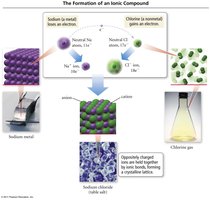
Ionic Bonds: Occur between metal and nonmetal ions, or ammonium and nonmetal ions. These bonds result from the attraction between oppositely charged ions.
Covalent Bonds: Occur between nonmetal atoms when they share electrons. Compounds held together by covalent bonds are called molecular or covalent compounds.
Metallic Bonds: Occur between metal atoms, involving a 'sea' of shared electrons.
Representing Compounds: Chemical Formulas and Models
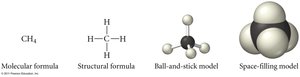
Compounds are represented using various types of formulas and models, each providing different levels of structural information.
Molecular Formula: Shows the actual number of atoms of each element in a molecule (e.g., CH4).
Empirical Formula: Shows the simplest whole-number ratio of atoms (e.g., CH for C6H6).
Structural Formula: Shows how atoms are connected using lines for covalent bonds.
Ball-and-Stick Model: Visualizes the spatial arrangement of atoms and bonds.
Space-Filling Model: Shows the relative sizes and spatial relationships of atoms.
Comparing Formula Types: Examples
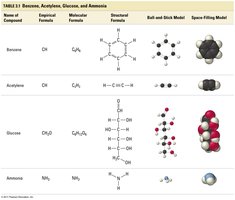
Different compounds can be represented in multiple ways to illustrate their structure and composition.
Name of Compound | Empirical Formula | Molecular Formula | Structural Formula | Ball-and-Stick Model | Space-Filling Model |
|---|---|---|---|---|---|
Benzene | CH | C6H6 | Ring structure | Ball-and-stick ring | Space-filling ring |
Acetylene | CH | C2H2 | Linear triple bond | Ball-and-stick linear | Space-filling linear |
Glucose | CH2O | C6H12O6 | Ring with side groups | Ball-and-stick ring | Space-filling ring |
Ammonia | NH3 | NH3 | Pyramidal | Ball-and-stick pyramid | Space-filling pyramid |
Classification of Elements and Compounds
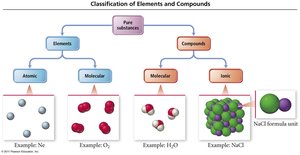
Pure substances are classified as elements or compounds, with further distinctions based on their atomic or molecular nature.
Atomic Elements: Exist as single atoms (e.g., Ne, metals).
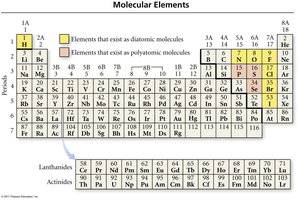
Molecular Elements: Exist as molecules, often diatomic (e.g., O2, N2).
Molecular Compounds: Composed of two or more nonmetals (e.g., H2O).
Ionic Compounds: Composed of cations (metal or NH4+) and anions (nonmetals) (e.g., NaCl).
Molecular Elements
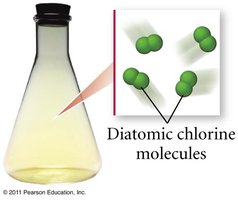
Molecular elements are those that exist naturally as molecules rather than individual atoms. Most commonly, these are diatomic molecules.
Diatomic Elements: H2, N2, O2, F2, Cl2, Br2, I2
Polyatomic Elements: Some elements exist as larger molecules (e.g., P4, S8).
Ionic vs. Molecular Compounds
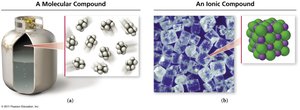
Ionic compounds and molecular compounds differ in their composition and structure.
Molecular Compounds: Contain discrete molecules (e.g., propane, C3H8).
Ionic Compounds: Contain arrays of ions (e.g., Na+ and Cl- in table salt).
Writing and Naming Ionic Compounds
Formulas for ionic compounds are written to ensure the compound is electrically neutral. Naming follows systematic rules based on the ions present.
Writing Formulas:
Write the symbol for the metal cation and its charge.
Write the symbol for the nonmetal anion and its charge.
Reduce subscripts to the smallest whole-number ratio.
Check that the sum of the charges equals zero.
Naming Ionic Compounds:
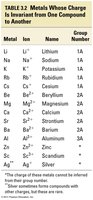
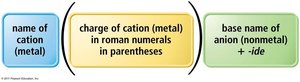
Metal with fixed charge: Use the metal name.
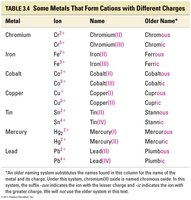
Metal with variable charge: Use the metal name and Roman numeral for charge.
Nonmetal anion: Use the base name + "-ide".
Polyatomic ions: Use the ion name.

Hydrates and Anhydrous Compounds
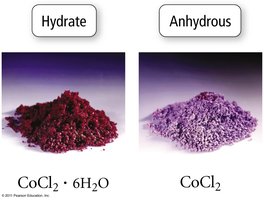
Some ionic compounds exist as hydrates, containing water molecules, while others are anhydrous.
Hydrate: Compound with water molecules (e.g., CoCl2 · 6H2O).
Anhydrous: Compound without water (e.g., CoCl2).
Formula Mass and Molar Mass
The formula mass (or molecular mass) is the sum of the atomic masses of all atoms in a formula unit. Molar mass is the mass of one mole of a compound.
Formula Mass: Calculated by summing the atomic masses of each atom in the formula.
Molar Mass: Expressed in grams per mole (g/mol).

Percent Composition
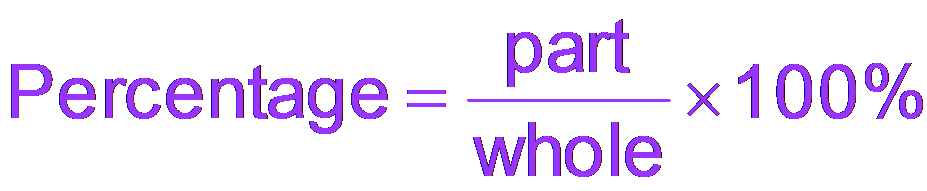
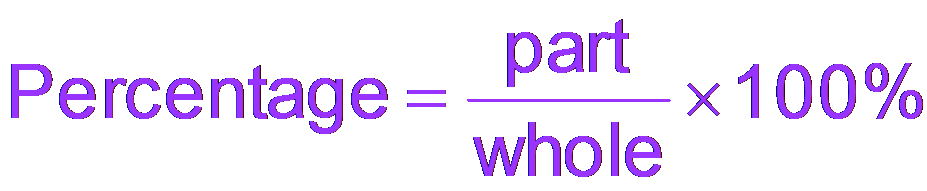
Percent composition expresses the percentage by mass of each element in a compound. It can be determined from the formula or experimental analysis.
Formula:
Application: Used to determine empirical formulas and for conversion factors in stoichiometry.
Empirical and Molecular Formulas
Empirical formulas show the simplest ratio of elements, while molecular formulas show the actual number of atoms. Determining these formulas often involves experimental data.
Empirical Formula: Simplest whole-number ratio of atoms.
Molecular Formula: Multiple of the empirical formula, based on molar mass.
Combustion Analysis: Used to determine empirical formulas for organic compounds.

Organic Compounds and Carbon Bonding
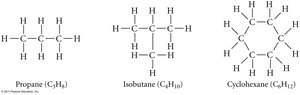
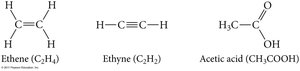
Organic compounds are primarily composed of carbon and hydrogen, sometimes with other elements. Carbon's ability to form four covalent bonds allows for diverse structures.
Hydrocarbons: Compounds containing only C and H.
Functional Groups: Groups of atoms that impart specific properties (e.g., alcohols, carboxylic acids).
Carbon Bonding: Carbon forms chains, branches, and rings.
Summary Table: Classification of Compounds
Type | Definition | Example |
|---|---|---|
Atomic Element | Single atoms as basic units | Ne, Co |
Molecular Element | Multi-atom molecules | O2, Cl2 |
Molecular Compound | Two or more nonmetals | H2O, CO2 |
Ionic Compound | Cations and anions | NaCl, KNO3 |
Key Equations and Concepts
Formula Mass:
Percent Composition:
Mole Conversion:
Empirical Formula Steps:
Convert percentages to grams.
Convert grams to moles.
Divide by smallest number of moles.
Multiply to obtain whole numbers.
Additional info: These notes expand on the original slides by providing definitions, examples, and stepwise procedures for key concepts in Chapter 3. All images included are directly relevant to the adjacent explanations and reinforce the educational content.
