 Back
Chapter 4: Molecules and Compounds – Chemical Bonding and Representation
Study Guide - Smart Notes
 Tailored notes based on your materials, expanded with key definitions, examples, and context.
Molecules and Compounds
Mixtures vs. Compounds
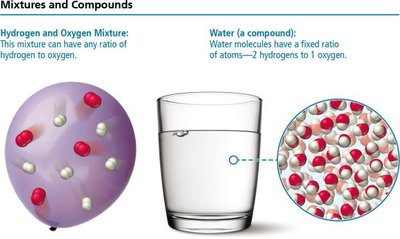
Mixtures and compounds differ fundamentally in their composition and properties. A mixture, such as a hydrogen–oxygen gas mixture, can have any proportion of its constituent elements, while a compound like water has a fixed ratio of atoms.
Mixture: Contains H2 and O2 molecules in any ratio; properties are a blend of the individual gases.
Compound: Water (H2O) always contains two hydrogen atoms for every one oxygen atom; properties are distinct from its constituent elements.
Example: Water is not simply a mixture of hydrogen and oxygen gases; it is a new substance with unique properties.
Types of Chemical Bonds
Ionic and Covalent Bonds
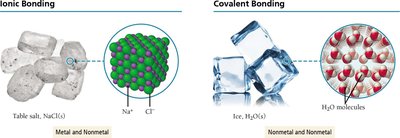
Elements combine to form compounds through chemical bonds, which are classified as ionic or covalent based on the nature of electron interaction.
Ionic Bonds: Occur between metals and nonmetals; involve the transfer of electrons from one atom to another, resulting in the formation of ions. These ions attract each other electrostatically, forming ionic compounds.
Covalent Bonds: Occur between two or more nonmetals; involve the sharing of electrons between atoms, resulting in molecular compounds.
Example: Sodium chloride (NaCl) is an ionic compound, while water (H2O) is a molecular compound.
Representing Compounds: Chemical Formulas and Molecular Models
Types of Chemical Formulas
Chemical compounds can be represented in several ways, each providing different levels of information about the composition and structure.
Empirical Formula: Shows the simplest whole-number ratio of atoms in a compound.
Molecular Formula: Indicates the actual number of atoms of each element in a molecule.
Structural Formula: Uses lines to represent bonds and shows how atoms are connected, giving insight into molecular geometry.
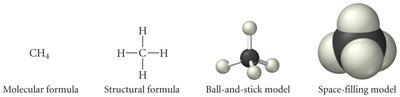
Example: For methane (CH4):
Empirical formula: CH4
Molecular formula: CH4
Structural formula: Shows C bonded to four H atoms
Molecular Models
Molecular models provide visual representations of molecules, helping to understand their geometry and spatial arrangement.
Ball-and-stick model: Atoms are balls, bonds are sticks; shows connectivity and angles.
Space-filling model: Atoms fill the space between each other, approximating the molecule's real appearance.
The Lewis Model: Representing Valence Electrons
Valence Electrons and Lewis Symbols
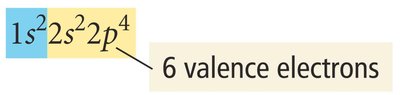
Valence electrons are the electrons in the outermost principal energy level of an atom. They play a crucial role in chemical bonding, as atoms lose, gain, or share these electrons to form bonds.
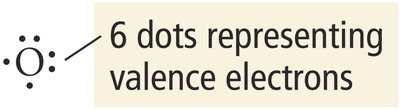
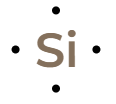
Lewis symbols: Use dots to represent valence electrons around the element's symbol.
Example: Oxygen has 6 valence electrons, represented as 6 dots around the O symbol.
Lewis Symbols for Elements
Lewis symbols are used for main group elements to visualize their valence electrons. Hydrogen and helium are exceptions, as they achieve stability with two electrons (duet rule).
Octet Rule: Atoms bond to achieve a filled outer level of eight (or two) electrons.
Example: Silicon (Si) can be represented with four dots, corresponding to its four valence electrons.

Ionic Bonding: The Lewis Model and Lattice Energies
Ionic Bonding and Electron Transfer
Ionic bonding involves the transfer of electrons from a metal to a nonmetal, resulting in the formation of cations and anions. The resulting ionic compound is held together by electrostatic attraction.
Example: Potassium (K) transfers its valence electron to chlorine (Cl), forming K+ and Cl−.
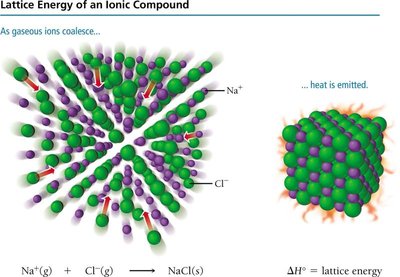
Energy: Formation of ionic compounds is highly exothermic, primarily due to lattice energy—the energy released when ions form a crystalline lattice.
Coulomb’s Law: The potential energy of the lattice depends on the charges and distances between ions.
Predicting Ionic Compound Formulas Using the Lewis Model
The Lewis model helps predict the formula of ionic compounds by considering the transfer of electrons and the resulting charges.
Draw Lewis symbols for each element.
Identify the number of electrons lost or gained to achieve an octet.
Determine the resulting ions and their charges.
Balance the positive and negative charges to find the smallest whole-number ratio.
Write the formula with subscripts, omitting the charges.
Example: Magnesium (Mg) and nitrogen (N) combine to form Mg3N2 by balancing Mg2+ and N3− ions.
Summary Table: Types of Chemical Bonds
Bond Type | Elements Involved | Electron Interaction | Resulting Compound |
|---|---|---|---|
Ionic | Metal + Nonmetal | Transfer of electrons | Ionic compound (e.g., NaCl) |
Covalent | Nonmetal + Nonmetal | Sharing of electrons | Molecular compound (e.g., H2O) |
