 Back
BackChapter 4: The Major Classes of Chemical Reactions – Study Notes
Study Guide - Smart Notes
 Tailored notes based on your materials, expanded with key definitions, examples, and context.
The Major Classes of Chemical Reactions
4.1 The Role of Water as a Solvent
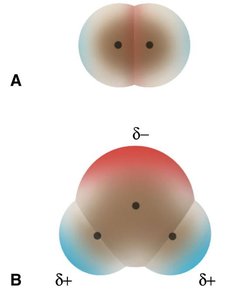
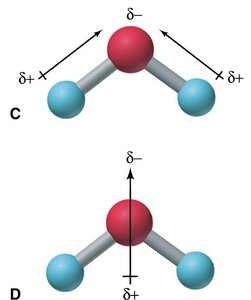
Water is a crucial solvent in chemistry due to its polarity and ability to dissolve a wide range of substances. Its molecular structure allows it to interact with both ionic and polar covalent compounds, facilitating chemical reactions in aqueous solutions.
Polarity of Water: Water molecules have a bent shape, resulting in a partial negative charge (δ−) on the oxygen atom and partial positive charges (δ+) on the hydrogen atoms. This polarity enables water to surround and stabilize ions in solution.
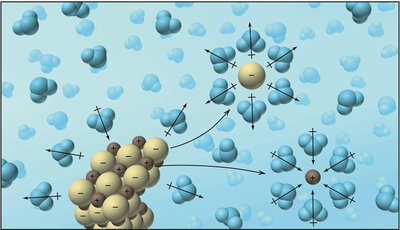
Solvation: When ionic compounds dissolve, water molecules surround the separated ions, a process called solvation or hydration.
Example: Sodium chloride (NaCl) dissolves in water as Na+ and Cl− ions, each surrounded by water molecules.
4.2 Writing Equations for Aqueous Ionic Reactions
Chemical reactions in aqueous solutions can be represented in three main ways: molecular, total ionic, and net ionic equations.
Molecular Equation: Shows all reactants and products as intact compounds.
Total Ionic Equation: Shows all soluble ionic substances dissociated into ions.
Net Ionic Equation: Shows only the species that actually change during the reaction, omitting spectator ions.
4.3 Precipitation Reactions
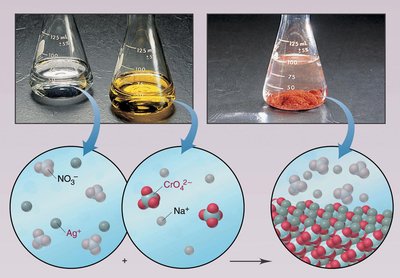
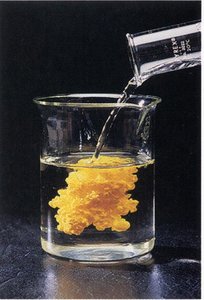
Precipitation reactions occur when two aqueous solutions combine to form an insoluble solid, called a precipitate. These reactions are important for identifying ions in solution and for removing unwanted ions.
Predicting Precipitation: Use solubility rules to determine if a precipitate will form when two solutions are mixed.
Example: Mixing silver nitrate (AgNO3) and sodium chromate (Na2CrO4) forms a red precipitate of silver chromate (Ag2CrO4).



4.4 Acid-Base Reactions
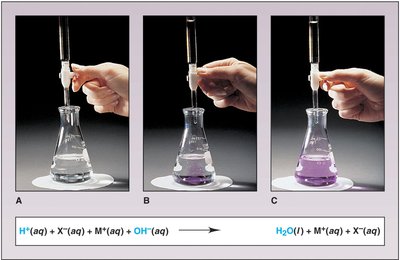
Acid-base reactions involve the transfer of protons (H+) between reactants. Acids donate protons, while bases accept them. These reactions are fundamental in chemistry and are used in titrations to determine concentrations.
Strong vs. Weak Acids/Bases: Strong acids and bases dissociate completely in water, while weak acids and bases only partially dissociate.
Neutralization: When an acid reacts with a base, water and a salt are formed.
Example: HCl(aq) + NaOH(aq) → NaCl(aq) + H2O(l)


4.5 Oxidation-Reduction (Redox) Reactions
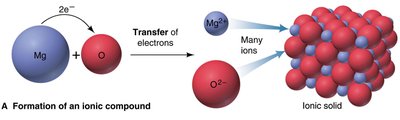
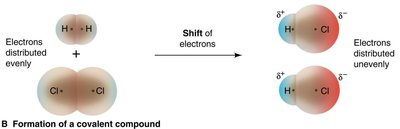
Redox reactions involve the transfer of electrons between substances. Oxidation is the loss of electrons, while reduction is the gain of electrons. These reactions are essential for processes such as combustion, respiration, and corrosion.
Oxidizing Agent: The substance that gains electrons (is reduced).
Reducing Agent: The substance that loses electrons (is oxidized).
Oxidation Number: A bookkeeping tool to track electron transfer in redox reactions.
4.6 Elements in Redox Reactions
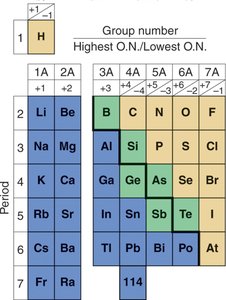
Elements can participate in redox reactions by changing their oxidation states. The highest and lowest oxidation numbers for main-group elements can be predicted based on their group in the periodic table.
Example: In the reaction 2Al(s) + 3H2SO4(aq) → Al2(SO4)3(aq) + 3H2(g), aluminum is oxidized and sulfuric acid is reduced.
4.7 Reversible Reactions: An Introduction to Chemical Equilibrium
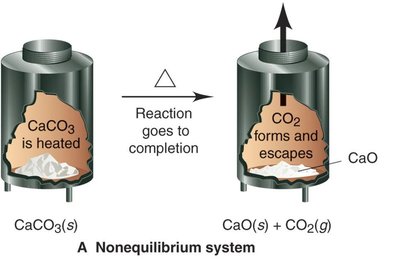
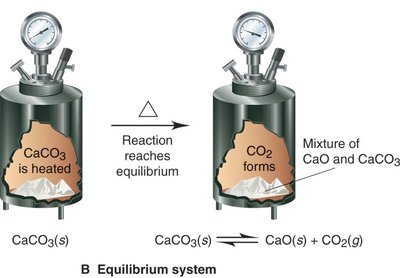
Many chemical reactions are reversible, meaning they can proceed in both forward and reverse directions. At equilibrium, the rates of the forward and reverse reactions are equal, and the concentrations of reactants and products remain constant.
Dynamic Equilibrium: Even though concentrations remain constant, both reactions continue to occur at the molecular level.
Example: The dissociation of weak acids and bases in water is a reversible process.
Appendix: Key Tables
Table 4.1: Solubility Rules for Ionic Compounds in Water
Soluble Ionic Compounds | Insoluble Ionic Compounds |
|---|---|
All common compounds of Group 1A(1) ions (Li+, Na+, K+, etc.) and ammonium ion (NH4+) | All common metal hydroxides except those of Group 1A(1) and larger Group 2A(2) (beginning with Ca2+) |
All common nitrates (NO3−), acetates (CH3COO−), and most perchlorates (ClO4−) | All common carbonates (CO32−) and phosphates (PO43−) except those of Group 1A(1) and NH4+ |
All common chlorides (Cl−), bromides (Br−), and iodides (I−) except those of Ag+, Pb2+, Cu+, and Hg22+ | All common sulfides except those of Group 1A(1), Group 2A(2), and NH4+ |
Table 4.2: Selected Acids and Bases
Strong Acids | Weak Acids | Strong Bases | Weak Bases |
|---|---|---|---|
HCl, HBr, HI, HNO3, H2SO4, HClO4 | HF, H3PO4, CH3COOH | NaOH, Ca(OH)2, KOH, Sr(OH)2, Ba(OH)2 | NH3 |
Additional info:
Sample problems throughout the chapter illustrate step-by-step approaches to solving quantitative and qualitative problems involving chemical reactions in aqueous solution.
Key concepts include the use of stoichiometry, molarity, and the identification of spectator ions in reactions.
