 Back
Chapter 5: Introduction to Solutions and Aqueous Reactions – Study Notes
Study Guide - Smart Notes
 Tailored notes based on your materials, expanded with key definitions, examples, and context.
Solutions and Solution Components
Definitions and Types of Solutions
Solutions are homogeneous mixtures composed of two or more substances. The substance present in the greatest amount is called the solvent, while the substance present in a lesser amount is the solute. When water is the solvent, the solution is termed an aqueous solution.
Solvent: The major component in a solution.
Solute: The minor component in a solution.
Homogeneous mixture: Uniform composition throughout.
Aqueous solution: Water acts as the solvent.
What Happens When a Solute Dissolves?
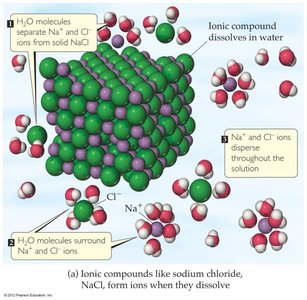
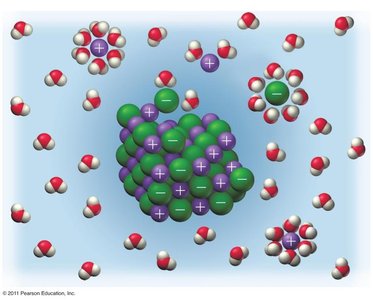
When an ionic compound such as sodium chloride (NaCl) dissolves in water, water molecules surround and separate the ions from the crystal lattice, a process called dissociation. The ions become solvated and are free to move in solution, allowing the solution to conduct electricity.
Dissociation: The separation of ions from an ionic solid by the solvent.
Solvation: The process of surrounding solute particles with solvent molecules.
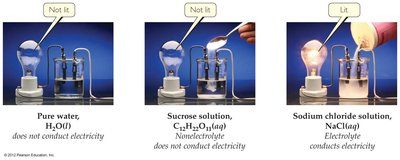
Conductivity: Free ions in solution enable electrical conductivity.
Electrolytes and Nonelectrolytes
Electrolytes
An electrolyte is a substance that dissociates into ions when dissolved in water, producing a solution that conducts electricity. Electrolytes include acids, bases, and soluble salts. A strong electrolyte dissociates completely, while a weak electrolyte dissociates only partially.
Strong electrolyte: Complete dissociation in water.
Weak electrolyte: Partial dissociation in water.
Nonelectrolytes
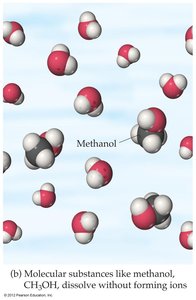
A nonelectrolyte dissolves in water but does not dissociate into ions, so its solution does not conduct electricity. Most molecular compounds are nonelectrolytes.
Example: Methanol (CH3OH) dissolves without forming ions.
Solubility of Ionic Compounds
Solubility and Insolubility
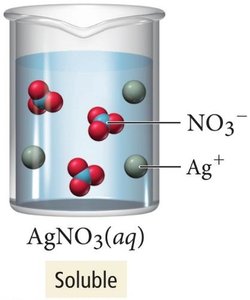
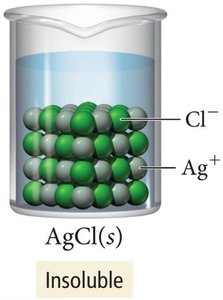
Solubility refers to the ability of a compound to dissolve in a solvent. Ionic compounds that dissolve in water are termed soluble, while those that do not are insoluble. The solubility of a compound depends on its chemical nature and the temperature.
Soluble: Dissolves in water (e.g., NaCl).
Insoluble: Does not dissolve in water (e.g., AgCl).
Solution Concentration
Quantitative Description of Solutions
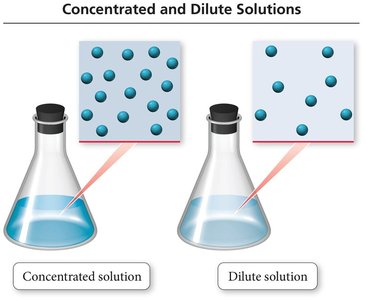
The concentration of a solution describes the amount of solute relative to the solvent. Solutions can be dilute (small amount of solute) or concentrated (large amount of solute).
Dilute solution: Low solute concentration.
Concentrated solution: High solute concentration.
Molarity (M)
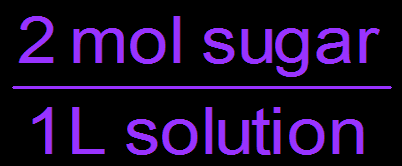
Molarity is the most common unit of concentration in chemistry, defined as the number of moles of solute per liter of solution:
Formula:
Preparing Solutions and Dilutions
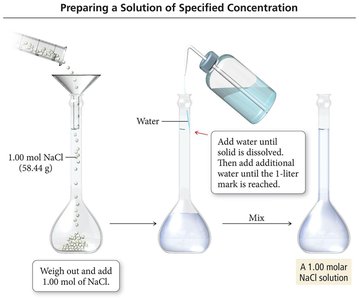
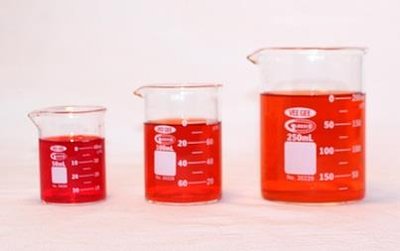
To prepare a solution of a specified concentration, weigh the required amount of solute, dissolve it in water, and dilute to the desired volume. Dilution involves adding more solvent to decrease the concentration without changing the number of moles of solute. The dilution equation is:
Dilution equation:

Stoichiometry with Solutions
Using Molarity in Chemical Reactions
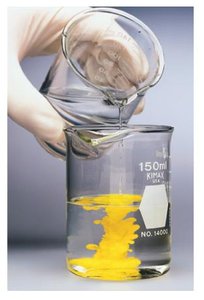
Molarity allows chemists to relate the volume of solution to the amount of reactant or product in a reaction. Solution stoichiometry involves converting between volumes, moles, and masses using balanced chemical equations.
Steps: Volume A → Amount A (moles) → Amount B (moles) → Volume B
Reactions in Aqueous Solution
Types of Reactions
Common types of reactions in aqueous solution include:
Precipitation reactions: Formation of an insoluble solid (precipitate).
Acid–base reactions: Transfer of a proton (H+).
Gas-forming reactions: Production of a gas.
Oxidation–reduction reactions: Transfer of electrons.
Precipitation Reactions
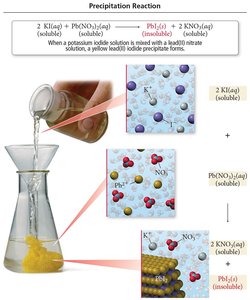
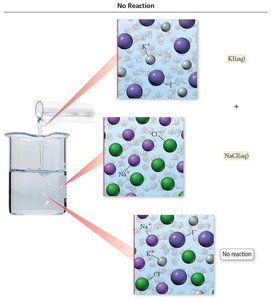
Precipitation reactions occur when two solutions are mixed and an insoluble product forms. The product is called a precipitate.
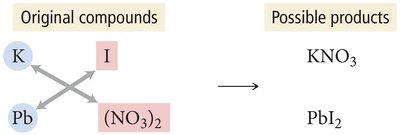
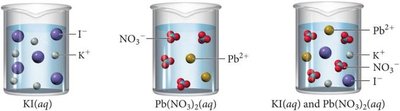
Example: Mixing KI and Pb(NO3)2 forms PbI2 (yellow precipitate).
Predicting Precipitation Reactions
To predict precipitation reactions:
Identify ions in each reactant.
Exchange ions to form possible products.
Determine solubility using solubility rules.
If a product is insoluble, it precipitates.
Balance the equation.
Writing Chemical Equations
Chemical equations for reactions in solution can be written in three ways:
Molecular equation: Shows complete formulas.
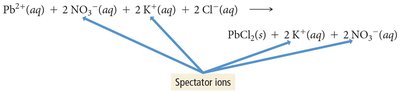
Complete ionic equation: Shows all ions present.
Net ionic equation: Shows only ions involved in the reaction.
Acids and Bases
Arrhenius and Brønsted-Lowry Definitions
Acids and bases are defined by their behavior in water:
Arrhenius acid: Produces H+ ions in water.
Arrhenius base: Produces OH− ions in water.
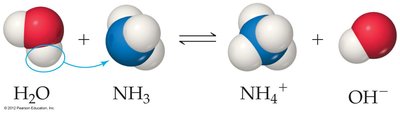
Brønsted-Lowry acid: Proton donor.
Brønsted-Lowry base: Proton acceptor.
Strong and Weak Acids/Bases
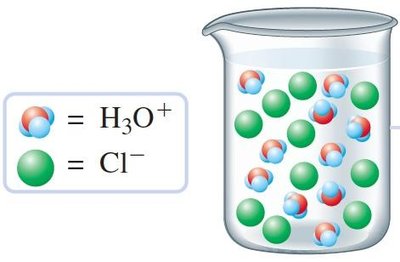
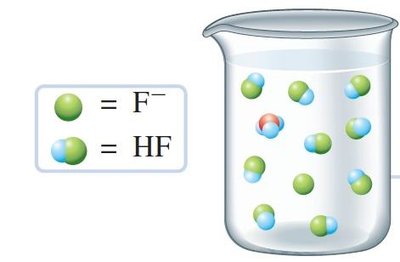
Strong acids and strong bases completely ionize in water, while weak acids and weak bases only partially ionize.
Strong acids: HCl, HNO3, H2SO4, HClO4, HBr, HI
Strong bases: LiOH, NaOH, KOH, Ca(OH)2, Sr(OH)2, Ba(OH)2
Polyprotic Acids
A polyprotic acid contains more than one acidic hydrogen per molecule. Examples include H2SO4 (diprotic) and H3PO4 (triprotic).
Neutralization Reactions
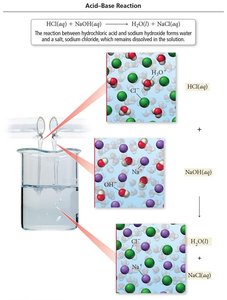
When an acid reacts with a base, the products are a salt and water. The net ionic equation for a strong acid and strong base is:
Gas-Forming Reactions
Gas Evolution in Reactions
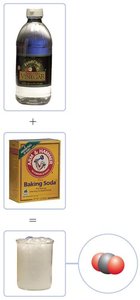
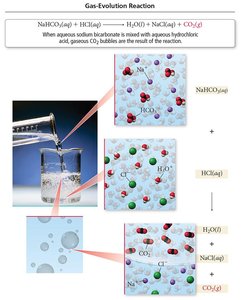
Certain salts react with acids to produce gases such as CO2, SO2, or H2S. For example, carbonates and bicarbonates produce carbon dioxide when treated with acid.
Example: NaHCO3 + HCl → NaCl + CO2 + H2O
Oxidation-Reduction (Redox) Reactions
Oxidation and Reduction
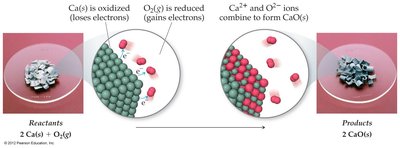
Redox reactions involve the transfer of electrons. Oxidation is the loss of electrons, while reduction is the gain of electrons. The reactant that causes reduction is the oxidizing agent, and the reactant that causes oxidation is the reducing agent.
LEO: Loss of Electrons is Oxidation.
GER: Gain of Electrons is Reduction.
Assigning Oxidation Numbers
Oxidation numbers are assigned to atoms to track electron transfer in reactions. The sum of oxidation numbers in a compound is zero, and in a polyatomic ion equals the ion's charge.
Element: Oxidation number = 0
Monatomic ion: Oxidation number = ion charge
Oxygen: Usually -2, except in peroxides (-1)
Hydrogen: +1 (except in metal hydrides, -1)
Halogens: Usually -1
Example: In C6H12O6, C = 0, H = +1, O = -2
Example: In PO43−, P = +5, O = -2
Identifying Oxidizing and Reducing Agents
In a redox reaction, the substance whose oxidation state increases is oxidized (reducing agent), and the substance whose oxidation state decreases is reduced (oxidizing agent).
Example: 2 Na(s) + Cl2(g) → 2 Na+Cl−(s)
Na is oxidized (reducing agent), Cl2 is reduced (oxidizing agent).
