 Back
BackChapter 6: Thermochemistry – Study Notes
Study Guide - Smart Notes
 Tailored notes based on your materials, expanded with key definitions, examples, and context.
Thermochemistry: The Study of Energy in Chemical Processes
Introduction to Thermochemistry
Thermochemistry is the branch of chemistry that studies the energy and heat associated with chemical reactions and physical transformations. It is essential for understanding how energy is transferred and conserved in chemical systems.
Matter is anything that has mass and occupies space (e.g., atoms, molecules, planets).
Energy is the ability to cause change, such as motion, heat, light, or chemical transformations.
Nature and Forms of Energy
Energy exists in various forms and can be transformed from one form to another. The two main forms are kinetic energy (energy of motion) and potential energy (stored energy).
Kinetic Energy (KE): Energy due to motion. For an object in motion:
Potential Energy (PE): Energy stored due to position or composition (e.g., chemical bonds).
Chemical Potential Energy: Energy stored in chemical bonds, released or absorbed during reactions.

Law of Conservation of Energy & First Law of Thermodynamics
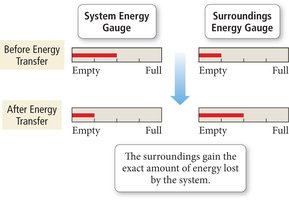
The law of conservation of energy states that energy cannot be created or destroyed, only transferred or transformed. The first law of thermodynamics formalizes this for chemical systems:
First Law of Thermodynamics: The total energy of the universe is constant.
Energy can be transferred between a system and its surroundings, but the total remains unchanged.
System, Surroundings, and Universe
In thermochemistry, it is crucial to define the system (the part under study) and the surroundings (everything else). The universe is the sum of both.
System: The specific part of the universe being studied (e.g., a reaction vessel).
Surroundings: Everything outside the system.
Universe: System + surroundings.
Thermal Energy and Temperature
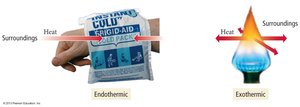
Thermal energy (q) is the energy associated with the random motion of particles. Temperature measures the average kinetic energy of particles in a substance.
Thermal Energy: Increases as particle motion increases.
Temperature: An intensive property; does not depend on the amount of substance.
Thermal Energy: An extensive property; depends on the amount of substance.

Energy Transformations
Energy can be transformed between kinetic and potential forms, and between system and surroundings, during physical and chemical processes.

Exothermic and Endothermic Processes
Definitions and Molecular View
Reactions are classified based on whether they absorb or release energy:
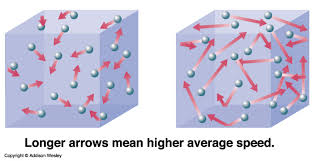
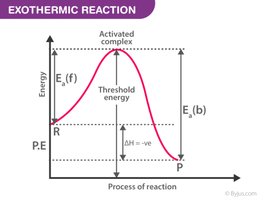
Exothermic Reaction: Releases heat to the surroundings (ΔH < 0). Products have lower energy than reactants.
Endothermic Reaction: Absorbs heat from the surroundings (ΔH > 0). Products have higher energy than reactants.
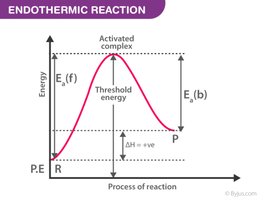

Quantifying Energy: Units and Conversions
Units of Energy
Joule (J): SI unit of energy. 1 J = 1 kg·m²/s².
Calorie (cal): 1 cal = 4.184 J (exact).
Other units: kJ, kcal, etc.
Internal Energy (U) and State Functions
Internal energy (U) is the total energy contained within a system, including kinetic and potential energies. It is a state function, meaning its value depends only on the current state, not the path taken.
Change in Internal Energy:
State Function: Properties that depend only on the initial and final states (e.g., U, H, S, G, P, V, T).

Sign Conventions for q, w, and ΔU
Process | q (Heat) | w (Work) | ΔU (Internal Energy) |
|---|---|---|---|
System gains heat | + | ||
System loses heat | - | ||
Work done on system | + | ||
Work done by system | - |
Heat Capacity and Calorimetry
Heat Capacity
Heat Capacity (C): Amount of heat required to change the temperature of a system by 1°C.
Specific Heat Capacity (C_s): Heat required to raise 1 g of a substance by 1°C.
Molar Heat Capacity (C_n): Heat required to raise 1 mol of a substance by 1°C.
Calorimetry
Calorimetry is the experimental measurement of heat transfer during chemical or physical processes. Two main types are:
Coffee-cup calorimetry: Constant pressure, measures ΔH.
Bomb calorimetry: Constant volume, measures ΔU.
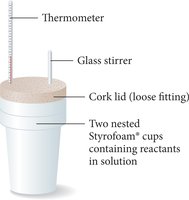
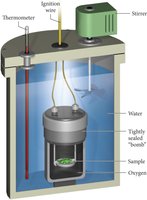
Sample Calorimetry Problem
When a hot metal is placed in water, heat lost by the metal equals heat gained by the water:
Use to solve for unknowns.
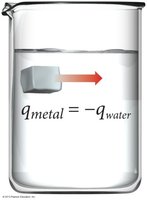
Work: Pressure-Volume Work
Pressure-Volume (PV) Work
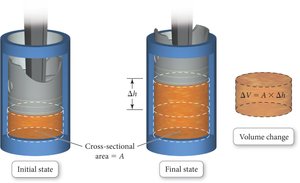
When a gas expands or contracts against an external pressure, it does pressure-volume work:
Work is negative when the system does work on the surroundings (expansion).
Enthalpy (H) and Enthalpy Changes (ΔH)
Definition and Measurement
Enthalpy (H):
Change in Enthalpy:
At constant pressure, (heat at constant pressure).
Thermochemical Equations and Stoichiometry
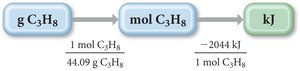
Thermochemical equations relate the enthalpy change to the stoichiometry of the reaction as written.
Hess’s Law and Standard Enthalpies of Formation
Hess’s Law
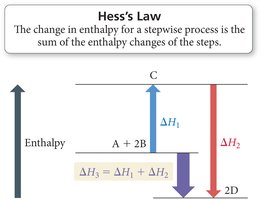
Hess’s Law states that the total enthalpy change for a reaction is the same, no matter how many steps the reaction is carried out in. This allows calculation of ΔH for reactions that are difficult to measure directly.
If a reaction is the sum of two or more steps, the overall ΔH is the sum of the ΔH values for those steps.
Standard Enthalpy of Formation (ΔfH°)
Standard State: Most stable form of a substance at 1 bar and a specified temperature (usually 25°C).
Standard Enthalpy of Formation (ΔfH°): Enthalpy change when 1 mole of a compound forms from its elements in their standard states.
For elements in their standard state, ΔfH° = 0.
Energy Use and the Environment
Fossil Fuels and Environmental Impact
Most of the world’s energy comes from fossil fuels (coal, oil, natural gas), which release significant energy but also contribute to environmental issues such as greenhouse gas emissions and resource depletion.

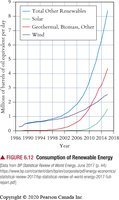
Renewable energy sources (solar, wind, hydroelectric) are increasing but still represent a small fraction of total energy use.
Summary Table: Key Thermochemistry Concepts
Concept | Definition | Key Equation |
|---|---|---|
Internal Energy (U) | Total energy in a system | |
Enthalpy (H) | Heat content at constant pressure | |
Heat (q) | Energy transfer due to temperature difference | |
Work (w) | Energy transfer due to force acting over distance | |
Hess’s Law | ΔH is path-independent | |
Standard Enthalpy of Formation | ΔH for forming 1 mol from elements | ΔfH° |
