 Back
Chapter 8: Covalent Bonding Theories and Molecular Structure – Study Notes
Study Guide - Smart Notes
 Tailored notes based on your materials, expanded with key definitions, examples, and context.
Covalent Bonding Theories and Molecular Structure
Molecular Shapes: The VSEPR Model
The Valence Shell Electron Pair Repulsion (VSEPR) model is a theory used to predict the three-dimensional structure of molecules based on the repulsion between electron pairs in the valence shell of the central atom. The arrangement of these electron pairs determines the molecular geometry and bond angles.
Step 1: Draw the Lewis structure and count the number of electron charge clouds (bonds and lone pairs) around the central atom.
Step 2: Predict the geometric arrangement by maximizing the distance between charge clouds to minimize repulsion.
Charge cloud: Can be a bond (single, double, triple), a lone pair, or a free radical.
Linear Geometry (Two Charge Clouds)
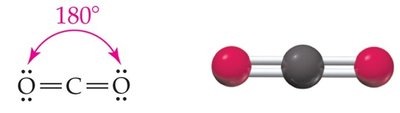
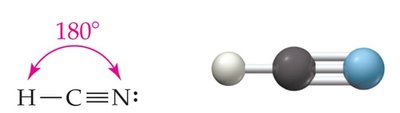
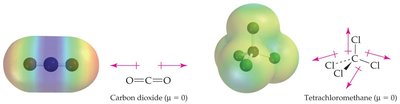
When the central atom has two charge clouds, the geometry is linear with a bond angle of 180°.
Example: Carbon dioxide (CO2) and hydrogen cyanide (HCN) are linear molecules.
Trigonal Planar Geometry (Three Charge Clouds)
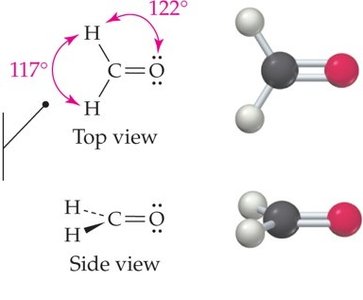
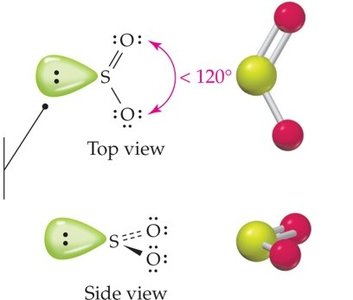
Three charge clouds around the central atom result in a trigonal planar geometry with bond angles of about 120°, unless lone pairs are present, which compress the angles and create a bent shape.
Example: Formaldehyde (CH2O) and sulfur dioxide (SO2).
Tetrahedral Geometry (Four Charge Clouds)
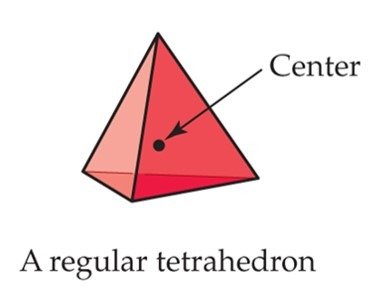
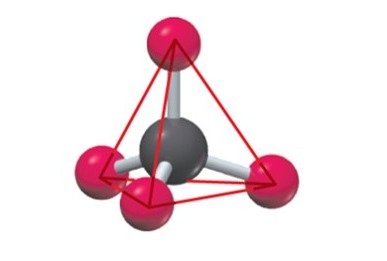
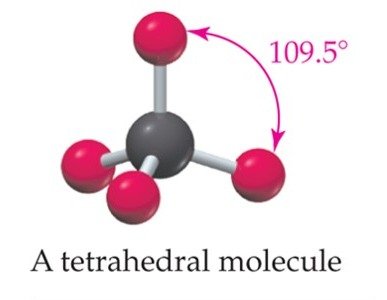
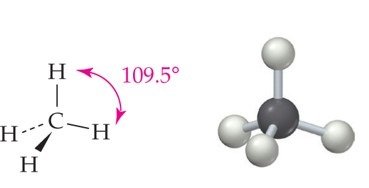
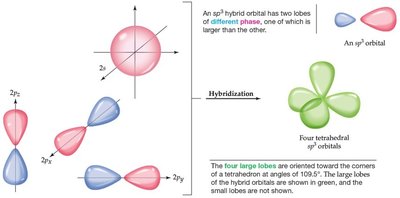
Four charge clouds around the central atom result in a tetrahedral geometry with bond angles of 109.5°. The atom is at the center of a regular tetrahedron, and the charge clouds point to the corners.
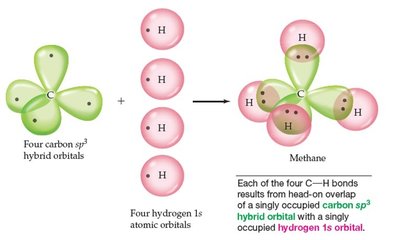
Example: Methane (CH4).
Tetrahedral Geometry with Lone Pairs
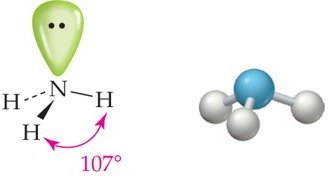
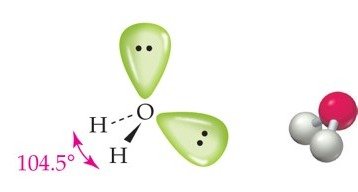
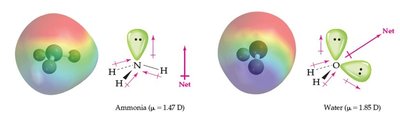
Lone pairs occupy more space than bonding pairs, compressing bond angles. One lone pair results in a trigonal pyramid shape; two lone pairs result in a bent shape.
Example: Ammonia (NH3) and water (H2O).
Trigonal Bipyramid Geometry (Five Charge Clouds)
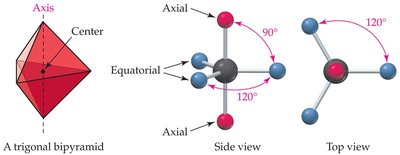
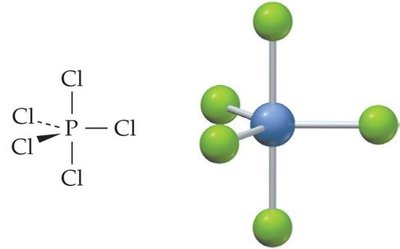
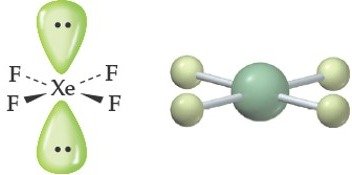
Five charge clouds result in a trigonal bipyramid geometry with axial (90°) and equatorial (120°) positions. Lone pairs occupy equatorial positions, causing distortions and reducing the shape to seesaw, T-shaped, or linear depending on the number of lone pairs.
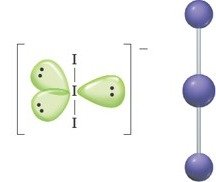
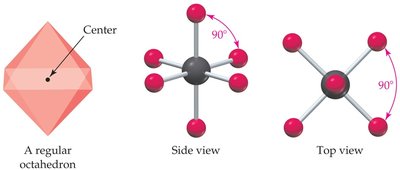
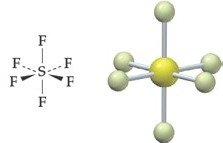
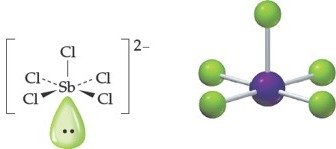
Octahedral Geometry (Six Charge Clouds)
Six charge clouds result in an octahedral geometry with all positions equivalent and bond angles of 90°. Lone pairs reduce the shape to square pyramid or square planar.
Valence Bond Theory
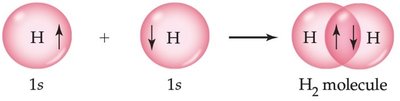
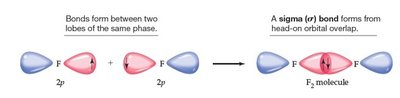
Valence bond theory describes covalent bonds as the overlap of half-filled atomic orbitals, each containing a single electron. The overlap creates a shared electron pair, forming a covalent bond. The greater the overlap, the stronger the bond.
Example: Sigma (σ) bond formation in H2, F2, and HCl.

Limitations of Valence Bond Theory
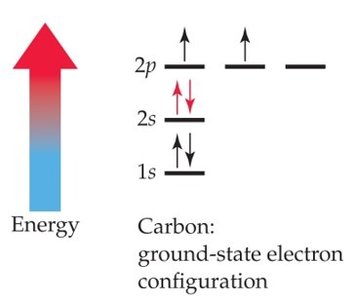
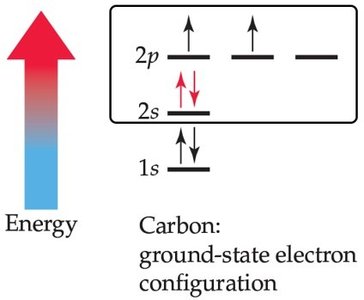
Valence bond theory cannot explain the formation of four equivalent bonds in methane (CH4), as carbon has only two unpaired electrons in its ground state.
Hybridization
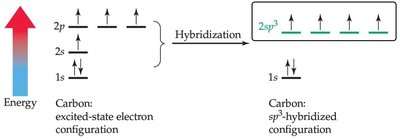
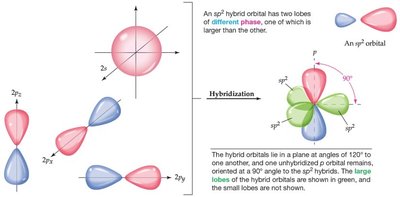
Hybridization is the mixing of atomic orbitals to form new hybrid orbitals suitable for bonding. In carbon, the 2s and three 2p orbitals mix to form four sp3 hybrid orbitals, each half-filled and capable of forming a σ bond with hydrogen.
Other Hybridization Types
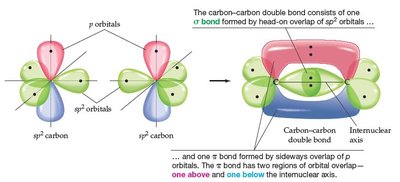
sp2 Hybridization: Three charge clouds mix to form three sp2 hybrid orbitals (trigonal planar geometry), with one unhybridized p orbital.
Double Bonds: One σ bond (sp2 overlap) and one π bond (side-by-side p overlap).
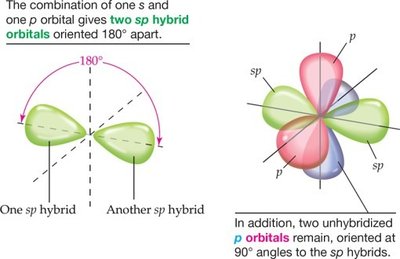
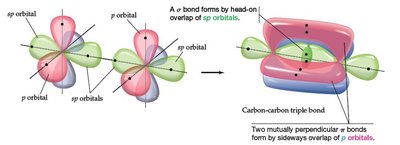
sp Hybridization: Two charge clouds mix to form two sp hybrid orbitals (linear geometry), with two unhybridized p orbitals.
Triple Bonds: One σ bond (sp overlap) and two π bonds (side-by-side p overlap).
Polar Covalent Bonds and Dipole Moments
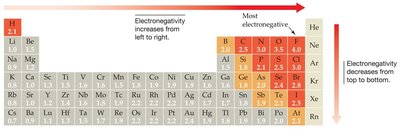
A polar covalent bond occurs when electrons are shared unequally between atoms, resulting in a dipole moment. The dipole moment (μ) is calculated as:
Where Q is the partial charge and r is the distance between charges (in debyes).
Polarity of Molecules
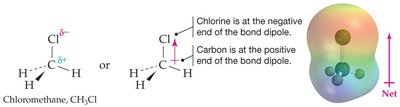
The polarity of a molecule depends on the vector sum of its bond dipoles. If the bond dipoles do not cancel, the molecule is polar.
Intermolecular Forces (IMFs)
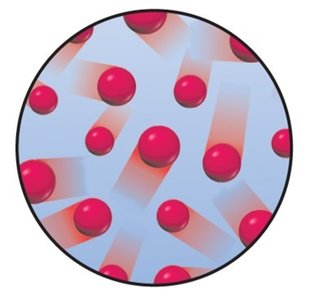
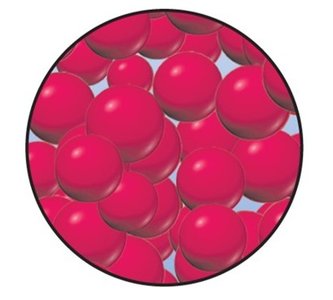
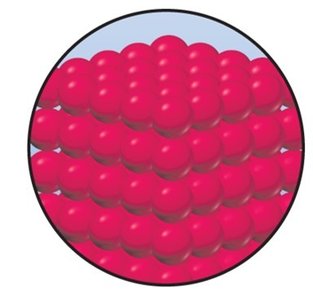
Intermolecular forces are attractions between molecules that affect physical properties such as melting and boiling points. The strength of IMFs varies with the type of force and the nature of the molecules involved.
Types: Ion–dipole, dipole–dipole, London dispersion, hydrogen bonds.
London Dispersion Forces
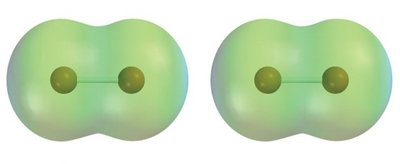
London dispersion forces arise from temporary dipoles induced by the motion of electrons. These forces are weak and fleeting but increase with molecular size and polarizability.
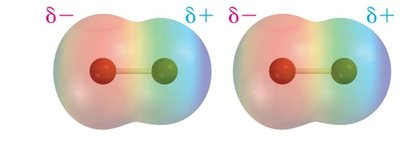
Effect of Molecular Shape on Dispersion Forces
Molecular shape and surface area affect the strength of dispersion forces. Longer, less compact molecules have stronger dispersion forces and higher boiling points.
Dipole-Dipole Forces
Dipole-dipole forces occur between polar molecules, where the positive end of one molecule attracts the negative end of another. These forces are stronger than dispersion forces.
Hydrogen Bonding
Hydrogen bonding is a strong intermolecular force occurring when hydrogen is bonded to highly electronegative atoms (O, N, F) and interacts with lone pairs on another electronegative atom. Hydrogen bonds are much stronger than dipole-dipole forces but weaker than covalent bonds.
Ion-Dipole Forces
Ion-dipole forces occur between ions and polar molecules. The strength of these interactions depends on the identity of the ion and the magnitude of the dipole moment.
Comparison of Intermolecular Forces
The table below summarizes the types, strengths, and characteristics of intermolecular forces:
Force | Strength | Characteristics |
|---|---|---|
Ion–dipole | Highly variable (10–70 kJ/mol) | Ions and polar molecules |
Dipole–dipole | Weak (3–4 kJ/mol) | Polar molecules |
London dispersion | Weak (1–10 kJ/mol) | All molecules; depends on size, polarizability |
Hydrogen bond | Moderate (10–40 kJ/mol) | Molecules with O–H, N–H, F–H bonds |
Molecular Orbital Theory (MOT)
Molecular orbital theory describes electrons in molecules using molecular orbitals formed by combining atomic orbitals. The number of molecular orbitals equals the number of atomic orbitals combined. Molecular orbitals can be bonding (lower energy) or antibonding (higher energy).
Bonding MO: Constructive combination, electron density between nuclei.
Antibonding MO: Destructive combination, node between nuclei.
Bond Order Calculation
Bond order is a measure of bond strength and is calculated as:
Bond order of 1: single bond; 2: double bond; 0: no bond forms.
Magnetism in Molecules
Diamagnetic: All electrons are paired; weakly repelled by magnetic fields.
Paramagnetic: At least one unpaired electron; weakly attracted by magnetic fields.
Example: O2 is paramagnetic, explained by molecular orbital theory.
Combining Valence Bond and Molecular Orbital Theory
Valence bond theory is used for σ bonds, while molecular orbital theory explains π bonds and delocalization, as in ozone (O3).
Chapter Summary
VSEPR: Electron pairs arrange to minimize repulsion; lone pairs affect shape and bond angles.
Valence bond theory: Covalent bonds form by orbital overlap; hybrid orbitals (sp, sp2, sp3) explain geometry.
Multiple bonds: One σ bond plus one or two π bonds.
Molecular polarity: Determined by bond dipoles and their cancellation.
Intermolecular forces: Ion–dipole, dipole–dipole, London dispersion, hydrogen bonds.
Molecular orbital theory: Explains bond order and magnetism (e.g., O2 paramagnetism).
