 Back
Chapter 9: Periodic Properties of the Elements – Structured Study Notes
Study Guide - Smart Notes
 Tailored notes based on your materials, expanded with key definitions, examples, and context.
Chapter 9: Periodic Properties of the Elements
Introduction
This chapter explores the development and structure of the periodic table, the arrangement of electrons in atoms, and the resulting periodic trends in atomic properties. Understanding these concepts is fundamental to predicting the behavior of elements and their compounds.
The Development of the Periodic Table
Historical Organization of Elements
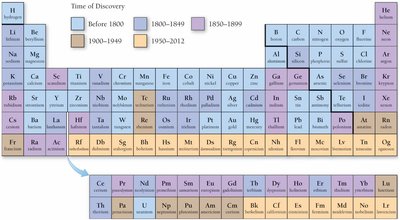
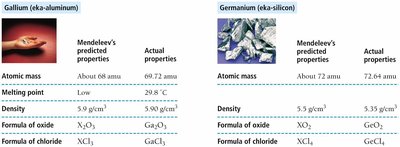
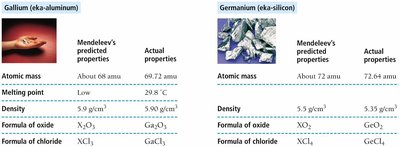
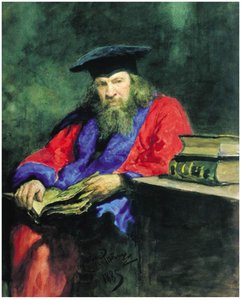
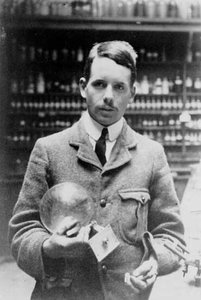
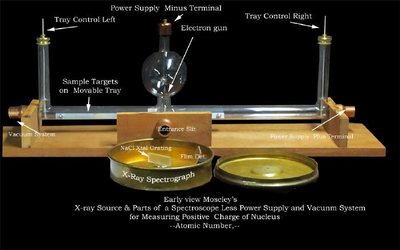
During the 19th century, chemists sought a systematic way to organize the known elements. The modern periodic table is primarily credited to Dmitri Mendeleev, who arranged elements by increasing atomic mass and predicted the existence and properties of undiscovered elements. Later, H. G. J. Moseley demonstrated that arranging elements by increasing nuclear charge (atomic number) explained periodic trends more accurately.
Mendeleev's Table: Predicted properties of elements not yet discovered.
Moseley's Contribution: Established atomic number as the organizing principle.
Limitations: Early tables lacked noble gases and did not account for isotopes.

Electron Configuration and Quantum Mechanical Principles
How Electrons Occupy Orbitals
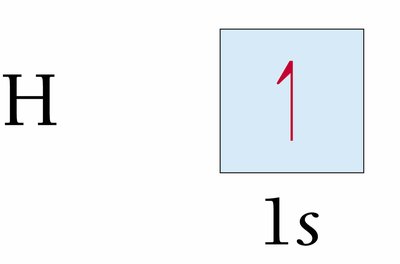
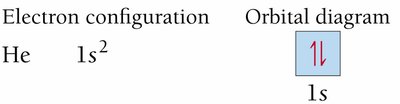
An electron configuration describes the distribution of electrons among atomic orbitals. The arrangement follows specific rules to minimize energy and maximize stability.
Pauli Exclusion Principle: No two electrons in an atom can have the same set of four quantum numbers.
Hund's Rule: Electrons occupy orbitals of equal energy singly before pairing.
Energy Ordering: Lower-energy orbitals fill first; influenced by Coulomb's Law, shielding, and penetration.
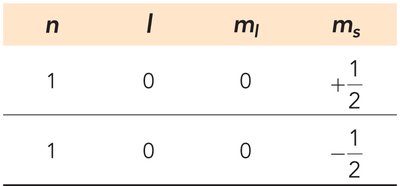

Electron Configurations for Multielectron Atoms
Electrons fill orbitals to minimize atomic energy. When writing configurations, use core notation to abbreviate inner electrons, and identify valence electrons for chemical reactivity.
Core Electrons: Not in the outermost principal energy level.
Valence Electrons: In the outermost principal energy level; for transition elements, include outermost d electrons.
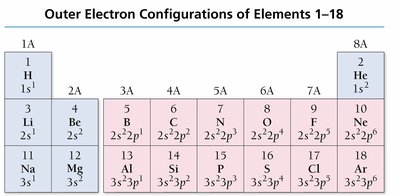
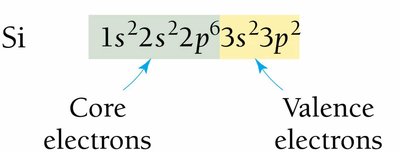
Orbital Blocks in the Periodic Table
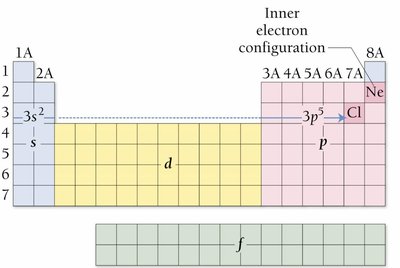
The periodic table is divided into four blocks (s, p, d, f) based on quantum sublevels. The group number of a main-group element equals its number of valence electrons, and the period number equals the highest principal quantum number.
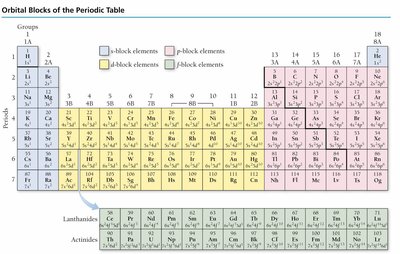
Writing Electron Configurations from the Periodic Table
To determine an element's electron configuration:
Locate the element on the periodic table.
Find the preceding noble gas for core notation.
Write the inner electron configuration using the noble gas.
Trace the outer electron configuration from the noble gas to the element.
Periodic Trends and Properties
Effective Nuclear Charge (Zeff)
The effective nuclear charge is the net positive charge experienced by an electron in a many-electron atom. Core electrons shield outer electrons from the full nuclear charge, while outer electrons do not shield each other efficiently.
Formula: (where Z is the atomic number, S is the shielding constant)
Trend: Zeff increases across a period, decreases down a group.
Atomic and Ionic Radii
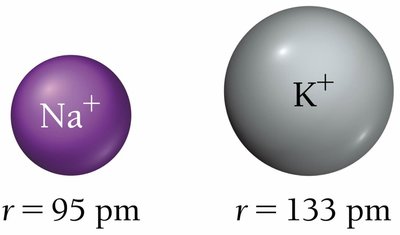
Atomic radius is the average distance from the nucleus to the boundary of the electron cloud. It can be measured as bonding (covalent) or nonbonding (van der Waals) radius. Ionic radius refers to the size of ions, which varies depending on charge and electron configuration.
Bonding Atomic Radius: Increases down a group, decreases across a period.
Cations: Smaller than their parent atoms.
Anions: Larger than their parent atoms.
Isoelectronic Series: Ions with the same number of electrons; size decreases with increasing nuclear charge.
Ionization Energy
Ionization energy is the energy required to remove an electron from a gaseous atom or ion. The first ionization energy (IE1) refers to removing the first electron; successive ionization energies increase as more electrons are removed.
Trend: Decreases down a group, increases across a period.
Equation:
Electron Affinity
Electron affinity is the energy change when an atom gains an electron in the gaseous state. Most elements release energy (negative electron affinity) upon gaining an electron.
Trend: Generally becomes more negative across a period; less definite down a group.
Equation:
Metallic Character
Metallic character refers to the ability of an element to conduct heat and electricity, be malleable and ductile, and lose electrons easily. Metallic character increases down a group and decreases across a period.
Summary of Periodic Trends
The periodic table reveals trends in atomic size, ionization energy, electron affinity, and metallic character. These trends are essential for predicting chemical behavior and reactivity.
Application: Ion Channels and Selectivity
Biological Relevance of Periodic Properties
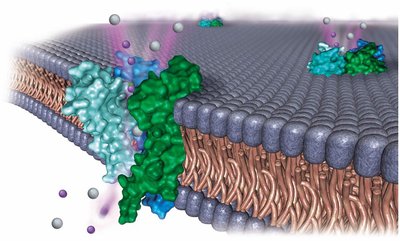
Ion channels in biological membranes differentiate between sodium and potassium ions based on their size and charge, selectively transporting potassium ions out of cells and sodium ions into cells. This selectivity is a direct consequence of periodic trends in ionic radii and charge.
Comparison of Sodium and Potassium Ions
The difference in ionic radii between Na+ (95 pm) and K+ (133 pm) is crucial for biological selectivity in ion channels.
Practice Problems and Further Study
Practice problems throughout the chapter reinforce understanding of electron configurations, periodic trends, and their applications. Students are encouraged to use the periodic table to predict properties and behaviors of elements and ions.
----------------------------------------
