 Back
BackCHEM 192: Principles of Chemistry II – Syllabus and Study Guide
Study Guide - Smart Notes
 Tailored notes based on your materials, expanded with key definitions, examples, and context.
Course Overview
Introduction to CHEM 192: Principles of Chemistry II
This course is a continuation of CHEM 191 and is designed for science majors. It covers advanced topics in general chemistry, including thermodynamics, kinetics, equilibrium, electrochemistry, and introductory organic chemistry. Laboratory work is an integral part of the curriculum, emphasizing hands-on experience and practical application of chemical principles.
Learning Outcomes
Core Competencies Developed in CHEM 192
Dimensional Analysis: Solve chemical problems using proper significant figures and unit conversions.
Nomenclature: Name and classify ionic and binary molecular compounds.
Formula Determination: Calculate empirical and molecular formulas from experimental data.
Chemical Equations: Balance equations and use stoichiometry to determine reactant and product quantities.
Reaction Types: Identify precipitation, neutralization, and oxidation-reduction reactions and predict their outcomes.
Thermodynamics: Understand the first law of thermodynamics, energy, and enthalpy in chemical reactions; perform thermochemical calculations.
Quantum Theory: Grasp basic quantum concepts, electron configurations, and periodic trends.
Gas Laws: Apply gas laws and kinetic molecular theory to gas-related processes.
Chemical Bonding: Use theories of bonding and VSEPR theory to determine molecular geometry.
Course Structure and Methodology
Lecture, Laboratory, and Assessment
Lectures: Delivered in person, focusing on guided problem solving and conceptual understanding.
Laboratory: Mandatory concurrent enrollment; lab work constitutes 25% of the course grade. Safety glasses and lab coats are required.
Homework: Combination of online assignments (Mastering Chemistry) and traditional challenge problems.
Exams: Four midterm exams and a comprehensive ACS final exam. Exams include multiple choice and short answer questions.
Quizzes: In-person quizzes announced in advance, designed to reinforce and guide study.
Required Materials
Textbook and Laboratory Equipment
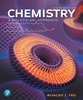
Textbook: Chemistry: A Molecular Approach by Nivaldo J. Tro (ISBN: 978-0-13-749361-6)
Online Homework: Mastering Chemistry subscription required.
Calculator: Scientific calculator capable of logarithms and scientific notation.
Safety Equipment: OSHA-approved safety glasses and lab coats (provided in lab).
Course Topics and Schedule
Major Topics Covered
Chemical Bonding and Molecular Structure: Lewis structures, VSEPR theory, molecular orbital theory, hybridization.
Intermolecular Forces and States of Matter: Types of intermolecular forces, phase diagrams, heating curves.
Solids and Solutions: Solid types, semiconductors, polymers, solution concentrations, solubility.
Colligative Properties and Kinetics: Colligative properties, rate laws, reaction mechanisms, catalysis.
Chemical Equilibrium: Equilibrium calculations, Le Chatelier’s Principle.
Acids and Bases: Definitions, pH, acid equilibria, polyprotic acids, buffers, titrations.
Thermodynamics: Laws of thermodynamics, entropy, free energy, spontaneity.
Electrochemistry: Redox reactions, galvanic cells, cell potential, Nernst equation, corrosion.
Nuclear Chemistry: Isotope stability, decay kinetics, fission, fusion, nuclear power, radiation.
Grading and Assessment
Distribution of Course Points
Assessment | Points |
|---|---|
Midterm Examinations | 400 (100 each) |
Final Exam | 150 |
Laboratory | 250 |
Homework | 100 |
Quizzes | 100 |
Total | 1000 |
Laboratory Safety and Protocols
Essential Safety Guidelines
Safety Glasses: Must be worn at all times in the laboratory.
Lab Coats: Provided and must be used according to protocol.
Emergency Procedures: Follow university guidelines for chemical exposure, fire, medical emergencies, and hostile intruder situations.
Academic Integrity and University Policies
Expectations and Consequences
Academic Honesty: Cheating, plagiarism, and unauthorized collaboration are strictly prohibited and subject to severe penalties.
Attendance: Regular attendance is strongly correlated with success; participation is expected.
Classroom Etiquette: Arrive on time, minimize disruptions, and respect others.
Electronic Devices: Use of phones and smart devices during class and exams is prohibited.
Accommodations: Students with documented disabilities should contact Student Accessibility Services for support.
Support and Tutoring
Resources for Student Success
Science Tutoring Center: Free tutoring available at the TSS Center.
ChemX Study Groups: Organized, interactive study sessions available for additional help.
Connections of Chemistry to Other Fields
Interdisciplinary Nature of Chemistry
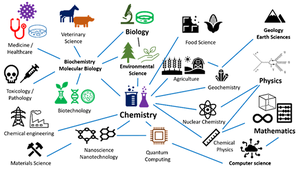
Chemistry serves as a central science, connecting biology, physics, geology, mathematics, engineering, and computer science. Its principles underpin advances in medicine, environmental science, materials science, and technology.
Final Advice
Keys to Success in CHEM 192
Attend all classes and labs.
Complete all assignments and review concepts regularly.
Seek help early from your professor, tutors, or study groups.
Practice problem-solving and apply concepts to real-world scenarios.
Additional info: This guide summarizes the syllabus and major topics for CHEM 192, providing a structured overview for exam preparation and course success.
