 Back
Chemical Bonding and Molecular Geometry: Study Notes for General Chemistry
Study Guide - Smart Notes
 Tailored notes based on your materials, expanded with key definitions, examples, and context.
Chemical Bonding I: Lewis Structures and Molecular Shapes
Introduction to Chemical Bonding
Chemical bonding is fundamental to understanding the structure and properties of molecules. Theories of bonding explain how and why atoms attach together, predict molecular shapes, and help determine the physical and chemical properties of compounds.
Bonding Theories: Explain atom attachment, stability, and predict shapes and properties.
Lewis Theory: Focuses on valence electrons to explain bonding and predict molecular stability, shape, size, and polarity.
Why Do Atoms Bond?
Atoms form chemical bonds to lower their potential energy. A bond forms when the potential energy of bonded atoms is less than that of separate atoms. Key interactions include nucleus-nucleus repulsions, electron-electron repulsions, and nucleus-electron attractions.
Types of Chemical Bonds
Bond Classification
Bonds are classified based on the types of atoms involved:
Ionic Bonds: Metal and nonmetal; electrons are transferred (cation-anion).
Covalent Bonds: Nonmetal and nonmetal; electrons are shared.
Metallic Bonds: Metal and metal; electrons are pooled (communal sharing).
Bond Polarity
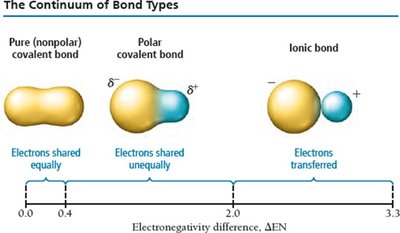
Most bonds have some degree of sharing and ion character. Covalent bonds involve electron sharing, but if sharing is unequal, the bond is polar covalent. Ionic bonds involve complete electron transfer.
Polar Covalent Bond: Unequal sharing of electrons, resulting in partial charges (δ+ and δ−).
Bond Polarity: The end with higher electron density is partially negative; the other is partially positive.
Electronegativity
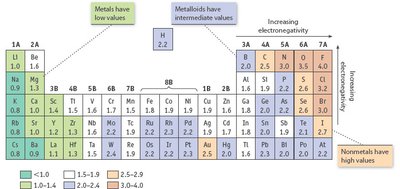
Electronegativity (EN) is the ability of an atom to attract electrons in a bond. It increases across a period and decreases down a group. Fluorine is the most electronegative element; francium is the least.
Trend: EN increases left to right, decreases top to bottom.
Opposite of atomic size trend.
Electronegativity Difference and Bond Type
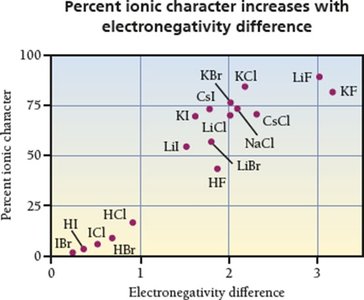
The difference in electronegativity (ΔEN) between atoms determines bond type:
ΔEN = 0: Pure covalent (nonpolar)
ΔEN = 0.1–0.4: Nonpolar covalent
ΔEN = 0.5–1.9: Polar covalent
ΔEN ≥ 2.0: Ionic
Bond Dipole Moments
The dipole moment (μ) measures bond polarity. It is proportional to the size of partial charges (q) and the distance (r) between them:
Formula:
Measured in Debyes (D).
Lewis Structures: Drawing and Interpretation
Lewis Structures for Molecules
Lewis theory predicts the distribution of valence electrons and helps understand bonding and molecular shapes.
Atoms achieve an octet by sharing electrons.
Covalent bonding involves shared electrons.
Atoms are most stable with a complete octet.
Steps for Writing Lewis Structures
Write the correct skeletal structure (less electronegative atom is usually central).
Determine the total number of valence electrons.
Distribute electrons to give octets (or duets for hydrogen).
If any atom lacks an octet, form double or triple bonds as needed.
Lewis Structures for Polyatomic Ions
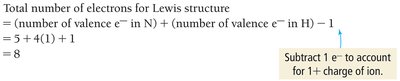
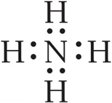
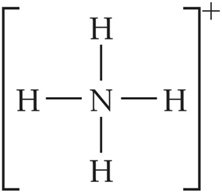
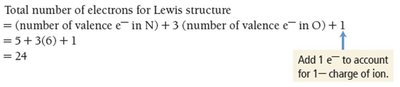
For ions, adjust the electron count for the charge:
Add electrons for negative charge; subtract for positive charge.
Resonance and Formal Charge
Resonance occurs when multiple valid Lewis structures exist for a molecule, differing only in electron positions. The actual molecule is a resonance hybrid. Formal charge helps identify the most stable structure:
Formal Charge Formula:
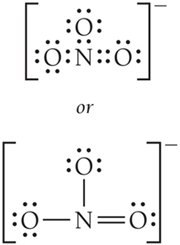
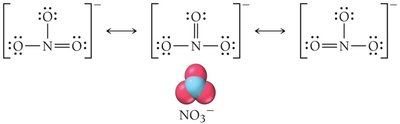
Exceptions to the Octet Rule
Types of Exceptions
Molecules with less than an octet (e.g., BF3)
Molecules with more than an octet (hypervalent, n ≥ 3)
Molecules with an odd number of electrons (free radicals)
Bond Energies and Bond Lengths
Bond Energy
Bond energy is the energy required to break one mole of a bond in the gaseous state. The more electrons shared, the stronger and shorter the bond.
Bond breaking is endothermic (ΔH positive).
Bond making is exothermic (ΔH negative).
Formula:
Bond Length Trends
More shared electrons → shorter bond.
Bond length decreases across a period, increases down a group.
Longer bonds are weaker.
VSEPR Theory and Molecular Geometry
VSEPR Theory
Valence Shell Electron Pair Repulsion (VSEPR) theory predicts molecular shapes by maximizing the distance between electron groups around a central atom.
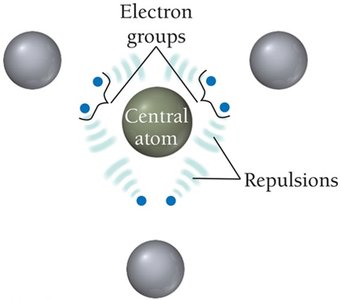
Electron Group Geometry
Five basic arrangements:
Linear (2 groups)
Trigonal planar (3 groups)
Tetrahedral (4 groups)
Trigonal bipyramidal (5 groups)
Octahedral (6 groups)
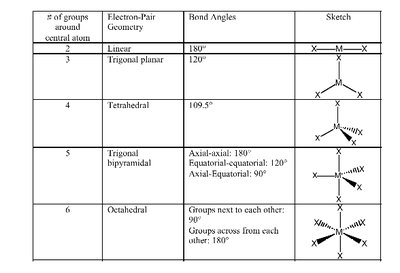
Linear Geometry
Two electron groups: bond angle is 180°.
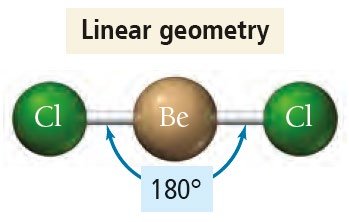
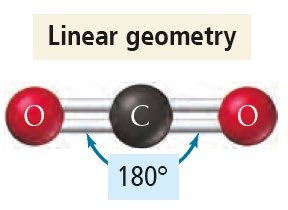
Trigonal Planar Geometry
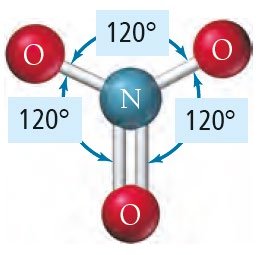
Three electron groups: bond angle is 120°.
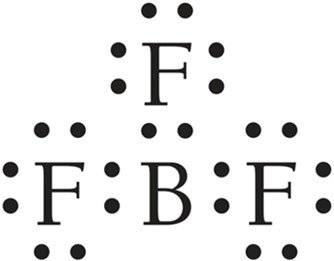
Tetrahedral Geometry
Four electron groups: bond angle is 109.5°.
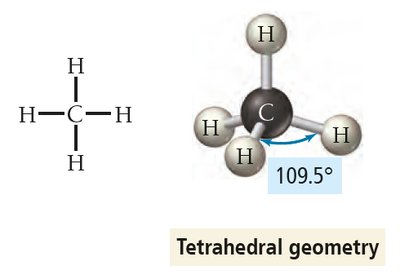
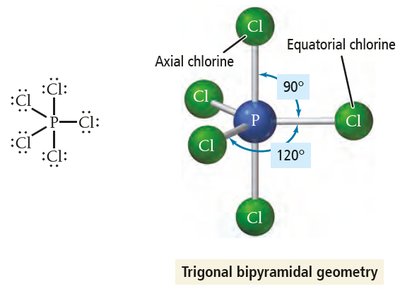
Trigonal Bipyramidal Geometry
Five electron groups: bond angles are 90° (axial-equatorial), 120° (equatorial-equatorial), 180° (axial-axial).
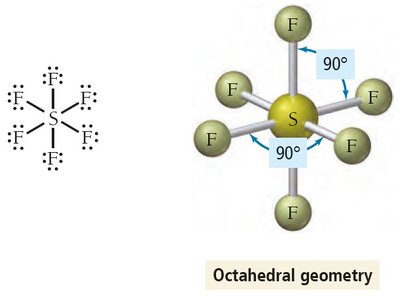
Octahedral Geometry
Six electron groups: bond angle is 90°.
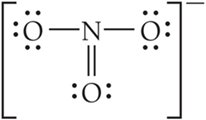
Resonance and VSEPR Example
Resonance does not affect electron geometry; use any resonance form to determine geometry.

Effect of Lone Pairs on Molecular Structure
Lone Pair Repulsions
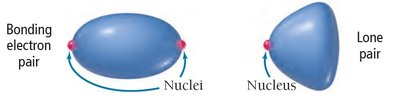
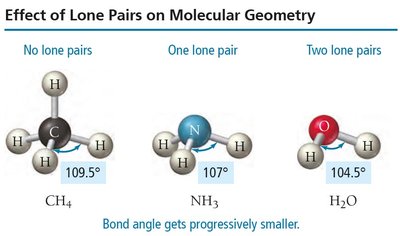
Lone pairs occupy more space and cause bond angle distortion. Repulsive force order:
Lone pair–lone pair > lone pair–bonding pair > bonding pair–bonding pair
Pyramidal and Bent Geometries
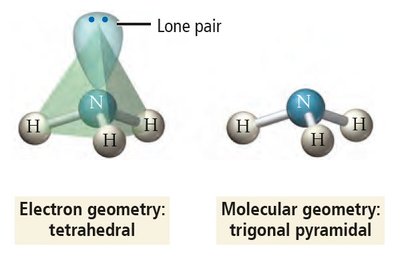
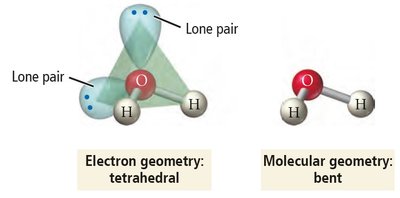
Derivatives of tetrahedral geometry:
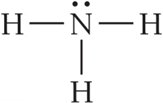
Trigonal pyramidal: one lone pair (e.g., NH3)
Bent: two lone pairs (e.g., H2O)
Derivatives of Trigonal Bipyramidal and Octahedral Geometries
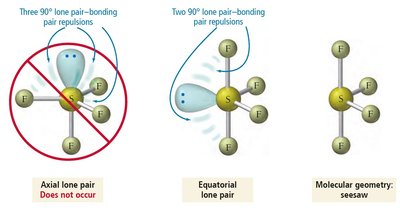
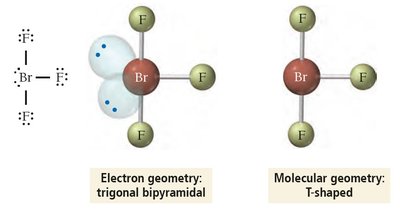
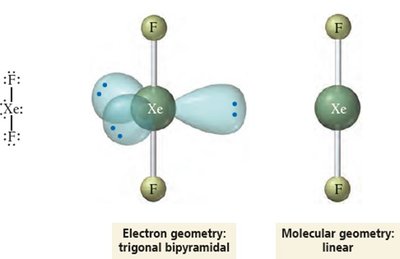
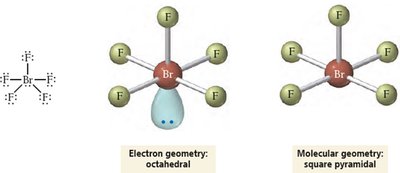
Lone pairs occupy equatorial positions in trigonal bipyramidal geometry, leading to seesaw, T-shaped, and linear shapes. In octahedral geometry, lone pairs lead to square pyramidal and square planar shapes.
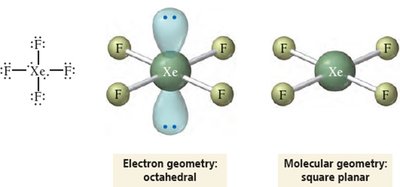
Predicting Molecular Geometries
Steps for Prediction
Draw the Lewis structure.
Count electron groups around the central atom.
Classify each group as bonding or lone pair.
Use geometry tables to determine shape and bond angles.
Polarity of Molecules
Determining Molecular Polarity
A molecule is polar if it contains polar bonds and the shape does not allow dipole moments to cancel. Polarity depends on electronegativity differences and molecular geometry.
Draw the Lewis structure and determine geometry.
Identify polar bonds (ΔEN sufficient).
Superimpose vectors for each polar bond.
Sum vectors: if net dipole moment exists, molecule is polar.
Examples of Molecular Polarity
HCl: Polar molecule; electrons pulled toward Cl.
CO2: Nonpolar; polar bonds cancel due to linear geometry.
H2O: Polar; bent geometry prevents cancellation of dipole moments.
Vector Addition and Polarity
Vector addition is used to determine if dipole moments cancel. If all terminal groups are identical and arranged symmetrically, the molecule is nonpolar. If lone pairs or different terminal atoms are present, the molecule is polar.
Vector Addition in One and Multiple Dimensions
Vectors on the same line are added by assigning positive and negative directions. In two or more dimensions, use the parallelogram method to find the resultant vector.
Molecular Polarity and Solubility
Polar molecules dissolve in water, a polar solvent. Some molecules have both polar and nonpolar regions, such as soap.
Practice Problem: Is a Molecule Polar?
Example: NH3 is polar due to its trigonal pyramidal geometry and the presence of polar N-H bonds.
Summary Table: Electron Group Geometry and Molecular Shape
# of groups around central atom | Electron-Pair Geometry | Bond Angles | Sketch |
|---|---|---|---|
2 | Linear | 180° | BeCl2, CO2 |
3 | Trigonal planar | 120° | BF3, NO3- |
4 | Tetrahedral | 109.5° | CH4, NH3, H2O |
5 | Trigonal bipyramidal | Axial-axial: 180°, Equatorial-equatorial: 120°, Axial-equatorial: 90° | PCl5, SF4, BrF3, XeF2 |
6 | Octahedral | 90° | SF6, BrF5, XeF4 |
