Back
BackChemical Bonding I: The Lewis Model – Study Notes
Study Guide - Smart Notes
 Tailored notes based on your materials, expanded with key definitions, examples, and context.
Chemical Bonding I: The Lewis Model
Introduction to Bonding Theories
Bonding theories explain how and why atoms attach together to form molecules, and why some combinations of atoms are stable while others are not. These theories are essential for predicting molecular shapes, chemical and physical properties, and for understanding the behavior of compounds in chemical reactions.
The Lewis Model
The Lewis theory is one of the simplest bonding theories, emphasizing the role of valence electrons in chemical bonding. Lewis structures, also known as electron dot structures, are diagrams that represent the valence electrons of atoms as dots around the element symbol. These structures help predict molecular stability, shape, size, and polarity.
Why Do Atoms Bond?
Chemical bonds form because they lower the potential energy between the charged particles that compose atoms.
A bond forms when the potential energy of the bonded atoms is less than that of the separate atoms.
Key interactions to consider: nucleus-to-nucleus repulsions, electron-to-electron repulsions, and nucleus-to-electron attractions.
Types of Chemical Bonds
Classification of Bonds
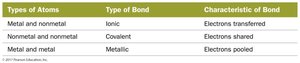
Bonds are classified based on the types of atoms involved and the nature of electron interactions.
Types of Atoms | Type of Bond | Characteristic of Bond |
|---|---|---|
Metal and nonmetal | Ionic | Electrons transferred |
Nonmetal and nonmetal | Covalent | Electrons shared |
Metal and metal | Metallic | Electrons pooled |
Ionic Bonds
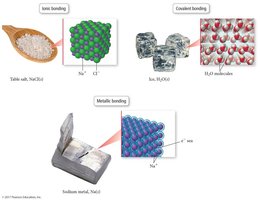
Formed when a metal atom loses electrons (becomes a cation) and a nonmetal atom gains electrons (becomes an anion).
The oppositely charged ions are attracted to each other, resulting in an ionic bond.
Covalent Bonds
Formed between nonmetal atoms with high ionization energies.
Atoms share valence electrons to achieve lower potential energy.
Shared electrons hold the atoms together by attracting the nuclei of both atoms.
Metallic Bonds
Formed between metal atoms with low ionization energies.
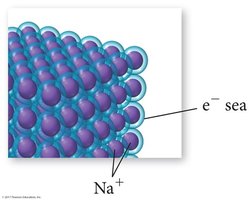
Valence electrons are pooled and delocalized throughout the metal structure, creating a "sea of electrons".
Bonding results from the attraction of cations for the delocalized electrons.
Valence Electrons and Lewis Structures
Valence Electrons
Valence electrons are the outermost electrons of an atom and are most involved in chemical bonding. The number of valence electrons for main group elements can be determined from the periodic table column number.
Lewis Structures of Atoms
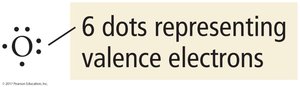
Valence electrons are represented as dots around the element symbol.
First two dots are paired for s orbital electrons; remaining dots are placed singly on each side before pairing for p electrons.
The Octet Rule
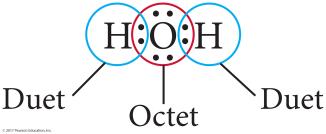
Atoms tend to bond in such a way that they each obtain an outer shell with eight electrons, similar to the electron configuration of noble gases. This is known as the octet rule. Some exceptions exist, such as hydrogen (duet rule), and elements with incomplete or expanded octets.
Ionic Bonding and Lattice Energy
Formation of Ions
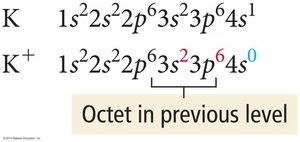
Metals lose valence electrons to form cations.
Nonmetals gain electrons to form anions.
Crystal Lattice Structure
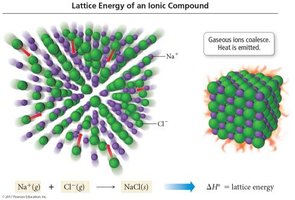
Ionic compounds form a crystal lattice, a repeating three-dimensional arrangement of ions that maximizes attractions between cations and anions, resulting in a stable structure.
Lattice Energy
Lattice energy is the energy released when one mole of an ionic crystalline compound forms from its gaseous ions.
It is always exothermic and depends on the charges and sizes of the ions.
The Born–Haber Cycle
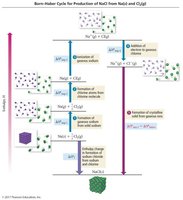
The Born–Haber cycle is a hypothetical series of steps used to calculate the lattice energy of an ionic compound using Hess's law and known enthalpy changes.
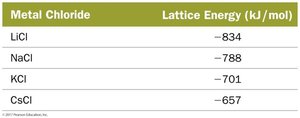
Trends in Lattice Energy
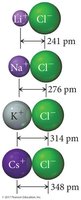
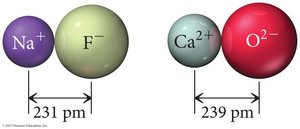
Lattice energy increases with higher ionic charge and decreases with larger ionic radius.
Smaller ions and higher charges result in stronger attractions and more exothermic lattice energies.
Properties of Ionic Compounds
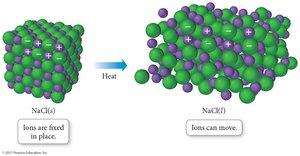
Hard and brittle crystalline solids with high melting points (generally > 300 °C).
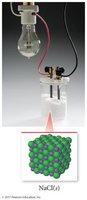
Conduct electricity in the liquid state or when dissolved in water, but not as solids.
Many are soluble in water; their solutions conduct electricity well.

Covalent Bonding and Lewis Structures
Covalent Bonding
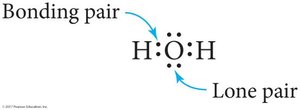
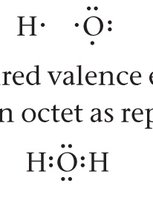
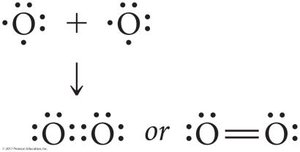
In covalent bonding, atoms share valence electrons to achieve octets. Shared electrons are called bonding pairs, while non-shared electrons are lone pairs or nonbonding pairs.
Single, Double, and Triple Bonds
Single bond: Two atoms share one pair of electrons.
Double bond: Two atoms share two pairs of electrons.
Triple bond: Two atoms share three pairs of electrons.

Bond Strength and Length
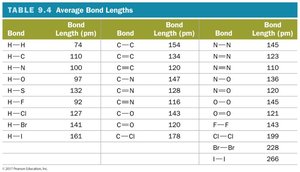
Triple bonds are stronger and shorter than double bonds, which are stronger and shorter than single bonds.
Bond strength is measured by the energy required to break the bond; bond length is the distance between nuclei of bonded atoms.
Bond Polarity and Electronegativity
Polar Covalent Bonds
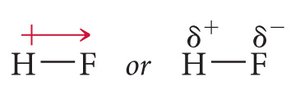
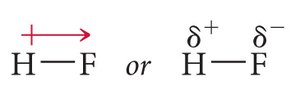
When covalent bonds form between different elements, electrons may be shared unequally, resulting in a polar covalent bond. The atom with higher electronegativity attracts electrons more strongly, acquiring a partial negative charge (δ−), while the other atom becomes partially positive (δ+).
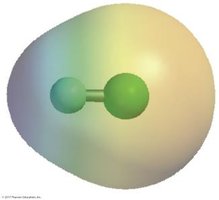
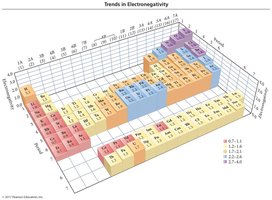
Electronegativity Trends
Electronegativity increases across a period and decreases down a group.
Fluorine is the most electronegative element.
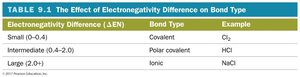
Bond Type and Electronegativity Difference
Electronegativity Difference (ΔEN) | Bond Type | Example |
|---|---|---|
0–0.4 | Covalent | Cl2 |
0.4–2.0 | Polar covalent | HCl |
≥2.0 | Ionic | NaCl |
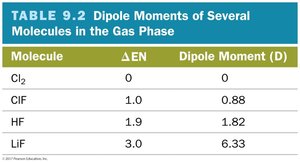
Bond Dipole Moments
The dipole moment (μ) measures bond polarity and is calculated as:
where q is the magnitude of the partial charges and r is the distance between them. Dipole moments are measured in Debyes (D).
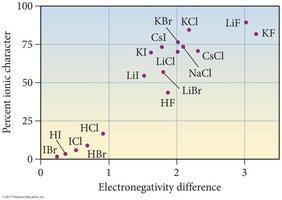
Percent Ionic Character
The percent ionic character compares a bond's measured dipole moment to the value expected if electrons were fully transferred. It indicates the degree of electron transfer in a bond.
Writing Lewis Structures and Resonance
Steps for Writing Lewis Structures
Write the correct skeletal structure for the molecule (hydrogen and more electronegative atoms are terminal).
Sum the valence electrons for all atoms.
Distribute electrons to give octets (or duets for hydrogen).
If any atom lacks an octet, form double or triple bonds as needed.
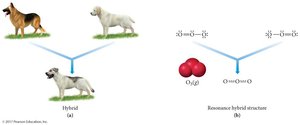
Resonance
Some molecules can be represented by more than one valid Lewis structure, differing only in the position of electrons. These are called resonance structures. The actual molecule is a resonance hybrid, with delocalized electrons stabilizing the structure.
Formal Charge
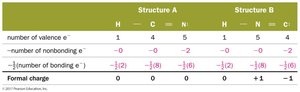
Formal charge helps identify the most stable Lewis structure. It is calculated as:
The best Lewis structure has the smallest and fewest formal charges, with negative charges on the most electronegative atoms.
Bond Energies and Bond Lengths
Bond Energies
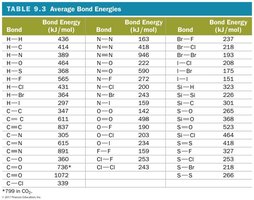
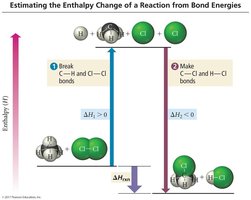
Bond energy (or bond enthalpy) is the energy required to break one mole of a bond in the gas phase.
Bond breaking is endothermic; bond making is exothermic.
Reaction enthalpy can be estimated using average bond energies:
Bond Lengths
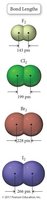
Bond length is the distance between the nuclei of bonded atoms.
Triple bonds are shorter than double bonds, which are shorter than single bonds.
Bond length decreases across a period and increases down a group.
Metallic Bonding
Metallic bonding involves the pooling of valence electrons among metal atoms, resulting in a "sea of electrons" that are delocalized throughout the structure. This explains properties such as electrical conductivity, malleability, and ductility in metals.
Applications: Ozone Layer
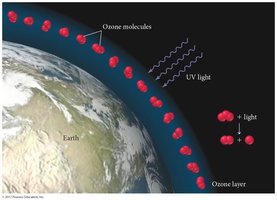
The ozone layer is an example of the importance of molecular structure and bonding in environmental chemistry. Ozone molecules absorb harmful UV light, protecting life on Earth.