 Back
BackChemical Bonding I: The Lewis Model – Comprehensive Study Notes
Study Guide - Smart Notes
 Tailored notes based on your materials, expanded with key definitions, examples, and context.
Chemical Bonding I: The Lewis Model
Introduction to Chemical Bonding
Chemical bonding is fundamental to understanding how atoms combine to form compounds. The Lewis model provides a visual and conceptual framework for representing valence electrons and predicting the stability and structure of molecules and ions.
Types of Chemical Bonds
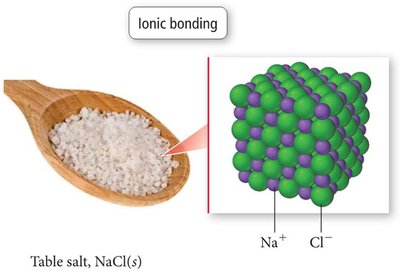
Ionic Bonding
Ionic bonds form when electrons are transferred from metals (which have low ionization energies) to nonmetals (which have high electron affinities). The resulting ions are held together by electrostatic attraction, forming a crystalline lattice.
Key Point: Ionic compounds are typically formed between metals and nonmetals.
Example: Table salt, NaCl, is a classic ionic compound.
Covalent Bonding
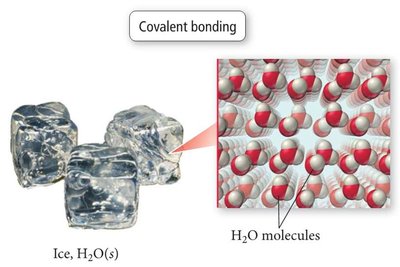
Covalent bonds occur when two or more nonmetals share electrons to achieve stable electron configurations. The shared electrons constitute a bonding pair, and the resulting molecules can be represented by Lewis structures.
Key Point: Covalent bonds involve electron sharing, not transfer.
Example: Water (H2O) is a covalent compound.
Metallic Bonding
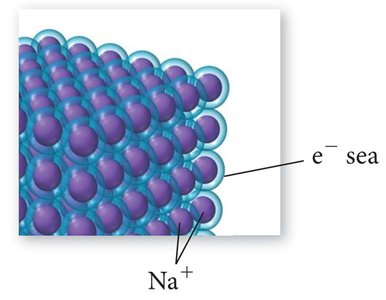
Metallic bonding is characterized by a 'sea of electrons' that are delocalized over the lattice of metal atoms. This electron pool stabilizes the positively charged metal centers and gives rise to properties such as electrical conductivity and malleability.
Key Point: Electrons are not associated with any one atom but are free to move throughout the metal lattice.
Lewis Symbols and the Octet Rule
Representing Valence Electrons
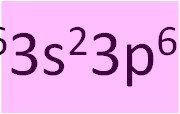
The Lewis symbol is a simple way to represent the valence electrons of an element as dots around the element's symbol. This helps visualize how atoms achieve stable electron configurations through bonding.
Key Point: Main-group elements tend to achieve an octet (eight electrons) in their valence shell.

The Octet Rule
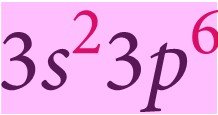
The octet rule states that atoms tend to form bonds in such a way that each atom has eight electrons in its valence shell, achieving the stability of noble gases. Hydrogen is an exception, aiming for a duet (two electrons).
Key Point: Noble gas configuration is particularly stable.
Lattice Energy and the Born-Haber Cycle
Lattice Energy
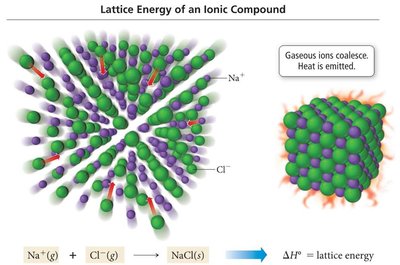
Lattice energy is the energy released when gaseous ions coalesce to form an ionic solid. It is a measure of the strength of the ionic bonds in a compound and is highly exothermic due to the formation of a crystalline lattice.
Key Point: Lattice energy depends on ion size and charge.
Formula:
The Born-Haber Cycle
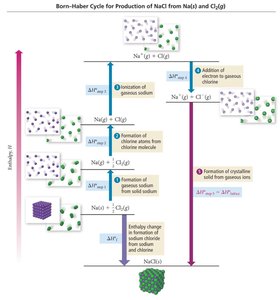
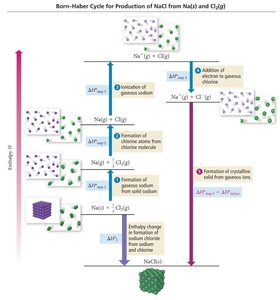
The Born-Haber cycle is a thermodynamic pathway used to calculate the lattice energy of ionic solids. It involves several steps, including atomization, ionization, electron affinity, and lattice formation.
Key Point: The formation of the lattice is the most exothermic step.
Trends in Lattice Energies
Effect of Ion Size
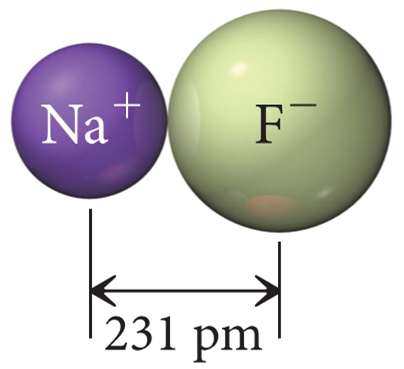
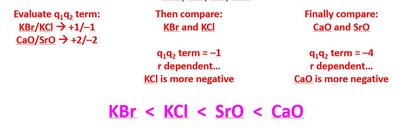
Lattice energy decreases (becomes less negative) as the ionic radius increases because the distance between ions increases, reducing the electrostatic attraction.
Key Point: Smaller ions form stronger lattices.
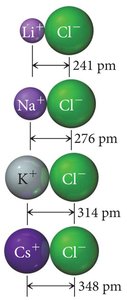
Effect of Ion Charge
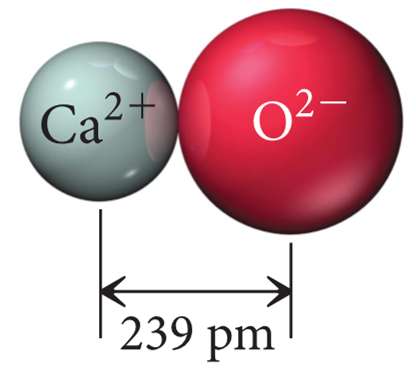
Lattice energy increases (becomes more negative) with increasing magnitude of ionic charge. Higher charges result in stronger electrostatic attraction.
Key Point: Compounds with higher charge ions have higher lattice energies.
Covalent Bonding and Lewis Structures
Bonding Pairs and Lone Pairs
In covalent molecules, electrons are shared between atoms to form bonds (bonding pairs), while nonbonding electrons (lone pairs) remain localized on individual atoms. The Lewis structure helps visualize these arrangements.
Key Point: Each bond is represented by a dash; lone pairs are shown as dots.


Bond Polarity and Electronegativity
Electronegativity and Bond Polarity
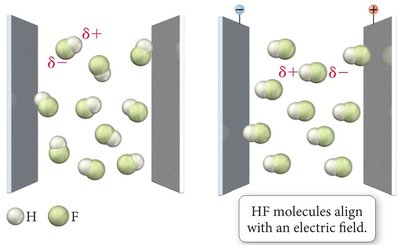
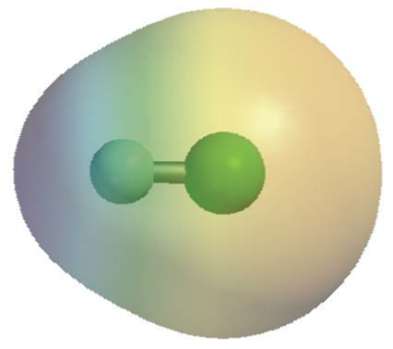
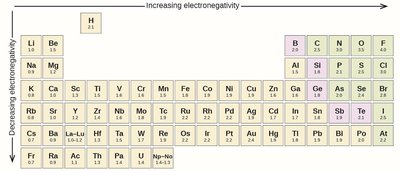
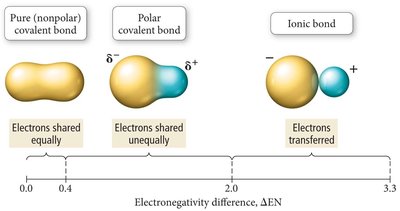
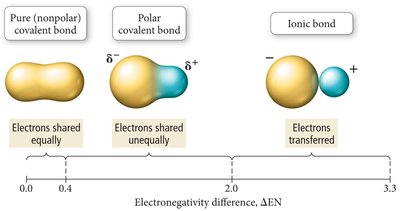
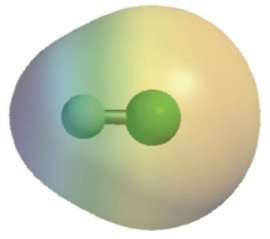
Electronegativity is the tendency of an atom to attract electrons in a bond. The difference in electronegativity () between two atoms determines the bond's polarity: pure covalent, polar covalent, or ionic.
Key Point: Larger leads to more ionic character.
Example: H–F is a polar covalent bond.

Writing Lewis Structures for Molecules and Ions
Steps for Lewis Structures
To write Lewis structures for molecules and polyatomic ions:
Write the skeletal structure (least electronegative atom in the center).
Sum the valence electrons, adjusting for charges.
Distribute electrons to achieve octets (or duets for H).
Form double or triple bonds if necessary.
Resonance Structures
Resonance and Delocalization
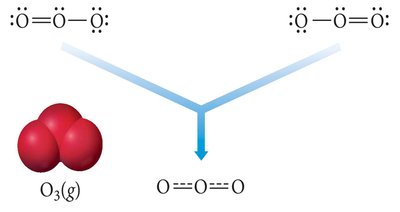
Some molecules have multiple valid Lewis structures, called resonance structures. The actual molecule is a resonance hybrid, with electrons delocalized across the structure.
Key Point: Resonance stabilizes molecules by spreading out electron density.
Formal Charge
Calculating Formal Charge
Formal charge helps identify the most stable Lewis structure. It is calculated as:
Formula:
Key Point: The best structure minimizes formal charges and places negative charges on the most electronegative atoms.
Exceptions to the Octet Rule
Odd-Electron Species, Incomplete Octets, Expanded Octets
Some molecules do not follow the octet rule:
Odd-electron species: Free radicals with unpaired electrons.
Incomplete octets: Common for B, Al, and Be.
Expanded octets: Elements in period 3 and beyond can have more than eight electrons.
Bond Energies and Bond Lengths
Bond Energy
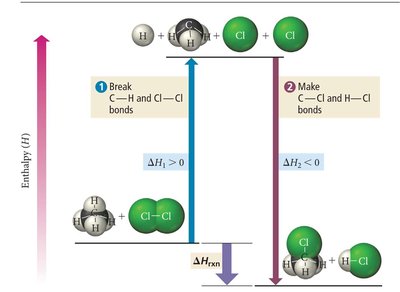
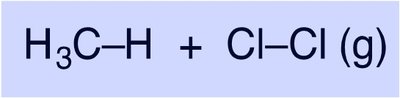
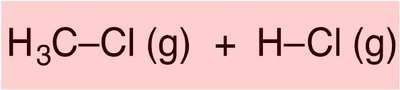
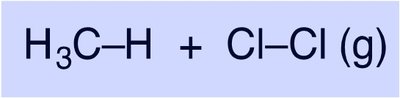
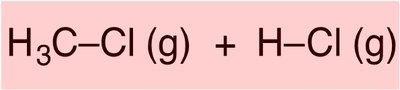
Bond energy is the energy required to break one mole of a bond in the gas phase. It is used to estimate enthalpy changes in reactions.
Key Point: Stronger bonds have higher bond energies and are less reactive.
Formula:
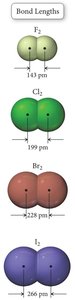
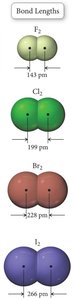
Bond Length
Bond length is the distance between the nuclei of two bonded atoms. Generally, shorter bonds are stronger, but this is not always the case.
Key Point: Bond length varies with bond order and atomic size.
Summary Table: Types of Chemical Bonds
Bond Type | Electron Behavior | Example |
|---|---|---|
Ionic | Transfer | NaCl |
Covalent | Sharing | H2O |
Metallic | Delocalized | Na (metal) |
Summary Table: Bond Polarity Classification
Bond Type | Electronegativity Difference (ΔEN) | Electron Distribution |
|---|---|---|
Pure Covalent | 0–0.4 | Shared equally |
Polar Covalent | 0.5–2.0 | Shared unequally |
Ionic | 2.1–3.3 | Transferred |
Additional info: These notes expand on the original slides by providing definitions, formulas, and context for each concept, ensuring a comprehensive and self-contained study guide for general chemistry students.
