 Back
BackChemical Bonding, Molecular Structure, and Stoichiometry: Study Notes
Study Guide - Smart Notes
 Tailored notes based on your materials, expanded with key definitions, examples, and context.
Chapter 5: Chemical Bonding I – Electronegativity, Lewis Structures, and Molecular Geometry
Electronegativity and Bond Polarity
Electronegativity is the ability of an atom in a molecule to attract shared electrons in a covalent bond. The difference in electronegativity between two atoms determines the type of bond formed:
Electronegativity Trend: Increases across a period (left to right) and decreases down a group (top to bottom) in the periodic table.
Bond Types Based on Electronegativity Difference (ΔEN):
Ionic: ΔEN > 2 (full charges, electron transfer)
Polar Covalent: 0.2 < ΔEN < 2 (partial charges, unequal sharing)
Non-polar Covalent: ΔEN < 0.2 (electronically symmetrical, equal sharing)
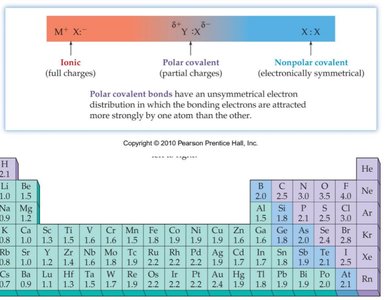
Example: In HCl, Cl is more electronegative than H, so the bond is polar covalent with Cl carrying a partial negative charge (δ-) and H a partial positive charge (δ+).
Lewis Structures (Electron-Dot Structures)
Lewis structures represent the arrangement of valence electrons around atoms in a molecule. They are essential for predicting molecular shape, reactivity, and resonance.
Steps for Drawing Lewis Structures:
Calculate the total number of valence electrons (add for negative charges, subtract for positive charges).
Draw the skeletal structure with the least electronegative atom (often carbon) in the center.
Assign electrons to terminal atoms first, then to the central atom.
If the central atom lacks an octet, move lone pairs to form double or triple bonds as needed.
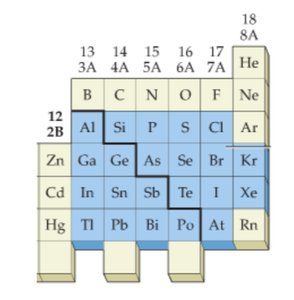
Exceptions: Some elements (especially in periods 3 and beyond) can accommodate more than 8 electrons (expanded octet).
Example: SF6 has 12 electrons around sulfur, exceeding the octet rule.
Resonance and Formal Charge
Some molecules can be represented by more than one valid Lewis structure, called resonance structures. The actual structure is a hybrid of these forms.
Resonance: Occurs when multiple Lewis structures are possible for a molecule.
Formal Charge Calculation: Used to determine the most stable resonance structure.
Formal Charge Formula:
Example: In the carbonate ion (CO32-), three resonance structures are possible, each with a different arrangement of double bonds.
VSEPR Theory (Valence Shell Electron Pair Repulsion)
VSEPR theory predicts the three-dimensional shape of molecules based on the repulsion between electron pairs in the valence shell of the central atom.
Steps for Determining Shape:
Draw the Lewis structure.
Count the number of charge clouds (bonding and lone pairs) around the central atom.
Determine the electron geometry (all charge clouds) and molecular geometry (only atoms).
Example: PF5 has five charge clouds, resulting in a trigonal bipyramidal geometry.
Chapter 6: Chemical Bonding II – Valence Bond Theory and Hybridization
Valence Bond Theory
Valence bond theory describes covalent bond formation as the overlap of atomic orbitals, each containing one electron of opposite spin. The greater the overlap, the stronger the bond.
Sigma (σ) Bond: Head-to-head overlap of orbitals (strongest type of covalent bond).
Pi (π) Bond: Side-to-side overlap of p orbitals (found in double and triple bonds).
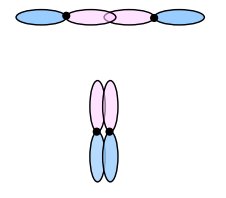
Example: In ethene (C2H4), the double bond consists of one σ and one π bond.
Hybridization
Hybridization is the mixing of atomic orbitals to form new, equivalent hybrid orbitals suitable for the pairing of electrons to form chemical bonds.
sp3 Hybridization: One s and three p orbitals mix to form four sp3 hybrid orbitals (tetrahedral geometry).
sp2 Hybridization: One s and two p orbitals mix to form three sp2 hybrid orbitals (trigonal planar geometry).
sp Hybridization: One s and one p orbital mix to form two sp hybrid orbitals (linear geometry).
Example: Methane (CH4) has sp3 hybridization, resulting in a tetrahedral shape.
Chapter 7: Chemical Reactions and Chemical Quantities
Chemical Equations and the Law of Conservation of Mass
Chemical equations are shorthand representations of chemical reactions. They must obey the law of conservation of mass, meaning the number of atoms of each element is the same on both sides of the equation.
Information from Equations: Formulas, states, and relative quantities of reactants and products.
Balancing Equations: Use whole-number coefficients to ensure mass conservation.
Example:
The Mole and Molar Mass
The mole is a counting unit in chemistry, defined as 6.022 × 10²³ entities (Avogadro's number). Molar mass is the mass of one mole of a substance, expressed in grams per mole (g/mol).
Atomic Mass vs. Molar Mass: The atomic mass in amu is numerically equal to the molar mass in grams for one mole of atoms.
Example: 1 mole of carbon (C) weighs 12.01 g.
Stoichiometry
Stoichiometry involves the calculation of reactants and products in chemical reactions using balanced equations.
Conversions: Moles to moles, grams to grams, using molar ratios from the balanced equation.
Limiting Reactant: The reactant that is completely consumed first, limiting the amount of product formed.
Theoretical Yield: Maximum possible amount of product.
Actual Yield: Amount of product actually obtained.
Percent Yield:
Example: If 10 g of Ca produces 5 g of Ca(OH)2, percent yield = (5/10) × 100 = 50%.
Empirical and Molecular Formulas
The empirical formula gives the simplest whole-number ratio of atoms in a compound, while the molecular formula gives the actual number of atoms.
Finding Empirical Formula:
Convert percentages to grams (if not already in grams).
Convert grams to moles using molar mass.
Write a pseudo formula using moles as subscripts.
Divide by the smallest number of moles to get whole-number ratios.
Multiply to clear fractions if necessary.
Finding Molecular Formula:
Calculate empirical formula mass.
Divide molar mass by empirical formula mass to find the multiple.
Multiply subscripts in empirical formula by this multiple.
Example: Hydrogen peroxide (H2O2): Empirical formula is HO; molecular formula is H2O2.
