 Back
BackChemical Bonding: Types, Properties, and Molecular Geometry
Study Guide - Smart Notes
 Tailored notes based on your materials, expanded with key definitions, examples, and context.
Chemical Bonding
The Nature of Bonding
Chemical bonding refers to the forces that hold atoms together in compounds. The three most common types of bonds are ionic, covalent, and metallic bonds.
Covalent bonds: Electrons are shared between atoms.
Ionic bonds: Electrons are transferred from one atom to another, creating cations and anions.
Metallic bonds: Involve two or more metals bonded together, with electrons delocalized across the lattice.
Types of Covalent Bonds
Covalent bonds can be classified as polar covalent or nonpolar covalent based on how electrons are shared.
Polar covalent: Electrons are not shared equally; they are pulled toward the more electronegative atom.
Nonpolar covalent: Electrons are shared equally between the two bonded atoms.
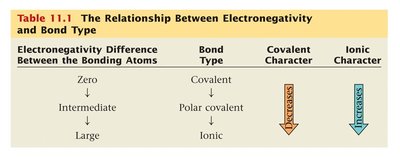
Electronegativity Difference (DEN):
DEN > 2.0: Ionic bond
DEN 0.5–1.7: Polar covalent bond
DEN 0–0.49: Nonpolar covalent bond
DEN 1.7–2.0: If a metal is present, ionic; if only nonmetals/metalloids, polar covalent
Bond Polarity and Dipole Moments
Bond Polarity
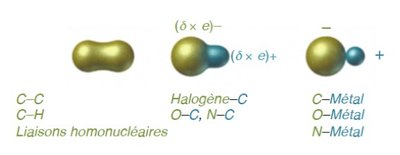
Covalent bonding between unlike atoms results in unequal sharing of electrons, leading to bond polarity. The atom with higher electron density gets a partial negative charge (δ−), while the other gets a partial positive charge (δ+).
Dipole Moment
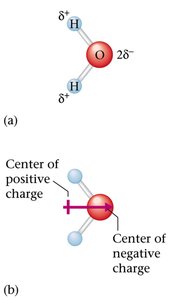
A dipole moment arises when a molecule has centers of positive and negative charge at different points. This affects intermolecular forces and physical properties.
Dipole moment is measured in Debye (D): 1 D = C·m
Multiple polar bonds can add or cancel dipole moments
Electron Configuration in Ionic Bonding
Formation of Ions
Metals tend to lose valence electrons to achieve a stable octet, forming cations. Nonmetals gain or share electrons to complete their octet, forming anions.
Sodium:
Calcium:
Oxygen:
Phosphorus:
Properties of Ionic Compounds
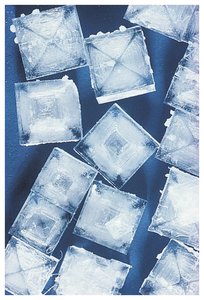
Ionic compounds are electrically neutral groups of ions joined by electrostatic forces. They are typically crystalline solids at room temperature, with high melting points due to strong ionic attractions.
Valence Electrons and Lewis Structures
Valence Electrons
Valence electrons are the electrons in the highest occupied energy level of an atom and are crucial for bonding. The number of valence electrons corresponds to the group number in the periodic table.
Group 1: 1 valence electron
Group 2: 2 valence electrons
Group 13: 3 valence electrons
Group 14: 4 valence electrons
Group 15: 5 valence electrons
Group 16: 6 valence electrons
Group 17: 7 valence electrons
Group 18: 8 valence electrons
Lewis Symbols and Structures
Lewis symbols (electron dot symbols) represent valence electrons as dots around the element symbol. Lewis structures show the arrangement of atoms and electrons in molecules.
Bonding pair: Shared between two atoms
Lone pair: Not shared
Octet Rule and Exceptions
Atoms tend to gain, lose, or share electrons to achieve a stable octet (8 valence electrons). Exceptions include:
Hydrogen: Stable with 2 electrons
Beryllium: Stable with 4 electrons
Boron: Stable with 6 electrons
Steps for Drawing Lewis Structures
Determine the number of valence electrons.
Choose the central atom (usually the least electronegative, never hydrogen or halogen).
Use pairs of electrons to bond terminal atoms to the central atom.
Make terminal atoms stable with valence electrons.
Place remaining electrons as lone pairs on the central atom.
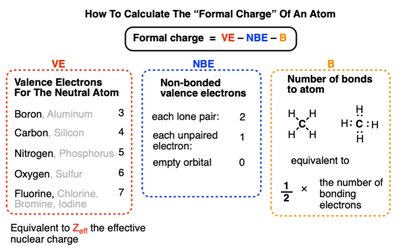
Determine the charge on each atom.
Bond Order, Length, and Strength
Single, Double, and Triple Bonds
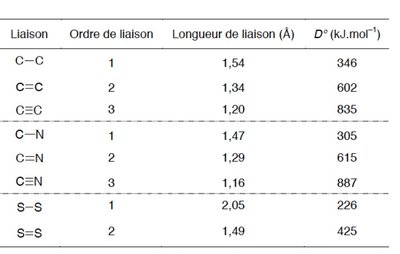
Bonds can be single, double, or triple, depending on the number of shared electron pairs.
Single bonds: Longest and weakest
Double bonds: Shorter and stronger
Triple bonds: Shortest and strongest
Resonance Structures
Resonance
Resonance structures occur when a molecule or ion can be represented by two or more valid Lewis structures, typically involving double bonds. The actual structure is a hybrid, with bond characteristics averaged across the molecule.
Molecular Geometry and VSEPR Theory
VSEPR Model
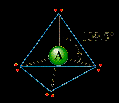
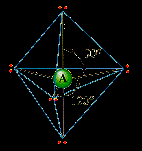
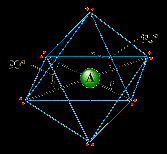
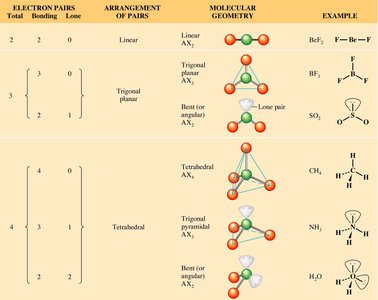
The Valence-Shell Electron Pair Repulsion (VSEPR) model predicts molecular shapes by assuming electron pairs arrange themselves as far apart as possible around the central atom.
Draw the Lewis structure.
Count bonding pairs (multiple bonds count as one pair).
Count lone pairs on the central atom.
Polar Bonds and Molecules
Polarity in Molecules
Polar bonds can create polar or nonpolar molecules. If centers of partial positive and negative charge coincide, the molecule is nonpolar; if they are separated, the molecule is polar.
Lone pairs on the central atom usually make the molecule polar.
If all atoms around the central atom are identical and there are no lone pairs, the molecule is nonpolar.
Different atoms around the central atom generally result in a polar molecule.
Intermolecular Forces
Types of Intermolecular Forces
Molecules are attracted to each other by intermolecular forces, which are weaker than ionic or covalent bonds. These forces determine the physical state (solid, liquid, gas) of molecular compounds.
Dispersion forces: Weakest, caused by electron motion; strength increases with molar mass and number of electrons.
Dipole interactions: Occur between polar molecules; partial positive and negative charges attract.
Hydrogen bonds: Strongest intermolecular force; occurs when H is bonded to F, O, or N and interacts with lone pairs on nearby F, O, or N atoms.
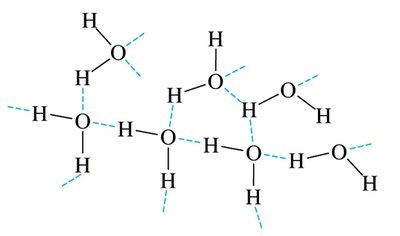
Example: Hydrogen bonds significantly increase the boiling point of water.
