 Back
BackChemical Bonds, Electronegativity, and Covalent Compounds: Study Notes for General Chemistry
Study Guide - Smart Notes
 Tailored notes based on your materials, expanded with key definitions, examples, and context.
Chemical Bonds and the Octet Rule
Introduction to Chemical Bonding
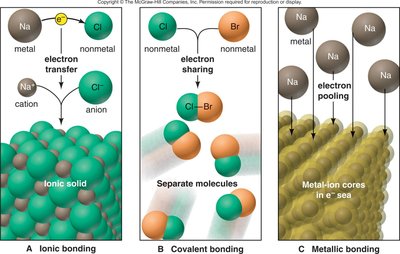
Chemical bonds are the attractive forces that hold atoms together in compounds. Atoms form bonds to achieve a stable electron configuration, often resembling the nearest noble gas (the octet rule). There are three primary types of chemical bonds: ionic, covalent, and metallic.
Ionic bonds: Formed by the transfer of electrons from a metal to a nonmetal, resulting in the formation of cations and anions.
Covalent bonds: Formed by the sharing of electrons between two nonmetals.
Metallic bonds: Involve the pooling of electrons among metal atoms.
Electronegativity and Covalent Bonds
Electronegativity: Definition and Trends
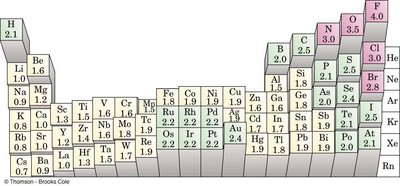
Electronegativity (EN) is the tendency of an atom to attract electrons in a chemical bond. It is a key factor in determining bond polarity and the type of bond formed between atoms.
Electronegativity increases across a period (left to right) and decreases down a group (top to bottom) in the periodic table.
Fluorine (F) is the most electronegative element; noble gases generally do not have EN values because they rarely form bonds.
Bond Polarity and Dipole Moments
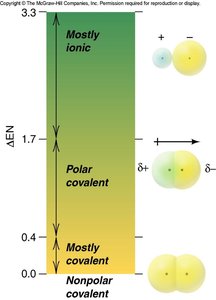
The difference in electronegativity (ΔEN) between two atoms determines the bond type:
Nonpolar covalent: ΔEN ≤ 0.4 (equal sharing of electrons)
Polar covalent: 0.4 < ΔEN ≤ 2.0 (unequal sharing, partial charges form)
Ionic: ΔEN > 2.0 (complete transfer of electrons)
A dipole moment (μ) measures the separation of charge in a molecule and is calculated as:
where Q = charge, r = separation distance
Lewis Structures and the Octet Rule
Drawing Lewis Structures
Lewis structures represent the arrangement of valence electrons in a molecule. The steps to construct a Lewis structure are:
Find the total number of valence electrons by summing the group numbers of all atoms.
Place the least electronegative atom in the center (except hydrogen).
Connect atoms with single bonds (pairs of electrons), then complete the octets of surrounding atoms.
Place any remaining electrons on the central atom. If the central atom lacks an octet, form double or triple bonds as needed (except for Be, B, F, and metals).
Calculate formal charges to determine the most reasonable structure.


Octet Rule and Its Exceptions
Incomplete octet: Some elements (e.g., B, Be) can have fewer than 8 electrons.
Odd-electron species: Molecules with an odd number of electrons (e.g., NO).
Expanded octet: Elements in period 3 or higher can have more than 8 electrons due to available d orbitals.
Single, Double, and Triple Bonds
Single bond: One shared pair of electrons (2 electrons).
Double bond: Two shared pairs (4 electrons).
Triple bond: Three shared pairs (6 electrons).
Resonance Structures
Some molecules can be represented by two or more valid Lewis structures, called resonance structures. The actual structure is a resonance hybrid, with delocalized electrons.
Resonance is indicated by a double-headed arrow between structures.
Bond lengths and strengths in resonance hybrids are intermediate between single and double bonds.
Formal Charge
Formal charge helps identify the most stable Lewis structure. It is calculated as:
Structures with the smallest formal charges (closest to zero) are preferred.
Negative formal charges should reside on the most electronegative atoms.
Naming Covalent Compounds
Rules for Naming Binary Covalent Compounds
Binary covalent compounds are formed between two nonmetals. The naming rules are:
Name the less electronegative element first.
Name the second element with the root and the suffix -ide.
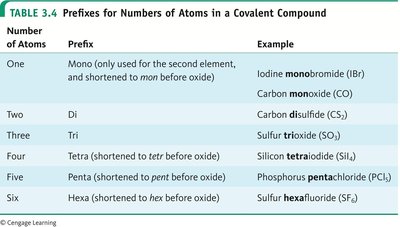
Use numerical prefixes to indicate the number of atoms (except mono- for the first element).
Examples:
CO2: carbon dioxide
Cl2O7: dichlorine heptoxide
CO: carbon monoxide
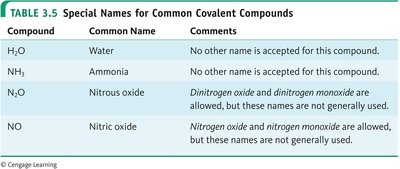
Special Names for Common Covalent Compounds
Compound | Common Name | Comments |
|---|---|---|
H2O | Water | No other name is accepted for this compound. |
NH3 | Ammonia | No other name is accepted for this compound. |
N2O | Nitrous oxide | Dinitrogen oxide and dinitrogen monoxide are allowed, but not generally used. |
NO | Nitric oxide | Nitrogen oxide and nitrogen monoxide are allowed, but not generally used. |
Naming Hydrocarbons
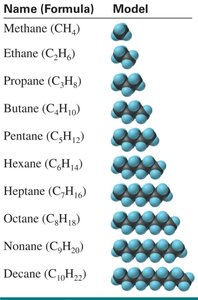
Hydrocarbons are compounds containing only carbon and hydrogen. The simplest type, alkanes, are named with a root and the suffix -ane.
Recognizing Ionic and Molecular Compounds
Distinguishing Features
Ionic compounds: Contain a metal and a nonmetal, or include polyatomic ions like NH4+.
Molecular (covalent) compounds: Contain only nonmetals.
Examples:
Ionic: CaO, Fe(NO3)3, NaC2H3O2, NH4Cl
Molecular: CO2, H2SO4, CH3OH
Comparison Table: Ionic vs. Covalent Compounds
Property | Ionic Compounds | Covalent Compounds |
|---|---|---|
Type of elements | Metal and nonmetal | Nonmetals only |
Bonding | Ionic (attraction between anions and cations) | Covalent (sharing of electrons) |
Representative unit | Formula unit | Molecule |
Physical state at room temperature | Solid | Gas, liquid, or solid |
Water solubility | Usually high | Variable |
Melting and boiling points | Generally high | Generally low |
Electrical conductivity | Good when molten or in solution | Poor |
State when dissolved in water | Separates into ions | Remains molecules |
Summary
This guide covers the essential concepts of chemical bonding, electronegativity, Lewis structures, naming covalent compounds, and distinguishing between ionic and molecular compounds. Mastery of these topics is fundamental for success in general chemistry.
