 Back
BackChemical Equilibrium: Concepts, Calculations, and Applications
Study Guide - Smart Notes
 Tailored notes based on your materials, expanded with key definitions, examples, and context.
Chemical Equilibrium
Introduction to Chemical Equilibrium
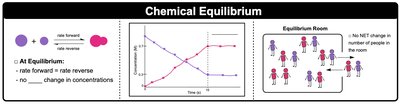
Chemical equilibrium is a fundamental concept in chemistry describing the state in which the rates of the forward and reverse reactions are equal, resulting in no net change in the concentrations of reactants and products. This dynamic process is central to understanding how reactions behave under various conditions.
Chemical Equilibrium: A dynamic state where the rate of the forward reaction equals the rate of the reverse reaction.
Dynamic Process: Both forward and reverse reactions continue to occur, but concentrations remain constant.
Reversible Reactions: Indicated by a double arrow (⇌), these reactions can proceed in both directions.
Homogeneous Equilibrium: All reactants and products are in the same phase.
Heterogeneous Equilibrium: Reactants and products are in different phases.
Example: At equilibrium, reactants form products as fast as products form reactants; the reaction does not stop.
Equilibrium Constant (K)
Equilibrium Constant Expressions
The equilibrium constant (K) quantifies the ratio of product to reactant concentrations at equilibrium. It is a central parameter for predicting the direction and extent of a chemical reaction.
K (Equilibrium Constant): Ratio of concentrations of products to reactants at equilibrium.
k (Rate Constant): Describes the speed of the reaction, not the position of equilibrium.
Temperature Dependence: The value of K changes with temperature.
Exclusion of Solids and Pure Liquids: Solids and pure liquids are omitted from K expressions because their concentrations do not change.
General Formula:

Relationship Between K and Rate Constants
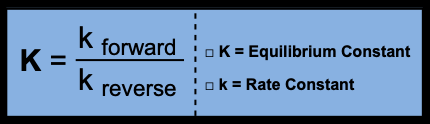
The equilibrium constant can also be expressed in terms of the rate constants for the forward and reverse reactions.
Formula:
Interpretation: If the forward rate constant is much larger than the reverse, products are favored.
Kp and Kc: Gas vs. Solution Equilibria
Relationship and Conversion
Equilibrium constants can be expressed in terms of partial pressures (Kp) for gases or concentrations (Kc) for solutions. The two are related by the following formula:
Kp: Used for gas-phase reactions (units: atm).
Kc: Used for reactions in solution (units: mol/L).
Conversion Formula:
Δn: Difference in moles of gas between products and reactants.
Formula:

Manipulating Equilibrium Constants
Effect of Reaction Rearrangement
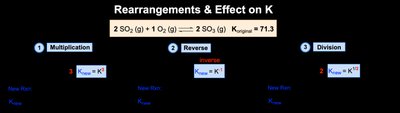
Changing the coefficients or direction of a reaction affects the equilibrium constant in predictable ways. This is analogous to Hess's Law for enthalpy changes.
Multiplication: If the reaction is multiplied by n,
Reverse: If the reaction is reversed,
Division: If the reaction is divided by n,
Le Chatelier’s Principle
Disturbances of Chemical Equilibrium
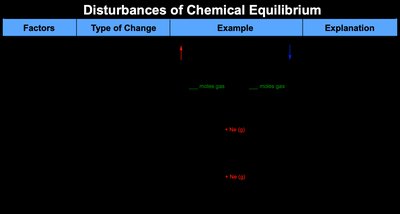
Le Chatelier’s Principle states that if a system at equilibrium is disturbed, it will shift in a direction that minimizes the disturbance and re-establishes equilibrium. Common disturbances include changes in concentration, pressure, and temperature.
Concentration: Adding/removing reactants or products shifts equilibrium to counteract the change.
Pressure/Volume: Increasing pressure (decreasing volume) shifts equilibrium toward the side with fewer moles of gas.
Temperature: The direction of shift depends on whether the reaction is exothermic or endothermic.
Catalysts: Do not affect the position of equilibrium; only speed up attainment of equilibrium.
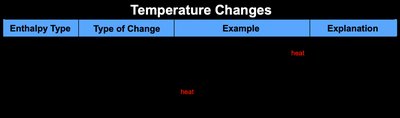
Temperature Changes and Equilibrium
Temperature changes affect equilibrium based on the enthalpy of the reaction. For exothermic reactions, increasing temperature shifts equilibrium to the left (reactants). For endothermic reactions, increasing temperature shifts equilibrium to the right (products).
Exothermic: Heat is released; increasing temperature favors reactants.
Endothermic: Heat is absorbed; increasing temperature favors products.
ICE Charts and Equilibrium Calculations
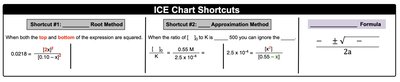
ICE Chart Shortcuts
ICE (Initial, Change, Equilibrium) charts are used to calculate equilibrium concentrations. Shortcuts can simplify calculations when certain conditions are met.
Root Method: Used when both numerator and denominator are squared.
Approximation Method: Used when the ratio of K to initial concentration is very small, allowing simplification.
Quadratic Formula: Used when the equilibrium expression leads to a quadratic equation.
Reaction Quotient (Q)
Comparing Q and K
The reaction quotient (Q) is calculated the same way as K but uses current concentrations, not necessarily equilibrium values. Comparing Q to K predicts the direction the reaction will shift:
Q < K: Reaction shifts right (toward products).
Q > K: Reaction shifts left (toward reactants).
Q = K: System is at equilibrium.
Example: If Q is less than K, more products will form until equilibrium is reached.
Summary Table: Key Equilibrium Concepts
Concept | Definition | Formula |
|---|---|---|
Chemical Equilibrium | Dynamic state with equal forward and reverse rates | |
Equilibrium Constant (K) | Ratio of product to reactant concentrations at equilibrium | |
Kp vs Kc | Gas-phase vs solution-phase equilibrium constants | |
Le Chatelier’s Principle | System shifts to minimize disturbance | N/A |
ICE Chart | Calculates equilibrium concentrations | Quadratic or approximation methods |
Reaction Quotient (Q) | Ratio of product to reactant concentrations at any time | Same as K, but not at equilibrium |
