 Back
BackChemical Equilibrium: Principles, Calculations, and Applications
Study Guide - Smart Notes
 Tailored notes based on your materials, expanded with key definitions, examples, and context.
Chemical Equilibrium
Introduction to Chemical Equilibrium
Chemical equilibrium is a fundamental concept in chemistry describing the state in which the rates of the forward and reverse reactions are equal, resulting in constant concentrations of reactants and products. This chapter explores the dynamic nature of equilibrium, the equilibrium constant, and how to calculate and manipulate equilibrium systems.
Reaction Dynamics and Dynamic Equilibrium
Reversible Reactions and Dynamic Equilibrium
Reversible reactions are those that proceed in both the forward and reverse directions.
As reactants are converted to products, their concentrations decrease, slowing the forward reaction rate. Conversely, as products accumulate, the reverse reaction rate increases.
Dynamic equilibrium is reached when the rates of the forward and reverse reactions are equal, and the concentrations of all species remain constant over time.
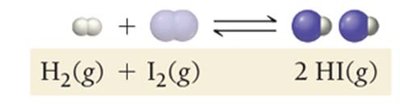
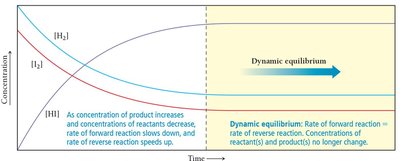
Key Points of Dynamic Equilibrium
At equilibrium, the concentrations of reactants and products do not change, but both reactions continue to occur at equal rates.
The equilibrium position does not imply equal concentrations of reactants and products; it depends on the reaction and conditions.
The Equilibrium Constant and the Law of Mass Action
Defining the Equilibrium Constant (K)
The law of mass action relates the concentrations of reactants and products at equilibrium for a given reaction:
For the general reaction:
The equilibrium constant expression is:
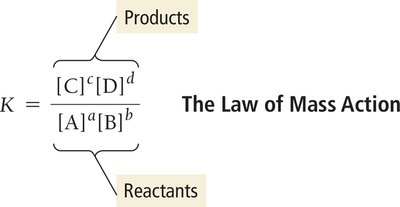
K is unitless and always written as products over reactants, with exponents matching the coefficients in the balanced equation.
Interpreting the Value of K
If , equilibrium favors products (more products than reactants at equilibrium).
If , equilibrium favors reactants (more reactants than products at equilibrium).
If , neither side is favored; significant amounts of both reactants and products are present.
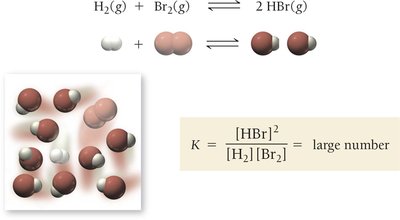
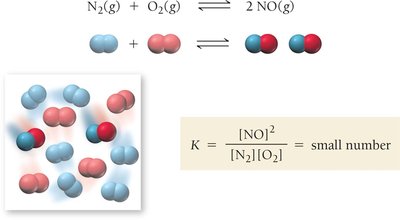
Manipulating Equilibrium Constants
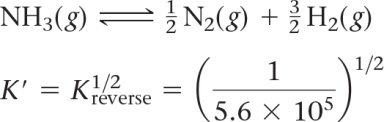
Reversing a reaction inverts K:
Multiplying coefficients by n raises K to the nth power:
Adding reactions multiplies their K values:
Equilibrium Constants for Gaseous Reactions
Kc and Kp
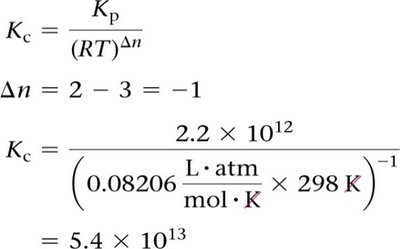
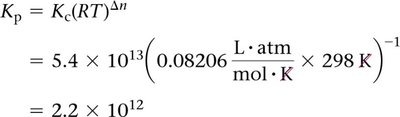
Kc uses concentrations (mol/L), while Kp uses partial pressures (atm).
The relationship between them is: , where is the change in moles of gas (products minus reactants).
Heterogeneous Equilibria
Solids and Liquids in Equilibrium Expressions
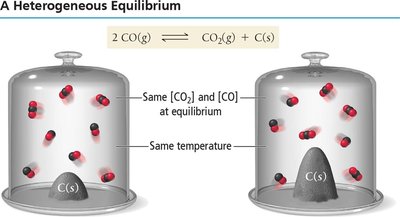
The concentrations of pure solids and liquids are constant and omitted from equilibrium expressions.
Only gases and aqueous species appear in K expressions for heterogeneous equilibria.
Calculating Equilibrium Constants and Concentrations
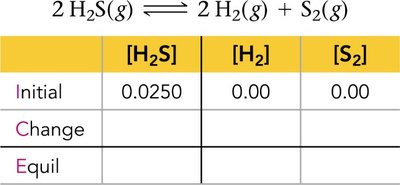
ICE Tables (Initial, Change, Equilibrium)
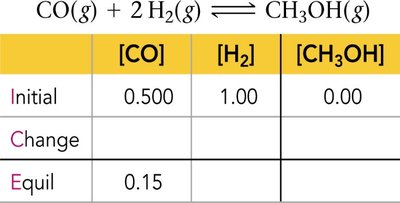
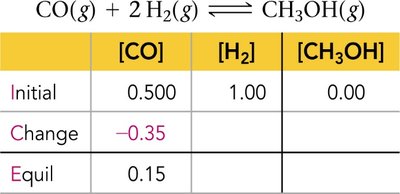
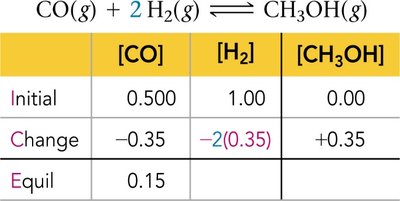
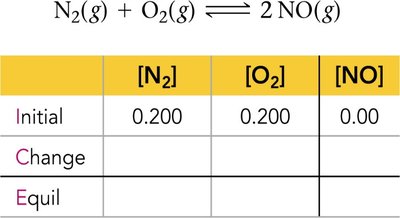
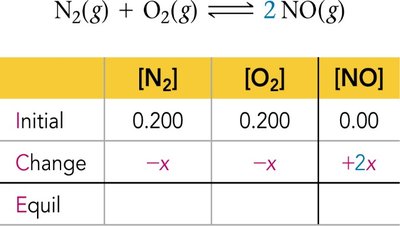
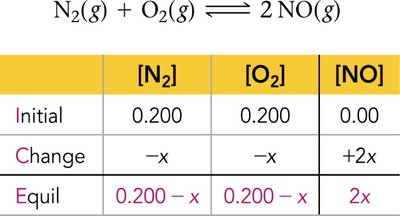
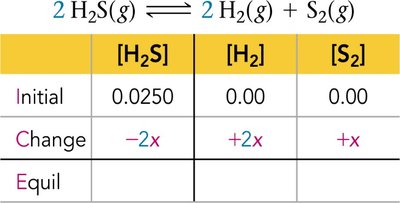
ICE tables are used to organize and solve equilibrium problems by tracking the initial concentrations, changes during the reaction, and equilibrium concentrations.
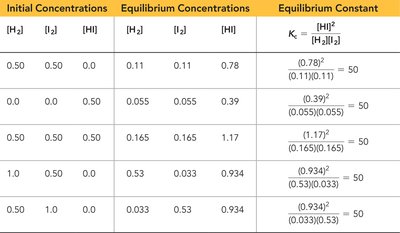
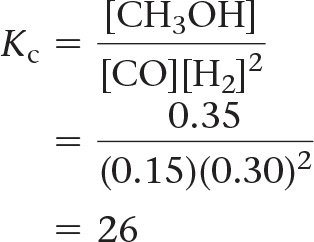
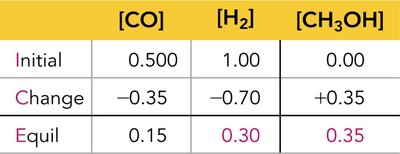
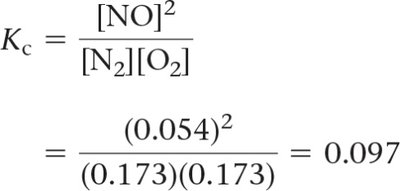
Example: Calculating Kc from Experimental Data
Measure equilibrium concentrations of all species.
Substitute values into the equilibrium expression to solve for K.
Example: Finding an Unknown Equilibrium Concentration
Given K and all but one equilibrium concentration, solve for the unknown using the equilibrium expression.
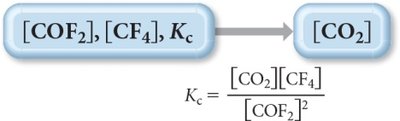
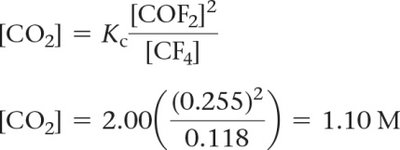
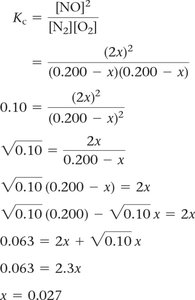
Example: Finding Equilibrium Concentrations from Initial Conditions and K
Set up an ICE table with initial concentrations.
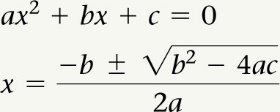
Define changes in terms of x, substitute into the equilibrium expression, and solve for x (using algebra or the quadratic formula as needed).
Approximations in Equilibrium Calculations
If K is very small and initial concentrations are large, the change in reactant concentration may be negligible.
Check the validity of the approximation: if the change is less than 5% of the initial value, the approximation is valid.
The Reaction Quotient (Q) and Predicting Direction of Change
Definition and Use of Q
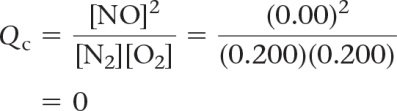
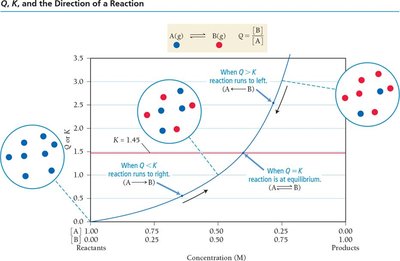
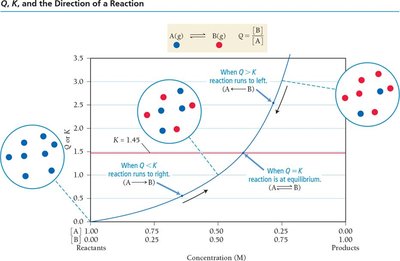
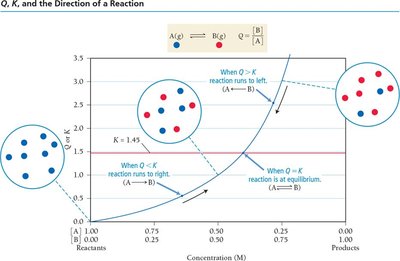
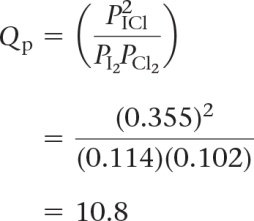
The reaction quotient (Q) is calculated like K but with current (not necessarily equilibrium) concentrations.
Comparing Q to K predicts the direction the reaction will proceed:
If Q < K, the reaction proceeds forward (toward products).
If Q > K, the reaction proceeds in reverse (toward reactants).
If Q = K, the system is at equilibrium.
Le Châtelier’s Principle and Disturbing Equilibrium
Le Châtelier’s Principle
If a system at equilibrium is disturbed, it will shift to minimize the disturbance and restore equilibrium.
Disturbances include changes in concentration, pressure/volume, or temperature.
Effect of Concentration Changes
Adding a reactant or product shifts equilibrium away from the added component.
Removing a reactant or product shifts equilibrium toward the removed component.
Adding or removing solids or liquids does not affect equilibrium.
Effect of Volume and Pressure Changes
Decreasing volume (increasing pressure) shifts equilibrium toward the side with fewer moles of gas.
Increasing volume (decreasing pressure) shifts equilibrium toward the side with more moles of gas.
Adding an inert gas at constant volume has no effect on equilibrium.
Effect of Temperature Changes
For exothermic reactions (heat as a product): increasing temperature shifts equilibrium left (decreases K); decreasing temperature shifts right (increases K).
For endothermic reactions (heat as a reactant): increasing temperature shifts equilibrium right (increases K); decreasing temperature shifts left (decreases K).
Summary Table: Direction of Reaction Based on Q and K
Condition | Direction of Reaction |
|---|---|
Q < K | Proceeds forward (toward products) |
Q > K | Proceeds in reverse (toward reactants) |
Q = K | At equilibrium (no net change) |
Additional info: This guide covers the core principles, calculations, and applications of chemical equilibrium, including the use of ICE tables, the law of mass action, and Le Châtelier’s principle. It is suitable for college-level general chemistry students preparing for exams or seeking a comprehensive overview of equilibrium concepts.
