 Back
BackChapter 15 lecture 4
Study Guide - Smart Notes
 Tailored notes based on your materials, expanded with key definitions, examples, and context.
Chemical Kinetics
Reaction Mechanisms
Chemical reactions often proceed through a series of steps rather than a single event. The reaction mechanism describes the sequence of elementary steps that lead from reactants to products. Understanding mechanisms is crucial for predicting reaction rates and designing efficient chemical processes.
Elementary Steps: Each step in a mechanism is called an elementary reaction. These steps may produce intermediates, which are species formed in one step and consumed in another.
Intermediates: Intermediates do not appear in the overall balanced equation or in the experimentally determined rate law.
Net Reaction: The sum of all elementary steps gives the overall reaction.
Molecularity of Elementary Reactions
The molecularity of an elementary reaction refers to the number of reactant molecules involved in that step.
Unimolecular: One molecule involved (e.g., A → products).
Bimolecular: Two molecules involved (e.g., A + B → products).
Termolecular: Three molecules involved (rare, e.g., A + B + C → products).
Rate Laws for Elementary Reactions
The rate law for an elementary reaction is directly related to its molecularity. For the overall reaction, the rate law must be determined experimentally.
Unimolecular:
Bimolecular (same species):
Bimolecular (different species):
Termolecular: or
Developing Reaction Mechanisms
Mechanisms are proposed to explain experimental observations. The predicted rate law from the mechanism must match the experimentally determined rate law. If not, the mechanism is rejected.
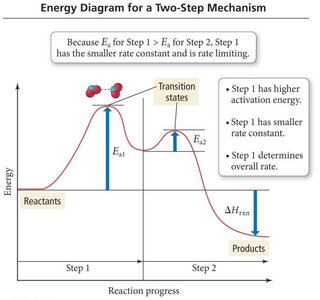
Each elementary step has its own activation energy () and rate constant ().
The slowest step (highest ) is the rate-determining step (RDS).
The rate law of the RDS becomes the rate law for the overall reaction.
Energy Diagrams and Rate-Determining Step
Energy diagrams illustrate the energy changes during a reaction. The step with the highest activation energy is the rate-limiting step.
Step 1 has higher activation energy and determines the overall rate.
Step 2 has lower activation energy and a faster rate constant.
Case Studies: Mechanisms and Rate Laws
Case 1: Slow Initial Step
For the reaction , the experimentally determined rate law is . The mechanism involves two steps, with the first being slow and rate-determining:
Step 1: (slow)
Step 2: (fast)
The overall rate law matches the experimental result.
Case 2: Fast Initial Step (Equilibrium)
For , the mechanism involves a fast, reversible step followed by a slow step. The concentration of the intermediate is solved using equilibrium expressions:
Step 1: (fast, reversible)
Step 2: (slow)
Intermediate concentration:
Overall rate law:
The Role of Catalysts
What is a Catalyst?
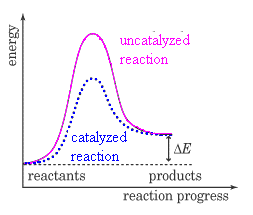
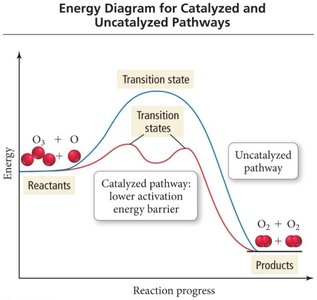
A catalyst is a substance that increases the rate of a chemical reaction by providing an alternative pathway with lower activation energy. Catalysts are not consumed in the reaction and speed up both the forward and reverse reactions.
Catalysts are consumed in an early step and regenerated in a later step.
They do not increase the amount of product, only the rate at which it is formed.
Types of Catalysts
Homogeneous Catalyst: Catalyst and reactants are in the same phase (e.g., chlorine atom in ozone destruction).
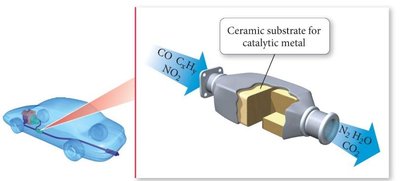
Heterogeneous Catalyst: Catalyst and reactants are in different phases (e.g., catalytic converter in cars).
Biological Catalysts: Enzymes
Enzymes are protein molecules that catalyze biological reactions. The substrate binds to the enzyme's active site, forming an enzyme-substrate complex. This lowers the activation energy for the reaction.
Lock and Key Mechanism: Substrate fits into the active site like a key in a lock.
Induced-fit Model: Active site changes shape to fit the substrate.
Binding involves intermolecular forces: hydrogen bonding, dipole-dipole, and London dispersion forces.
Enzyme inhibitors block the active site, preventing catalysis (e.g., heavy metal ions).
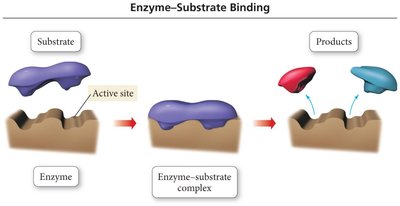
Enzyme Mechanism
The general mechanism for enzyme catalysis is:
(fast, reversible)
(rate-determining step)
Ozone and Catalysis
Stratospheric and Ground Level Ozone
Ozone in the stratosphere protects against UV radiation, while ground-level ozone is a pollutant. Ozone reacts with volatile organic compounds (VOCs) to form harmful substances like acetaldehyde and peroxyacetyl nitrate (PAN).
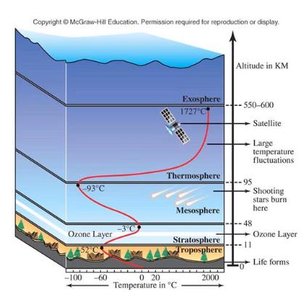
Ozone Depletion and Catalysis
Chlorofluorocarbons (CFCs) release chlorine atoms in the stratosphere, which catalyze the destruction of ozone. Chlorine acts as a homogeneous catalyst, and chlorine monoxide (ClO·) is an intermediate.
Net reaction:
Chlorine is regenerated, demonstrating catalytic action.
