 Back
BackChemical Kinetics: Reaction Rates, Mechanisms, and Catalysis
Study Guide - Smart Notes
 Tailored notes based on your materials, expanded with key definitions, examples, and context.
Unit 5: Chemical Kinetics
Overview of Chemical Kinetics
Chemical kinetics is the study of the rates at which chemical reactions occur and the factors that affect these rates. Understanding kinetics allows chemists to control reactions, optimize conditions, and elucidate reaction mechanisms.
Chemical changes are represented by chemical reactions, and their rates are determined by molecular collisions.
Reaction rates are measured by monitoring the concentration of reactants or products over time.
Energy changes often accompany chemical processes.
Topic 5.1: Reaction Rates
Definition and Measurement of Reaction Rate
The reaction rate describes how quickly a chemical reaction occurs, typically measured as the change in concentration of a reactant or product per unit time (e.g., M/s).
Rate law/equation:
k: Rate constant (unique for each reaction and temperature)
Coefficients in the balanced equation are generally not the exponents in the rate law (except for elementary reactions).
Factors Affecting Reaction Rate
Concentration of Reactants: Higher concentration increases collision frequency, thus increasing the reaction rate.
Temperature: Higher temperature increases both the frequency and energy of collisions, leading to a higher reaction rate.
Physical State and Surface Area: Solids react faster when finely divided due to increased surface area.
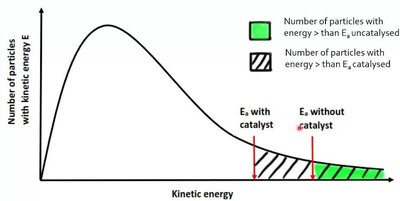
Catalysts: Catalysts increase reaction rate by lowering the activation energy required for a successful collision.


Topic 5.2: Introduction to Rate Law
Rate Law Expressions
The rate law relates the rate of a reaction to the concentrations of reactants, each raised to a power (the order with respect to that reactant). The overall order is the sum of these powers.
Must be determined experimentally.
General form:
The units of the rate constant depend on the overall reaction order.
Example:
Experiment | [A] (M) | [B] (M) | [C] (M) | d[D]/dt (M/s) |
|---|---|---|---|---|
1 | 0.2 | 0.2 | 0.2 | 0.04 |
2 | 0.2 | 0.4 | 0.2 | 0.04 |
3 | 0.4 | 0.2 | 0.2 | 0.08 |
4 | 0.4 | 0.2 | 0.4 | 0.32 |
From the data:
Doubling [A] doubles rate: first order in A
Doubling [B] does not change rate: zero order in B
Doubling [C] quadruples rate: second order in C
Overall rate law: (overall order = 3)
Units of the Rate Constant
0th order: ; units: M/s
1st order: ; units: s-1
2nd order: or ; units: M-1s-1
3rd order: ; units: M-2s-1
Topic 5.3: Concentration Changes Over Time
Integrated Rate Laws and Graphical Analysis
The order of a reaction can be determined by plotting concentration data in different ways:
Zero order: (plot [A] vs. t is linear)
First order: (plot ln[A] vs. t is linear)
Second order: (plot 1/[A] vs. t is linear)
![Zero order reaction: [A] vs. t linear plot](https://static.studychannel.pearsonprd.tech/study_guide_files/general-chemistry/sub_images/7ea7ca21_image_3.png)
Half-Life
The half-life () is the time required for half of a reactant to be consumed. For first-order reactions:
Half-life is constant for first-order reactions.
Radioactive decay is a classic example of first-order kinetics.
# of | Remaining (%) | Decayed (%) |
|---|---|---|
0 | 100 | 0 |
1 | 50 | 50 |
2 | 25 | 75 |
3 | 12.5 | 87.5 |
4 | 6.25 | 93.75 |
5 | 3.125 | 96.875 |
Topic 5.4: Elementary Reactions and Mechanisms
Elementary and Complex Reactions
An elementary reaction occurs in a single step and its rate law can be written directly from its stoichiometry. A complex reaction involves multiple elementary steps.
Elementary reaction:
Complex reaction: Rate law must be determined experimentally.
Reaction Mechanisms
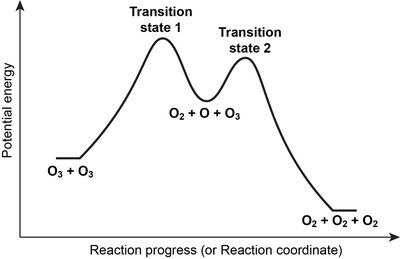
A reaction mechanism is a sequence of elementary steps that sum to the overall reaction. Intermediates are produced and consumed during the mechanism but do not appear in the overall equation. The slowest step is the rate-determining step (rds).
Topic 5.5: Collision Model
Criteria for Effective Collisions
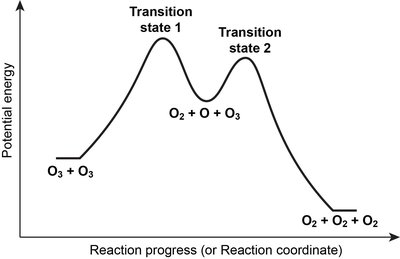
For a reaction to occur, molecules must collide with sufficient energy and proper orientation. The collision model explains how these factors influence reaction rates.
Frequency of collisions: More collisions per second increase the reaction rate.
Kinetic energy: Only collisions with energy greater than the activation energy () are effective.
Orientation: Molecules must be oriented correctly for bonds to break and form.
The Maxwell-Boltzmann distribution describes the spread of kinetic energies among particles. The fraction of particles with energy above increases with temperature.
Topic 5.6: Reaction Energy Profile
Energy Changes During a Reaction
The reaction energy profile plots potential energy versus reaction progress. The peak represents the transition state, and the energy difference between reactants and the transition state is the activation energy ().
The Arrhenius equation relates the rate constant to temperature and activation energy (not required for AP calculations).
Topic 5.7: Introduction to Reaction Mechanisms
Components of a Reaction Mechanism
A reaction mechanism consists of a series of elementary steps, including reactants, intermediates, products, and possibly catalysts. The overall reaction is the sum of these steps.
Rate-Determining Step
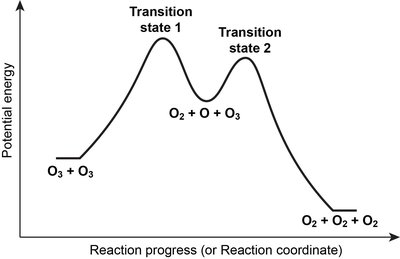
The slowest elementary step with the highest activation energy determines the overall reaction rate and the observed rate law.
Topic 5.8: Reaction Mechanisms and Rate Law
Relating Mechanisms to Rate Laws
For mechanisms where the first step is rate-limiting, the rate law is determined by the molecularity of that step. If a later step is rate-limiting, approximations may be needed to express the rate law in terms of observable species.
Topic 5.9: Pre-Equilibrium Approximation
When the First Step is Not Rate-Limiting
If the first step is fast and reversible, and a later step is slow, the steady-state or pre-equilibrium approximation is used to derive the rate law.
Topic 5.10: Multistep Reaction Energy Profile
Energy Profile for Multistep Reactions
Each elementary step has its own activation energy, and the overall energy profile shows multiple peaks (transition states) and valleys (intermediates).
Topic 5.11: Catalysis
Role and Mechanism of Catalysts
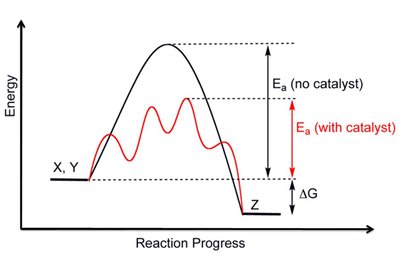
Catalysts increase the rate of a reaction by providing an alternative pathway with a lower activation energy. They are not consumed in the reaction and may participate in the rate-determining step.
Homogeneous catalysts are in the same phase as reactants; heterogeneous catalysts are in a different phase.
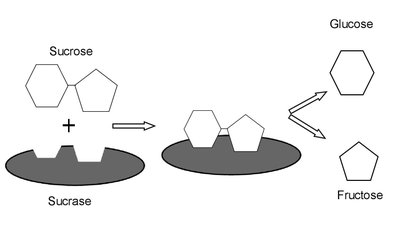
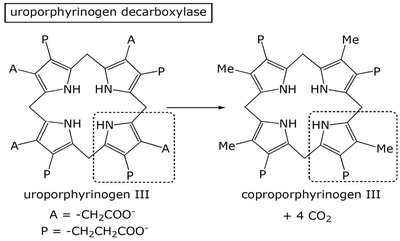
Enzymes are biological catalysts that often bind reactants, orienting them favorably and lowering activation energy.
Examples of Catalysis
Acid-base catalysis: Proton transfer creates new intermediates.
Surface catalysis: Reactants bind to a surface, facilitating reaction.
Enzyme catalysis: Enzymes bind substrates, lower activation energy, and are regenerated.
Summary Table: Half-Life and Decay
Isotope | Half-life | Decay Type |
|---|---|---|
Uranium-238 | 4.468 x 10⁹ years | α |
Potassium-40 | 1.251 x 10⁹ years | β |
Plutonium-239 | 24,110 years | β |
Carbon-14 | 5,730 years | β |
Radium-226 | 1,622 years | α |
Gold-195 | 186.1 days | β |
A free neutron | 10.2 minutes | β |
Radon-220 | 55.6 seconds | β |
Oxygen-13 | 8.58 x 10⁻³ seconds | β |
Lithium-8 | 6 x 10-20 seconds | β |
