 Back
Chemical Reactions and Chemical Quantities: Study Guide
Study Guide - Smart Notes
 Tailored notes based on your materials, expanded with key definitions, examples, and context.
Chapter 4: Chemical Reactions and Chemical Quantities
Chemical Reactions
Chemical reactions are fundamental processes in chemistry where substances are transformed into new substances with different properties. These reactions involve the rearrangement of atoms and the breaking and forming of chemical bonds.
Chemical reaction: A process in which one or more substances are converted into one or more different substances.
Combustion reaction: A type of chemical reaction where a substance combines with oxygen to form oxygen-containing compounds and releases heat.
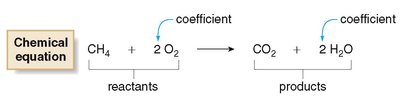
Example: Combustion of methane:
Chemical Equations
Chemical equations represent chemical reactions using chemical formulas and symbols. They show the reactants (starting materials) and products (substances formed), along with coefficients indicating the number of molecules or moles involved.
Reactants: Written on the left side of the equation.
Products: Written on the right side of the equation.
Coefficients: Indicate the number of molecules or moles of each substance.
Subscripts: Indicate the number of atoms in a molecule and should not be changed when balancing equations.
Balancing Chemical Equations
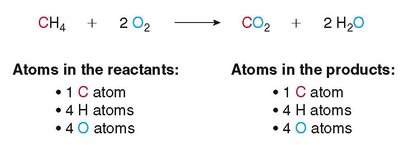
Balancing chemical equations ensures the law of conservation of mass is obeyed, meaning the number of atoms of each element is the same on both sides of the equation. Only coefficients can be changed to balance equations, not subscripts.
Law of conservation of mass: Atoms cannot be created or destroyed in a chemical reaction.
Balanced equation: Has equal numbers of each atom on both sides.
Steps to balance:
Write the correct chemical formulas.
Assign a coefficient of "1" to the most complex compound or start with an element appearing in only one substance on each side.
Balance one element at a time, moving back and forth across the arrow.
Balance uncombined elements last.
Balance polyatomic ions as a group if they appear unchanged on both sides.
Check for the smallest set of whole number coefficients.
Example:
Reaction Stoichiometry
Stoichiometry and Real-Life Applications
Stoichiometry is the study of the quantitative relationships between reactants and products in a chemical reaction. It allows chemists to predict the amounts of substances consumed and produced.
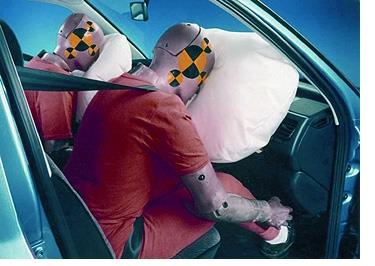
Air Bags: The reaction produces nitrogen gas to inflate airbags.
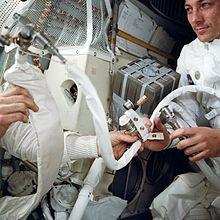
Spacecraft CO2 Removal: removes CO2 from air.
Mole Calculations in Chemical Equations
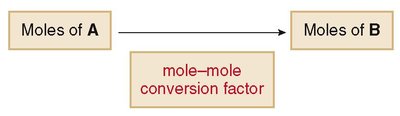
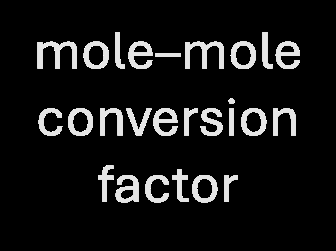
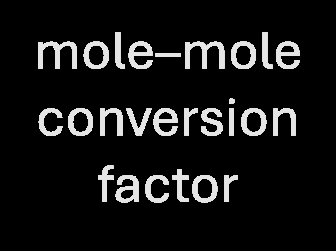
Balanced chemical equations provide mole ratios, which are used as conversion factors to relate the amounts of reactants and products.
Mole ratio: The ratio of moles of one substance to moles of another, based on the coefficients in the balanced equation.
Example: gives mole ratios:
Conversion: Use mole ratios to convert moles of A to moles of B.
Mass Calculations in Chemical Equations
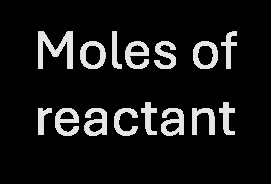
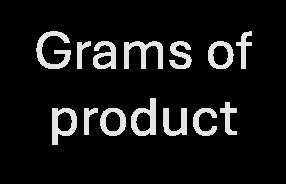
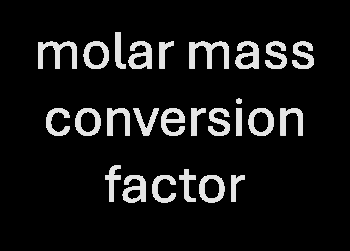
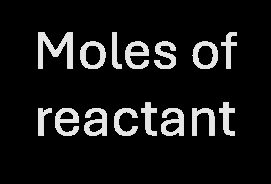
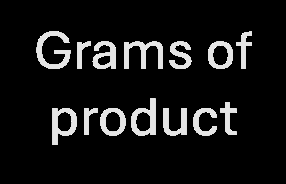
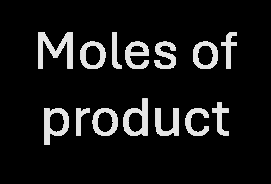
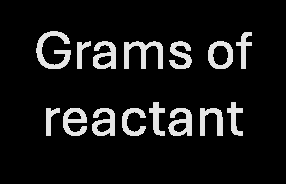
To relate masses of reactants and products, convert grams to moles using molar mass, use the mole ratio, then convert moles back to grams.
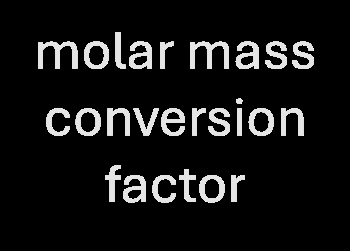
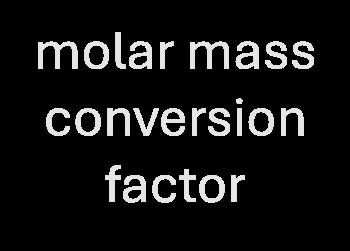
Molar mass: The mass of one mole of a substance (g/mol).
Steps:
Convert grams of reactant to moles using molar mass.
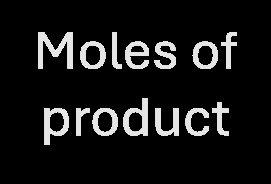
Use mole ratio to find moles of product.
Convert moles of product to grams using molar mass.
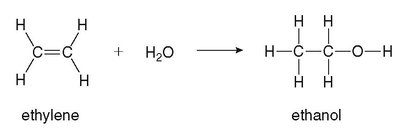
Example: Synthesis of ethanol from ethylene and water.
Percent Yield
Percent yield measures the efficiency of a reaction by comparing the actual yield to the theoretical yield.
Theoretical yield: The maximum amount of product predicted by stoichiometry.
Actual yield: The amount of product actually obtained from the reaction.
Percent yield formula:
Reasons for less than 100% yield: Mechanical losses, evaporation, poor technique, competing reactions, incomplete reaction.
Limiting Reactants
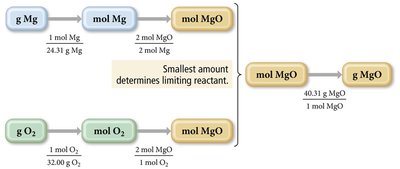
The limiting reactant is the substance that is completely consumed first in a reaction, thus limiting the amount of product formed. The excess reactant is left over after the reaction.
Determining limiting reactant:
Convert each reactant to the desired product using mole ratios.
The reactant that produces the least amount of product is the limiting reactant.
Example:
Limiting Reactant Analogy
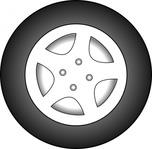
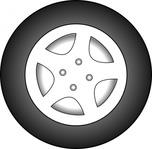
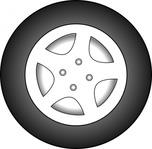
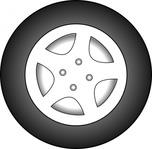
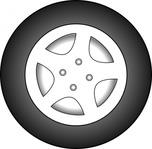
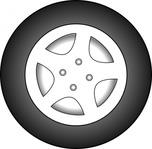
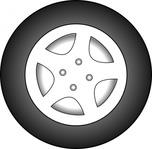
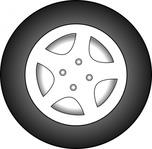
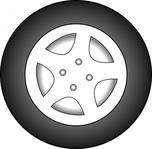
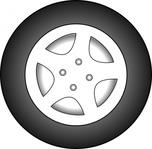
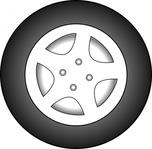
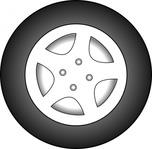
Limiting reactants can be illustrated using everyday analogies, such as assembling cars from bodies and wheels. The component that runs out first limits the number of complete cars that can be made.
Component | Quantity |
|---|---|
Car bodies | 2 |
Wheels | 12 |
Cars assembled | 2 |
Wheels used | 8 |
Wheels left over | 4 |
Limiting reactant | Car bodies |
Excess reactant | Wheels |


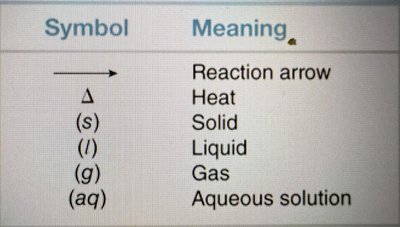
Summary Table: Key Chemical Equation Symbols
Symbol | Meaning |
|---|---|
→ | Reaction arrow |
Δ | Heat |
(s) | Solid |
(l) | Liquid |
(g) | Gas |
(aq) | Aqueous solution |
Additional info: This study guide covers the essential concepts of chemical reactions, stoichiometry, balancing equations, mass and mole calculations, percent yield, and limiting reactants, with real-life applications and analogies to reinforce understanding.
