Back
BackChemical Reactions and Chemical Quantities: Study Notes
Study Guide - Smart Notes
 Tailored notes based on your materials, expanded with key definitions, examples, and context.
Chapter 7: Chemical Reactions and Chemical Quantities
7.1 Climate Change and the Combustion of Fossil Fuels
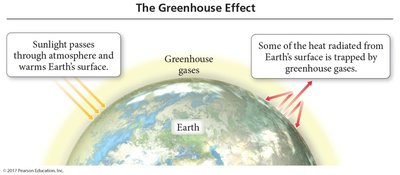
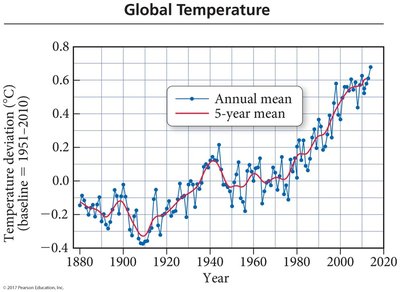
Climate change is closely linked to the chemical processes involved in the combustion of fossil fuels. The Earth's temperature is regulated by the balance of incoming solar energy and outgoing heat, a process significantly influenced by greenhouse gases such as carbon dioxide (CO2).
Greenhouse Effect: Greenhouse gases allow sunlight to enter the atmosphere, warming the Earth's surface, and trap some of the heat radiated back from the surface, preventing it from escaping into space.
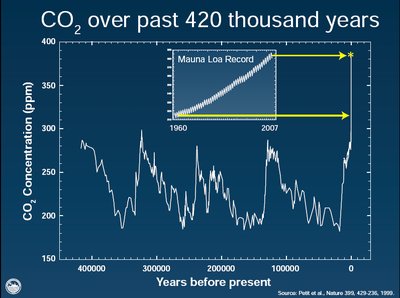
CO2 and Temperature: The concentration of CO2 in the atmosphere has a direct effect on Earth's temperature. Both natural (e.g., volcanoes) and anthropogenic (e.g., car exhaust) sources contribute to atmospheric CO2.
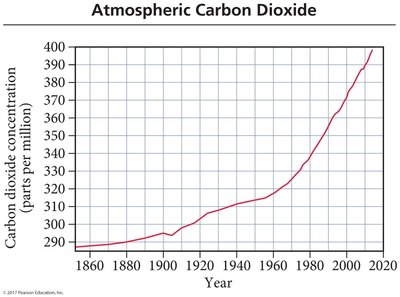
Trends: Since 1880, atmospheric CO2 levels have risen by 37%, and global temperatures have increased by approximately 0.9°C (1.6°F).
7.2 Physical and Chemical Changes
Understanding the distinction between physical and chemical changes is fundamental in chemistry. These changes are characterized by how they affect the composition and properties of substances.
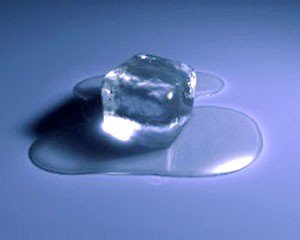
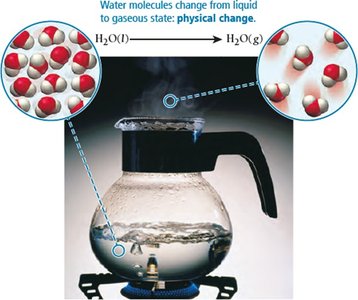
Physical Change: A change that does not alter the chemical composition of a substance. Examples include changes in state (melting, boiling) or appearance.
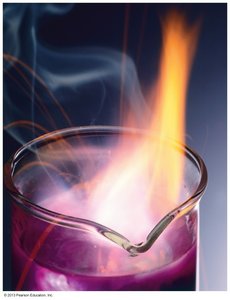
Chemical Change: A change that alters the chemical composition, resulting in the formation of new substances. This involves the rearrangement of atoms.
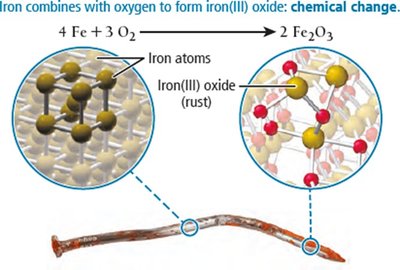
Physical Properties vs. Chemical Properties
Physical Properties: Observed without changing the substance's composition (e.g., odor, taste, color, melting point, boiling point, density).
Chemical Properties: Observed only by changing the substance's composition via a chemical reaction (e.g., flammability, acidity, toxicity, corrosiveness).
7.3 Writing and Balancing Chemical Equations
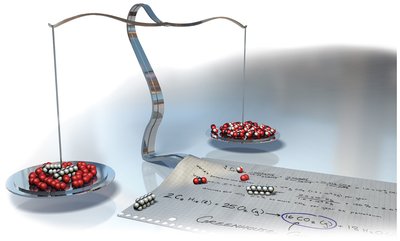
Chemical equations are symbolic representations of chemical reactions, showing the reactants, products, and their physical states. Balancing these equations is essential to satisfy the law of conservation of mass.
General Form: Reactants (state) → Products (state)
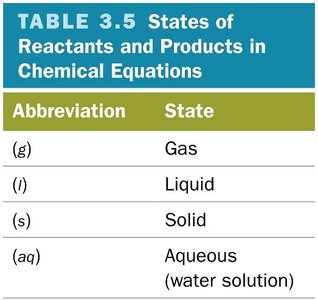
States of Matter: (g) = gas, (l) = liquid, (s) = solid, (aq) = aqueous (dissolved in water)
Balancing Steps:
Write the unbalanced equation with correct formulas.
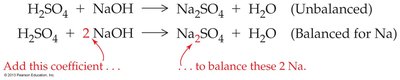
Add coefficients to balance the number of atoms of each element.
If a polyatomic ion appears unchanged on both sides, treat it as a unit.
Check that all atoms are balanced and coefficients are in lowest whole-number ratio.


7.4 Reaction Stoichiometry: How Much Carbon Dioxide?
Stoichiometry involves the quantitative relationships between reactants and products in a balanced chemical equation. It allows chemists to predict the amounts of substances consumed and produced in a reaction.
Mole Ratios: Coefficients in a balanced equation indicate the ratio of moles of each substance involved.
Conversions: Use molar mass and mole ratios to convert between mass, moles, and molecules of reactants and products.
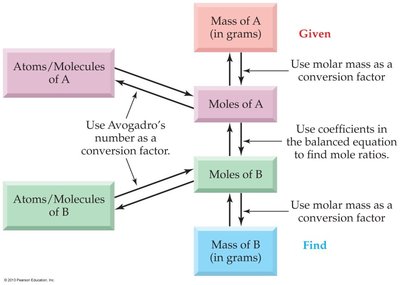

Example: Photosynthesis
Given 37.8 g CO2, calculate the mass of glucose (C6H12O6) produced:
Step 1: Convert grams CO2 to moles CO2
Step 2: Use the stoichiometric ratio from the balanced equation
Step 3: Convert moles of glucose to grams
Calculation pathway:
7.5 Stoichiometric Relationships: Limiting Reactant, Theoretical Yield, Percent Yield, and Reactant in Excess
In chemical reactions, reactants are rarely present in exact stoichiometric proportions. The limiting reactant is the one that is completely consumed first, thus determining the maximum amount of product formed (theoretical yield). The percent yield compares the actual yield to the theoretical yield.
Limiting Reactant: The reactant that runs out first and limits the amount of product formed.
Theoretical Yield: The maximum amount of product that can be formed from the limiting reactant.
Percent Yield:
Reactant in Excess: The reactant that remains after the reaction is complete.
Combustion Reactions
A combustion reaction involves the reaction of a substance with oxygen to form one or more oxygen-containing compounds, typically producing water and heat as well. Hydrocarbons combust to form CO2 and H2O.
Example:
Alkali Metal Reactions
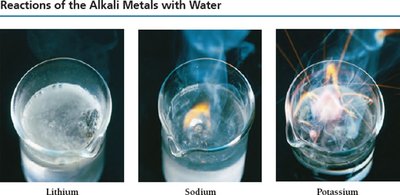
Alkali metals (Group 1A) are highly reactive, especially with water and halogens. They form 1+ cations to achieve noble gas configurations.
Reaction with Halogens:
Reaction with Water:
These reactions are highly exothermic and can be explosive due to the ignition of hydrogen gas.
Halogen Reactions
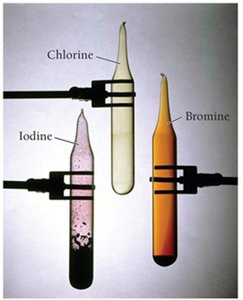
Halogens (Group 7A) are the most reactive nonmetals, forming 1- anions. They react with metals to form ionic compounds and with hydrogen to form hydrogen halides.
Reaction with Metals:
Reaction with Hydrogen: