 Back
BackChemical Reactions and Reaction Stoichiometry: Study Notes
Study Guide - Smart Notes
 Tailored notes based on your materials, expanded with key definitions, examples, and context.
Chemical Reactions and Reaction Stoichiometry
Stoichiometry and the Law of Conservation of Mass
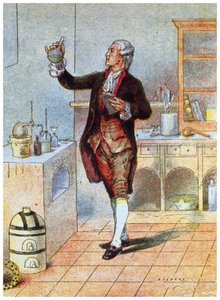
Stoichiometry is the study of the quantitative relationships between the amounts of reactants and products in chemical reactions. It is fundamentally based on the Law of Conservation of Mass, which states that matter is neither created nor destroyed in a chemical reaction. This principle, established by Antoine Lavoisier, ensures that the total mass of reactants equals the total mass of products.
Chemical Equations
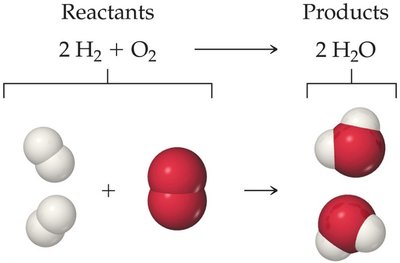
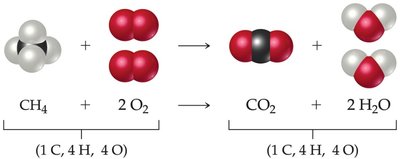
Chemical equations are symbolic representations of chemical reactions. They use arrows to separate reactants (on the left) from products (on the right), and plus signs to indicate multiple substances. Equations must be balanced to reflect the conservation of mass.
Balancing Chemical Equations
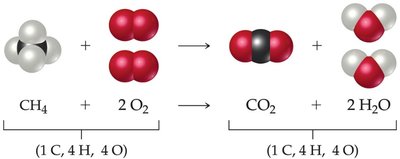
Start with elements that appear in only one reactant and one product.
Balance by adjusting coefficients (never subscripts).
Check all elements at the end to ensure balance.
Symbols in Chemical Equations
States of matter: (g) = gas, (l) = liquid, (s) = solid, (aq) = aqueous solution.
Δ above the arrow indicates heat is required.
Types of Chemical Reactions
Chemical reactions can be classified into several types based on their patterns of reactivity.
Combination Reactions
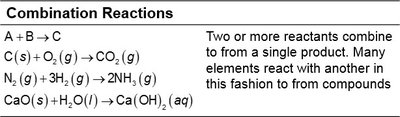
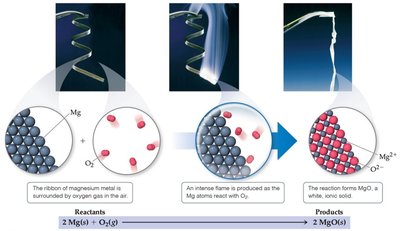
In a combination reaction, two or more substances combine to form a single product.
General form: A + B → C
Example: C(s) + O2(g) → CO2(g)
Decomposition Reactions
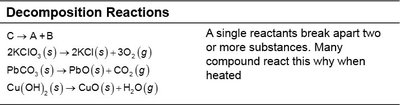
In a decomposition reaction, a single compound breaks down into two or more simpler substances. Many compounds decompose when heated.
General form: C → A + B
Example: 2KClO3(s) → 2KCl(s) + 3O2(g)
Combustion Reactions
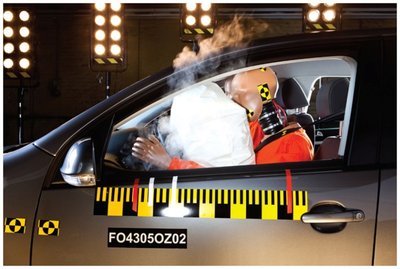
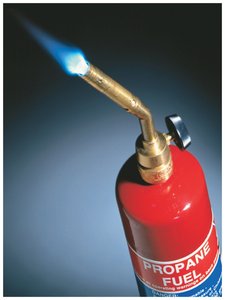
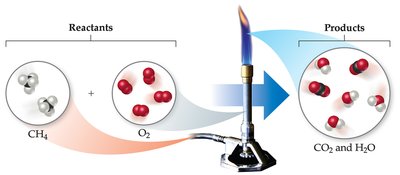
Combustion reactions are rapid reactions that produce a flame, typically involving oxygen as a reactant. Hydrocarbons combust to form CO2 and H2O.
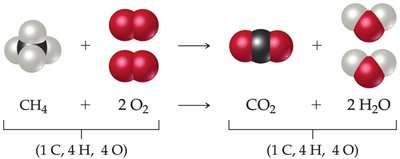
Example: CH4(g) + 2O2(g) → CO2(g) + 2H2O(g)
Formula Weight, Molecular Weight, and Percent Composition
The formula weight (FW) is the sum of atomic weights for all atoms in a chemical formula. For molecules, this is also called the molecular weight (MW). Percent composition expresses the mass percentage of each element in a compound.
Formula weight of H2SO4: amu
Molecular weight of C6H12O6: amu
Percent composition:
The Mole and Avogadro’s Number
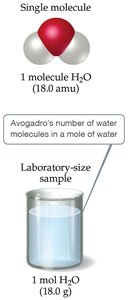
The mole (mol) is the SI unit for amount of substance, defined as the number of particles in exactly 12 g of carbon-12. Avogadro’s number () is the number of particles in one mole.
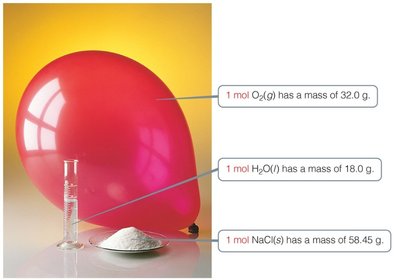
Molar Mass and Mole Relationships
Molar mass is the mass of one mole of a substance, expressed in g/mol. The molar mass of an element is numerically equal to its atomic weight in amu. The number of particles in a mole is given by Avogadro’s number.
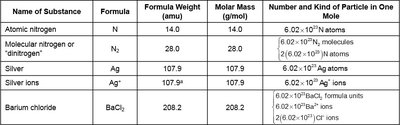
Conversions: Mass, Moles, and Particles
Conversions between mass, moles, and number of particles are fundamental in stoichiometry. Use the molar mass to convert between grams and moles, and Avogadro’s number to convert between moles and particles.

Empirical and Molecular Formulas
The empirical formula gives the simplest whole-number ratio of atoms in a compound. The molecular formula gives the actual number of atoms of each element in a molecule. Empirical formulas can be determined from percent composition data.

Example: Determining Empirical Formula
Convert mass percentages to grams (assume 100 g sample).
Convert grams to moles for each element.
Divide by the smallest number of moles to get the simplest ratio.
Write the empirical formula using these ratios as subscripts.
Determining Molecular Formula
Find the empirical formula mass.
Divide the molar mass by the empirical formula mass to get a whole-number multiple.
Multiply the subscripts in the empirical formula by this multiple.
Combustion Analysis
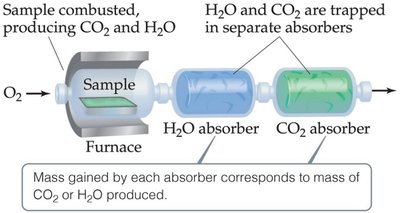
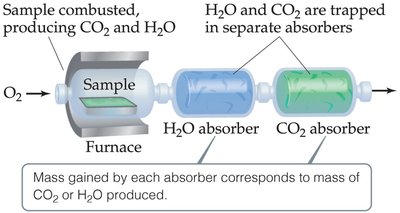
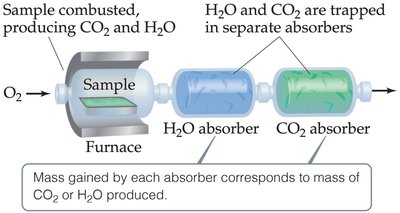
Combustion analysis is used to determine the empirical formula of compounds containing C, H, and O. The sample is combusted, and the masses of CO2 and H2O produced are measured to calculate the amounts of C and H. The amount of O is found by difference.
Stoichiometric Calculations
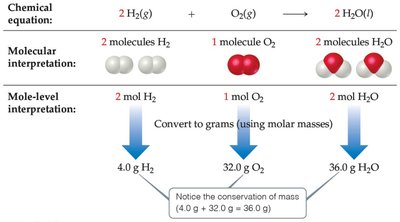
Stoichiometric calculations use the coefficients from balanced equations to relate the amounts of reactants and products. The mole ratio from the equation allows conversion between substances.

Example: Calculating Product Mass
Convert grams of reactant to moles using molar mass.
Use the mole ratio from the balanced equation to find moles of product.
Convert moles of product to grams using molar mass.



Limiting Reactants and Theoretical Yield
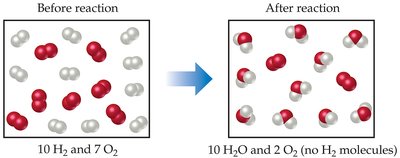
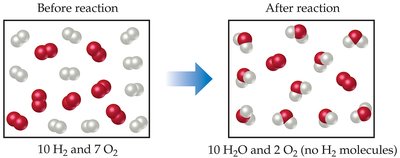
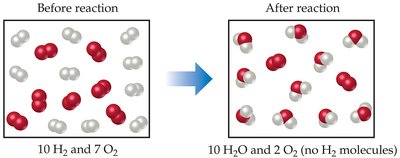
The limiting reactant is the reactant that is completely consumed first, limiting the amount of product formed. The theoretical yield is the maximum amount of product that can be formed from the limiting reactant. The percent yield compares the actual yield to the theoretical yield:
Additional info: These notes cover the core concepts of chemical reactions and stoichiometry, including types of reactions, balancing equations, mole concepts, empirical and molecular formulas, combustion analysis, and limiting reactants. Mastery of these topics is essential for success in General Chemistry.
