 Back
BackChemical Reactions in Aqueous Solutions: General Chemistry Study Notes
Study Guide - Smart Notes
 Tailored notes based on your materials, expanded with key definitions, examples, and context.
Chapter 9: Chemical Reactions in Aqueous Solutions
9.1 General Properties of Aqueous Solutions
An aqueous solution is a homogeneous mixture in which water is the solvent. The substance present in the largest amount is the solvent, while other substances are solutes. A substance that dissolves in a solvent is said to be soluble in that solvent.
Electrolytes: Substances that dissolve in water to yield a solution that conducts electricity. They dissociate into ions.
Nonelectrolytes: Substances that dissolve in water but do not conduct electricity. Their molecules remain intact.
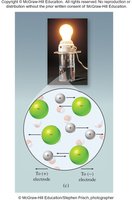
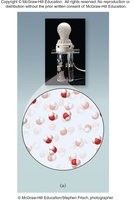
Strong vs. Weak Electrolytes
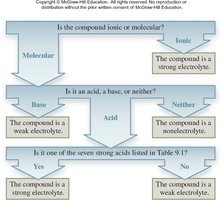
Strong electrolytes: Dissociate completely in water (e.g., water-soluble ionic compounds, strong acids, strong bases).
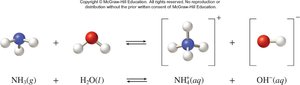
Weak electrolytes: Partially dissociate in water, existing mostly as molecules with a small fraction as ions (e.g., weak acids, weak bases).
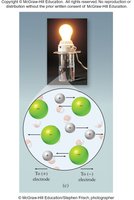
The double arrow (⇌) denotes a reaction that occurs in both directions, indicating dynamic chemical equilibrium.
Classification Flowchart
9.2 Precipitation Reactions
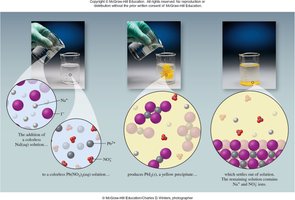
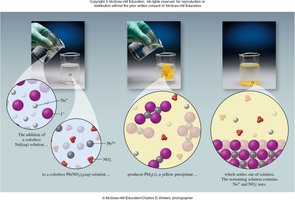
A precipitate is an insoluble product that separates from a solution. A precipitation reaction forms a precipitate when two solutions are mixed.
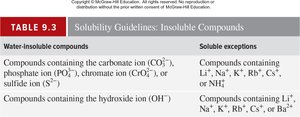
Solubility Guidelines for Ionic Compounds in Water
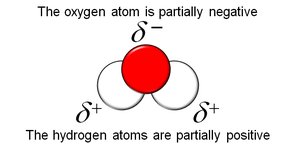
Water is a polar molecule, making it an excellent solvent for ionic compounds.
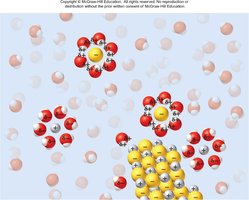
Hydration: Water molecules surround and separate ions from an ionic solid, allowing it to dissolve.
Solubility: The maximum amount of solute that will dissolve in a given quantity of solvent at a specific temperature.
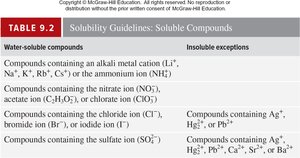
Solubility Guidelines: Soluble Compounds | Insoluble Exceptions |
|---|---|
Alkali metal cations, NH4+ | None |
Nitrate, acetate, chlorate ions | None |
Chloride, bromide, iodide ions | Ag+, Hg22+, Pb2+ |
Sulfate ion | Ag+, Hg22+, Pb2+, Ca2+, Sr2+, Ba2+ |
Molecular, Ionic, and Net Ionic Equations
Molecular equation: Shows all reactants and products as compounds.
Ionic equation: Shows all strong electrolytes as ions.
Net ionic equation: Shows only the species that actually participate in the reaction; spectator ions are omitted.
9.3 Acid–Base Reactions
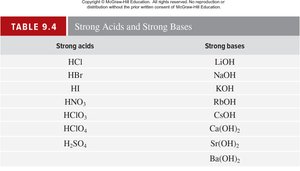
Acids and bases can be strong or weak, depending on their degree of ionization in water.
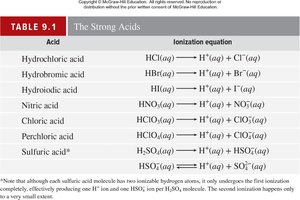
Strong acids: Ionize completely in water (e.g., HCl, HNO3, H2SO4).
Strong bases: Dissociate completely in water (e.g., NaOH, KOH).
Weak acids/bases: Partially ionize or dissociate.
Brønsted Acids and Bases
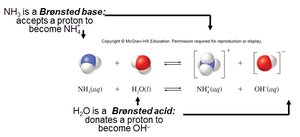
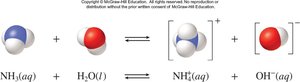
Brønsted acid: Proton (H+) donor.
Brønsted base: Proton (H+) acceptor.
In water, acids donate protons to form hydronium ions (H3O+).
Polyprotic Acids and Bases
Monoprotic acid: Donates one proton (e.g., HCl).
Diprotic acid: Donates two protons in steps (e.g., H2SO4).
Monobasic base: Produces one hydroxide per mole (e.g., NaOH).
Dibasic base: Produces two hydroxides per mole (e.g., Ba(OH)2).
Acid–Base Neutralization
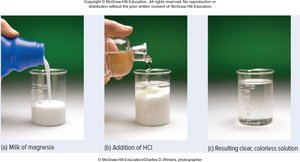
A neutralization reaction occurs when an acid reacts with a base to produce water and a salt.

9.4 Oxidation–Reduction (Redox) Reactions
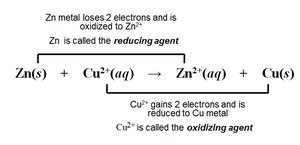
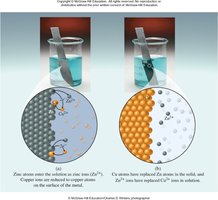
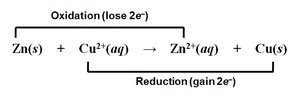
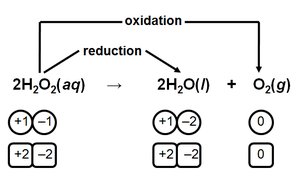
Redox reactions involve the transfer of electrons between reactants. Oxidation is the loss of electrons, and reduction is the gain of electrons.
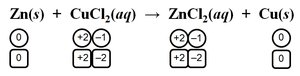
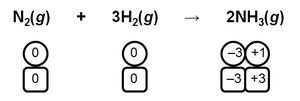
Oxidation Numbers
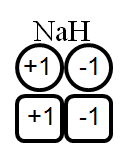
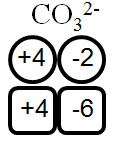
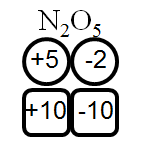
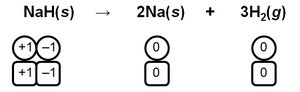
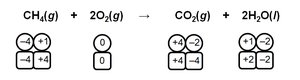
The oxidation number (oxidation state) is the charge an atom would have if electrons were transferred completely.
Rules for assigning oxidation numbers:
Elemental form: 0
Sum of oxidation numbers equals the overall charge
Monatomic ion: equals the ion's charge
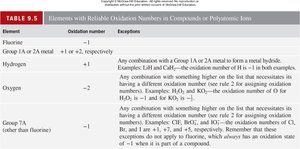
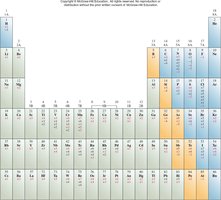
Some elements have reliable oxidation numbers (see table below)
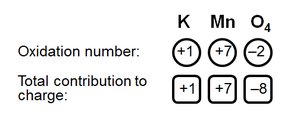
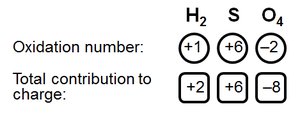
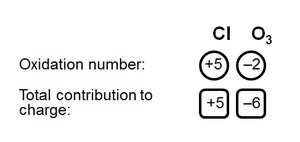
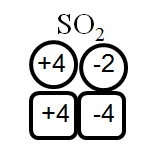
Oxidation of Metals in Aqueous Solutions
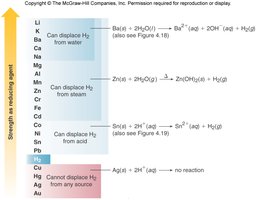
Displacement reaction: An atom or ion in a compound is replaced by an atom of another element.
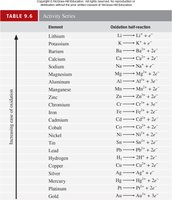
The activity series ranks metals by their ease of oxidation.
Other Types of Redox Reactions
Combination reactions: Two or more substances form one product.
Decomposition reactions: A single compound breaks down into two or more products.
Disproportionation reactions: One element undergoes both oxidation and reduction.
Combustion reactions: A substance reacts with oxygen, releasing energy.
9.5 Concentration of Solutions
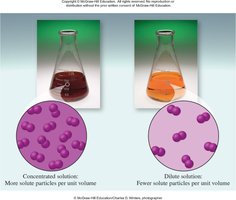
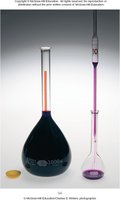
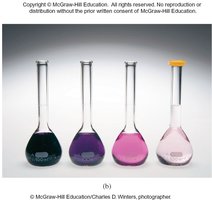
Molarity (M) is the number of moles of solute per liter of solution:
Dilution
Dilution is the process of preparing a less concentrated solution from a more concentrated one. The number of moles of solute remains constant:
9.6 Aqueous Reactions and Chemical Analysis
Gravimetric Analysis
Gravimetric analysis is an analytical technique based on measuring mass to determine the amount of a substance in a sample. It is highly accurate and used for reactions that go to completion.
Acid–Base Titrations
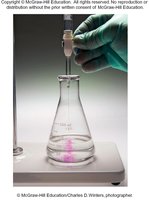
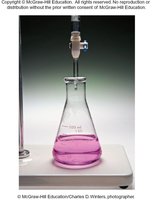
Titration is a volumetric technique used to determine the concentration of an acid or base. The equivalence point is when the acid has been completely neutralized by the base, often indicated by a color change due to an indicator.
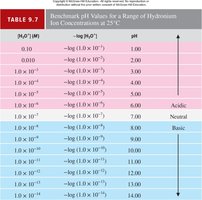
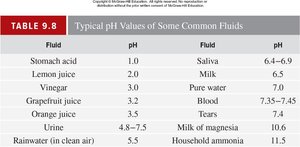
The pH Scale
The pH of a solution is a measure of its acidity or basicity, defined as:
Solution Stoichiometry
Soluble ionic compounds are strong electrolytes and dissociate completely in solution.
Stoichiometry can be used to relate concentrations of ions and compounds in solution.
Example: For a 0.35 M Na2SO4 solution, [Na+] = 0.70 M and [SO42–] = 0.35 M.
Additional info: These notes are based on Chapter 9 of "Chemistry: Atoms First" (Burdge & Overby, 3rd Edition), covering aqueous reactions, solution stoichiometry, and related analytical techniques.
