 Back
BackChemical Thermodynamics: Enthalpy, Entropy, and Free Energy
Study Guide - Smart Notes
 Tailored notes based on your materials, expanded with key definitions, examples, and context.
Chemical Thermodynamics
Introduction to Thermodynamics
Chemical thermodynamics is the study of energy changes and transfers that occur during chemical and physical processes. It provides a framework for understanding how and why reactions occur, and whether they are energetically favorable.
Energy: The capacity to do work. It exists mainly as kinetic energy (energy of motion) and potential energy (energy due to position or composition).
Thermodynamic System: The part of the universe under study (e.g., chemicals in a beaker).
Surroundings: Everything outside the system.
Universe: System + surroundings.
The First Law of Thermodynamics
Law of Conservation of Energy
The first law states that the total energy of the universe is constant. Energy can neither be created nor destroyed, only transferred or transformed.
Exothermic reactions release energy as heat (e.g., combustion of propane).
Endothermic reactions absorb energy from the surroundings.
State Functions and Thermodynamic Terms
State functions depend only on the current state of the system, not the path taken to reach it. Examples include temperature (T), pressure (P), volume (V), internal energy (E), enthalpy (H), and entropy (S).
Change in a state function:
Types of systems: open, closed, isolated.
Enthalpy and Calorimetry
Enthalpy Change ()
Enthalpy change is the heat transferred at constant pressure. It is a key quantity in chemical reactions:
: Exothermic reaction
: Endothermic reaction
Calorimetry: Measuring Heat Changes
Calorimetry is the experimental technique used to measure the heat change in a chemical or physical process. A common device is the coffee-cup calorimeter, which operates at constant pressure.
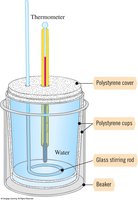

Specific heat (s): Heat required to raise the temperature of 1 g of a substance by 1°C.
Heat capacity: Total heat required to raise the temperature of the calorimeter by 1°C.
Heat change equation:
Thermochemical Equations and Standard Enthalpies
Thermochemical Equations
These are balanced chemical equations that include the enthalpy change () for the reaction. The sign of indicates whether the reaction is exothermic or endothermic.
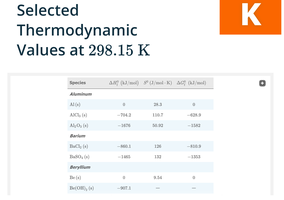
Standard Molar Enthalpy of Formation ()
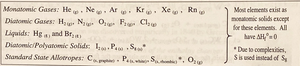
The standard molar enthalpy of formation is the enthalpy change when one mole of a compound is formed from its elements in their standard states at 298.15 K and 1 atm. For elements in their most stable form, .
Hess's Law and Bond Energies
Hess's Law
Hess's Law states that the total enthalpy change for a reaction is the same, no matter how many steps the reaction is carried out in. This is because enthalpy is a state function.
Bond Energies
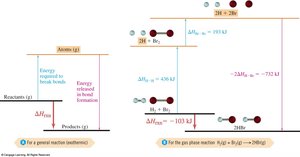
Bond energy is the energy required to break a bond in the gas phase. The enthalpy change of a reaction can be estimated using average bond energies:
Breaking bonds requires energy (endothermic).
Forming bonds releases energy (exothermic).
Internal Energy and Calorimetry at Constant Volume
Internal Energy ()
Internal energy is the sum of all forms of energy in a system. The first law of thermodynamics can be expressed as:
(where is heat, is work)
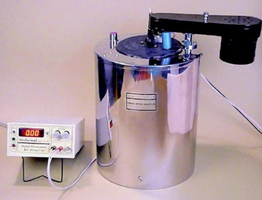
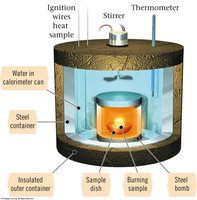
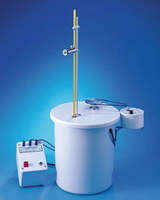
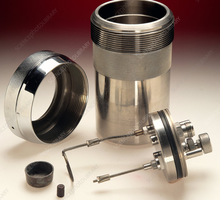
Constant Volume Calorimetry (Bomb Calorimeter)
Bomb calorimeters are used to measure heat changes at constant volume, which directly gives for the reaction.
Spontaneity, Entropy, and the Second Law
Spontaneous and Nonspontaneous Changes
Spontaneous changes occur without outside intervention and have a natural direction. Nonspontaneous changes require energy input.
Entropy (S)
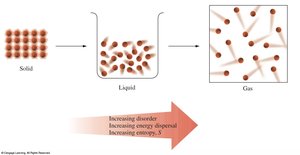
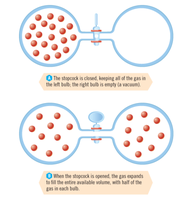
Entropy is a measure of disorder or randomness. The second law of thermodynamics states that the entropy of the universe increases in a spontaneous process.
: Disorder increases (favors spontaneity)
: Disorder decreases
Third Law of Thermodynamics
The entropy of a perfect crystal at 0 K is zero. This allows for the calculation of absolute entropies.

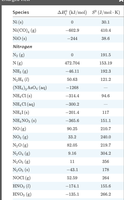
Trends in Entropy
For a given substance:
Entropy increases with temperature and with phase changes (solid → liquid → gas).
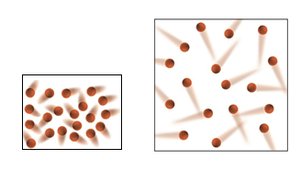
Entropy increases as the volume of a gas increases.
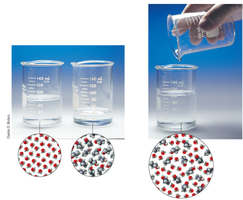
Mixing substances or dissolving solids increases entropy.
Gibbs Free Energy and Spontaneity
Gibbs Free Energy ()
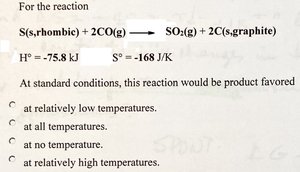
Gibbs free energy combines enthalpy and entropy to predict spontaneity at constant temperature and pressure:
: Spontaneous process
: System at equilibrium
: Nonspontaneous process
Standard Free Energy of Formation ()
This is the free energy change when one mole of a compound is formed from its elements in their standard states.
Summary Table: Key Thermodynamic Quantities
Quantity | Symbol | Definition |
|---|---|---|
Enthalpy Change | Heat change at constant pressure | |
Internal Energy Change | Total energy change (heat + work) | |
Entropy Change | Change in disorder/randomness | |
Gibbs Free Energy Change | Predicts spontaneity () |
Additional info: This guide covers the core concepts of chemical thermodynamics, including the first and second laws, enthalpy, entropy, calorimetry, and Gibbs free energy, as relevant to a general chemistry college course.
