 Back
BackChemistry of the Nonmetals: Main Group Elements, Hydrogen, Oxides, and Noble Gases
Study Guide - Smart Notes
 Tailored notes based on your materials, expanded with key definitions, examples, and context.
Chemistry of the Nonmetals
Main Group Elements: Bonding Types
The main group elements exhibit several types of molecular chemical bonding, which influence their physical and chemical properties.
Metallic Bonding: Occurs in metals, where electrons are delocalized across a lattice of metal atoms.
Covalent Bonding: Involves the sharing of electron pairs between atoms, typical in nonmetals and metalloids.
Covalent Network Bonding: Atoms are linked in a continuous network by covalent bonds, resulting in very high melting and boiling points. Exception: Carbon is the only nonmetal with covalent network bonding. Exception: Nitrogen and Oxygen do not possess covalent network bonding.
Example: The most common type of chemical bonding found within solid I2 is covalent bonding.

Main Group Elements: Boiling & Melting Points
Boiling Point (BP) and Melting Point (MP) are the energies required to change an element from solid to liquid and liquid to gas, respectively.
Periodic Trend 1: For Groups 1A to 4A, BP and MP increase moving from left to right across a period and going up a group.
Periodic Trend 2: For Groups 5A to 8A, BP and MP decrease moving from left to right across a period and going up a group.
Example: Carbon is expected to have the highest melting point among the listed elements due to its covalent network structure.
Main Group Elements: Density
At standard room temperature (25 ºC) and pressure (1 atm), elements can exist as solids, liquids, or gases.
Density Trend: Solid > Liquid > Gas
Diatomic Elements: Elements stable as pairs in nature (e.g., O2, N2, Cl2).
Polyatomic Elements: Elements stable in numbers greater than two (e.g., S8).
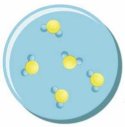
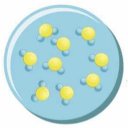
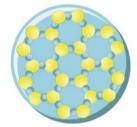
Periodic Trend: Density increases going down a group, but across a period there is no uniform trend. Exception: Potassium and Calcium have lower densities than Sodium and Magnesium due to larger atomic volumes.
Main Group Elements: Periodic Trends
Periodic trends describe how properties change across periods and groups in the periodic table.
Type A Trends: Lattice Energy, Ionization Energy, Electron Affinity, and Electronegativity all increase toward the top right corner.
Type B Trends: Metallic Character and Atomic Radius decrease toward the top right corner.
Example: Group 3A elements tend to have lower atomic radii and higher ionization energies than Group 1A elements.
The Electron Configuration Review
Electron configurations describe the distribution of electrons in atomic orbitals, following the Auf Bau Principle.
Auf Bau Principle: Electrons fill lower energy orbitals before higher energy orbitals.
Condensed Electron Configuration: Uses the noble gas preceding the element in brackets, followed by the remaining configuration.
Example: Fluorine (Z = 9): Aluminum: [Ne]
Periodic Table Charges Review
Elements gain or lose electrons to achieve noble gas configurations.
Metals: Tend to lose electrons, forming cations.
Type I Metals: Have a fixed charge.
Type II Metals: Have variable charges.
Non-metals: Tend to gain electrons, forming anions.
Example: Gallium ion typically possesses a +3 charge.
Hydrogen Isotopes
Hydrogen has three isotopes: protium, deuterium, and tritium.
Protium: Most abundant, 1 proton, 0 neutrons.
Deuterium: 1 proton, 1 neutron; forms heavy water (D2O), which has higher melting and boiling points and is denser than regular water.
Tritium: 1 proton, 2 neutrons; radioactive and rare.
Hydrogen Compounds
Hydrogen forms hydrides with metals and nonmetals.
Ionic Hydrides: Formed with Group 1A or 2A metals (except Be), H has an oxidation number of -1.
Covalent Hydrides: Formed with nonmetals and metalloids, H has an oxidation number of +1. Examples include CH4, NH3, H2O, HF.
Metallic Hydrides: Formed with transition metals, often non-stoichiometric, H fills spaces in the metal lattice.
Production of Hydrogen
Hydrogen gas can be produced by reactions involving ionic hydrides or metals and acids.
From Ionic Hydrides: H- reacts with water or acids to form H2 gas.
From Metal and Acid: Reactive metals react with acids, producing H2 gas.
Group 1A and 2A Reactions
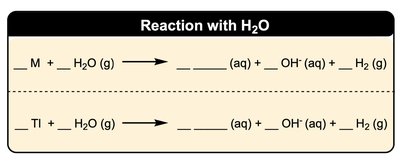
Alkali metals (1A) and alkaline earth metals (2A) react with water and halogens.
Reaction with Water: Both groups react violently, producing hydrogen gas and metal hydroxides.
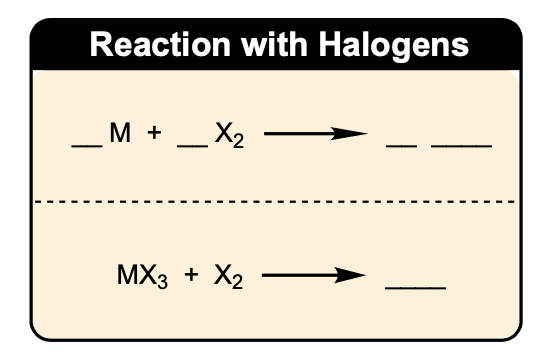
Reaction with Halogens: Both groups react to form ionic halides.
Boron Family Reactions
Boron family elements (Group 3A) react with acids and halogens.
Reaction with Water: Boron family metals do not react with water but do react with acids.
Reaction with Halogens: Boron family metals react to form halide solids.
Borane and Diborane
Boranes are covalent hydrides of boron and hydrogen. Diborane is the simplest form, featuring bridging hydrogens.
Bridging Hydrogens: Hydrogens that form polarized covalent bonds between boron atoms.
Hybridization: Boron atoms in diborane are sp3 hybridized.
Borane Reactions
Boranes are electron-deficient and highly reactive.
Reaction with Water: Diborane reacts with water to produce boric acid and hydrogen gas.
Lewis Acid-Base Reaction: Boranes act as Lewis acids due to electron deficiency, forming adducts with Lewis bases.
Nitrogen Family Reactions
Nitrogen family elements (Group 5A) react with halogens and water.
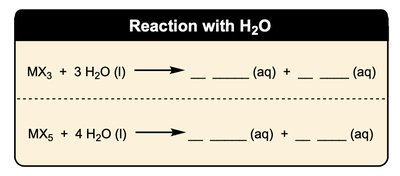
Reaction with Halogens: Forms trihalides and pentahalides; elements from Period 3 or lower can have expanded octets.
Reaction with Water: Trihalides and pentahalides react with water to form oxyacids (except nitrogen trihalides).
Oxides, Peroxides, and Superoxides
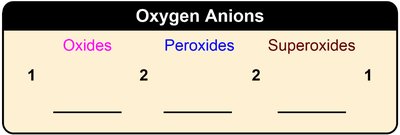
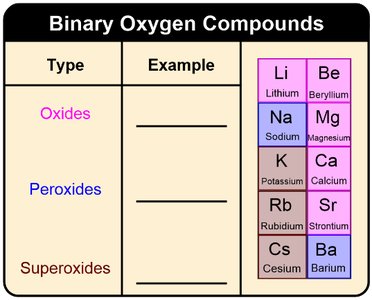
These are binary compounds of oxygen with metals, especially Groups 1A and 2A.
Oxides: O2- anion
Peroxides: O22- anion
Superoxides: O2- anion
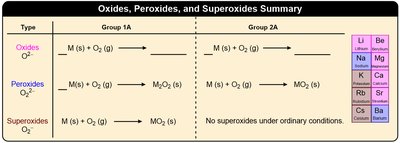
Oxide Reactions
Oxides, peroxides, and superoxides react with water and acids.
Reaction with Water: Produces metal hydroxides.
Reaction with Acids: Produces salts and water.

Peroxide and Superoxide Reactions
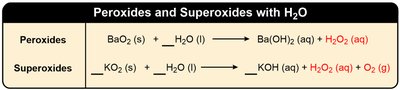
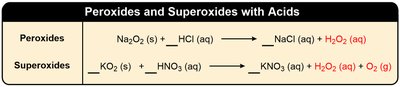
Peroxides and superoxides react with water and acids to produce hydrogen peroxide and oxygen.
Peroxides with Water: Produce H2O2 as an additional product.
Superoxides with Water: Produce H2O2 and O2.
Peroxides with Acids: Produce H2O2 instead of water.
Superoxides with Acids: Produce H2O2 and O2.
Noble Gas Compounds
Among Group 8A elements, only xenon forms stable compounds, reacting directly with fluorine to form xenon fluorides.
Xenon Fluorides: XeF2, XeF4, XeF6
Other noble gas compounds: Generally unstable or do not exist.
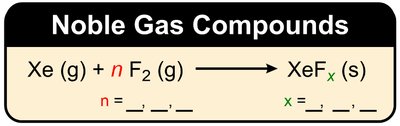
Example: XeF4 is a colorless crystalline solid at room temperature.
Additional info: Academic context and explanations have been expanded for clarity and completeness. All images included are directly relevant to the adjacent explanations.
