 Back
BackComprehensive Study Guide: Moles, Compounds, Stoichiometry, Gases, and Acids/Bases
Study Guide - Smart Notes
 Tailored notes based on your materials, expanded with key definitions, examples, and context.
Unit 5: The Mole
Definition and Significance of the Mole
The mole is the SI unit for the amount of substance, defined as containing exactly 6.022 x 10²³ particles (Avogadro's number). This unit allows chemists to count atoms, molecules, or ions by weighing them.
Key Point: 1 mole of any substance contains 6.022 x 10²³ particles (atoms, molecules, ions, etc.).
Example: How many molecules are in 2.5 moles of H2O? molecules$
Key Point: In 1 mole of H2O, there are 2 moles of H atoms and 1 mole of O atoms.
Relative Masses and Molar Mass
The molar mass is the mass of one mole of a substance, expressed in grams per mole (g/mol). Different substances have different molar masses due to differences in atomic or molecular composition.
Key Point: 1 mole of Ne and 1 mole of He contain the same number of atoms, but their masses differ due to different atomic masses.
Example: Mass of 1 mole of Ne (20.18 g) vs. 1 mole of He (4.00 g).
Conversions: Moles, Grams, and Particles
Conversions between moles, grams, and number of particles use Avogadro's number and molar mass as conversion factors.
Key Point:
Key Point:
Key Point:
Example: Calculate the number of molecules in 2.31 g of CH4: molecules$
Unit 6: Binary Compounds, Bonds
Naming Ions and Compounds
Chemical nomenclature follows international rules for naming anions and cations.
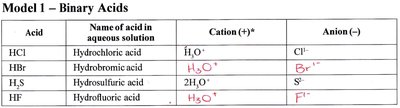
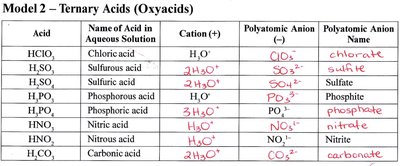
Anions: Monoatomic (e.g., Cl- is chloride), Polyatomic (e.g., NO3- is nitrate).
Cations: All monoatomic except NH4+ (ammonium) and H3O+ (hydronium).
Example: The N3- ion is called nitride.
Types of Chemical Bonds
Chemical bonds form due to interactions between electrons of atoms.
Ionic Bonds: Formed by transfer of electrons from metals to nonmetals.
Covalent Bonds: Formed by sharing of electrons between nonmetals.
Metallic Bonds: Involve a 'sea of electrons' shared among metal atoms.
Example: Ionic bonds are formed between a metal and a nonmetal.
Physical Properties of Compounds
Ionic Compounds: High melting points, brittle, conduct electricity when molten.
Covalent Compounds: Low melting points, poor conductors.
Metals: Malleable, ductile, good conductors.
Chemical Formulas and Lewis Structures
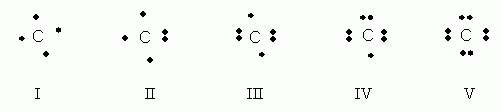
Chemical formulas represent the composition of compounds. Lewis dot structures show valence electrons.
Ionic Formula: Shows the simplest ratio of ions (formula unit).
Molecular Formula: Shows the actual number of atoms in a molecule.
Lewis Dot Notation: Represents valence electrons around an element symbol.
Molecules: Monatomic, Diatomic, Polyatomic
Monatomic: Single atom (e.g., He).
Diatomic: Two atoms (e.g., N2, O2, F2, Cl2, Br2, I2, H2).
Polyatomic: More than two atoms (e.g., O3).
Bond Polarity and the Octet Rule
Polar Bonds: Electrons are shared unequally due to differences in electronegativity.
Nonpolar Bonds: Electrons are shared equally.
Octet Rule: Atoms tend to have 8 electrons in their valence shell (exceptions: H, He, B, etc.).
Molecular Geometry
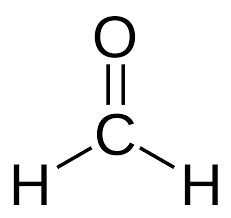
Molecular shape is determined by the number of electron domains (bonding and nonbonding pairs) around the central atom.
Geometry | Bond Angle | Example |
|---|---|---|
Linear | 180° | CO2 |
Trigonal Planar | 120° | H2CO |
Tetrahedral | 109.5° | CH4 |
Bent | 109.5° | H2O |
Trigonal Pyramidal | 109.5° | NH3 |
Bonding in Metals
Metals are held together by a 'sea of electrons' that allows for conductivity and malleability.
Unit 7: Polyatomic Ions, Ternary Compounds, Stoichiometry
Naming Ionic and Molecular Compounds
Ionic Compounds: Name the cation (with Roman numeral if variable charge), then the anion.
Molecular Compounds: Use Greek prefixes (mono-, di-, tri-, etc.) to indicate the number of each atom.
Greek Prefixes Table:
Number | Prefix |
|---|---|
1 | mono- |
2 | di- |
3 | tri- |
4 | tetra- |
5 | penta- |
6 | hexa- |
7 | hepta- |
8 | octa- |
9 | nona- |
10 | deca- |
Stoichiometry and Chemical Equations
Reactants: Substances consumed in a reaction.
Products: Substances formed in a reaction.
Coefficients: Indicate the number of molecules or moles; Subscripts: Indicate the number of atoms in a molecule.
Balancing Equations: Ensures the same number of each atom on both sides.
Stoichiometry: The calculation of reactants and products in chemical reactions using mole ratios.
Limiting and Excess Reactants
Limiting Reactant: The reactant that is completely consumed first, limiting the amount of product formed.
Excess Reactant: The reactant that remains after the reaction is complete.
Unit 8: Gas Laws
Kinetic Molecular Theory and Gas Laws
The behavior of gases is described by the kinetic molecular theory and summarized by several gas laws.
Kinetic Molecular Theory: Gas particles move rapidly, are far apart, and do not attract or repel each other.
Combined Gas Law:
Ideal Gas Law:
Standard Temperature and Pressure (STP): 0°C (273 K) and 1 atm; 1 mole of gas occupies 22.4 L at STP.
Partial Pressures
Dalton's Law: The total pressure of a gas mixture is the sum of the partial pressures of each component.
Example:
Mini Unit 9: Naming Acids and Bases, Neutralization Reactions
Naming Acids
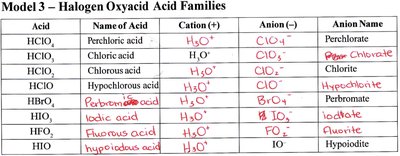
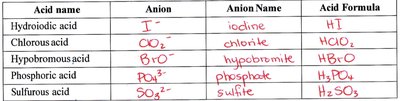
Binary Acids: "hydro-" + anion root + "ic acid" (e.g., HCl is hydrochloric acid).
Ternary (Oxo) Acids: Based on polyatomic anion: - "-ate" ion → "-ic acid" (e.g., HNO3 is nitric acid) - "-ite" ion → "-ous acid" (e.g., HNO2 is nitrous acid)
Naming Bases
Bases: Most common bases are metallic cations with hydroxide (OH-), e.g., NaOH is sodium hydroxide.
Additional info: This guide covers core topics from general chemistry including the mole concept, chemical bonding, nomenclature, stoichiometry, gas laws, and acid/base naming conventions. Practice problems and tables are included for reference and review.
